
SDG 7 Universitas Jember 2025
SDG 7 · Indicator 7.2.1 · Energy-efficient renovation and building
New Buildings and Renovations at UNEJ Must Follow Green-Building Principles
The Green Campus Standards require at least four green-building elements in every construction and renovation policy.
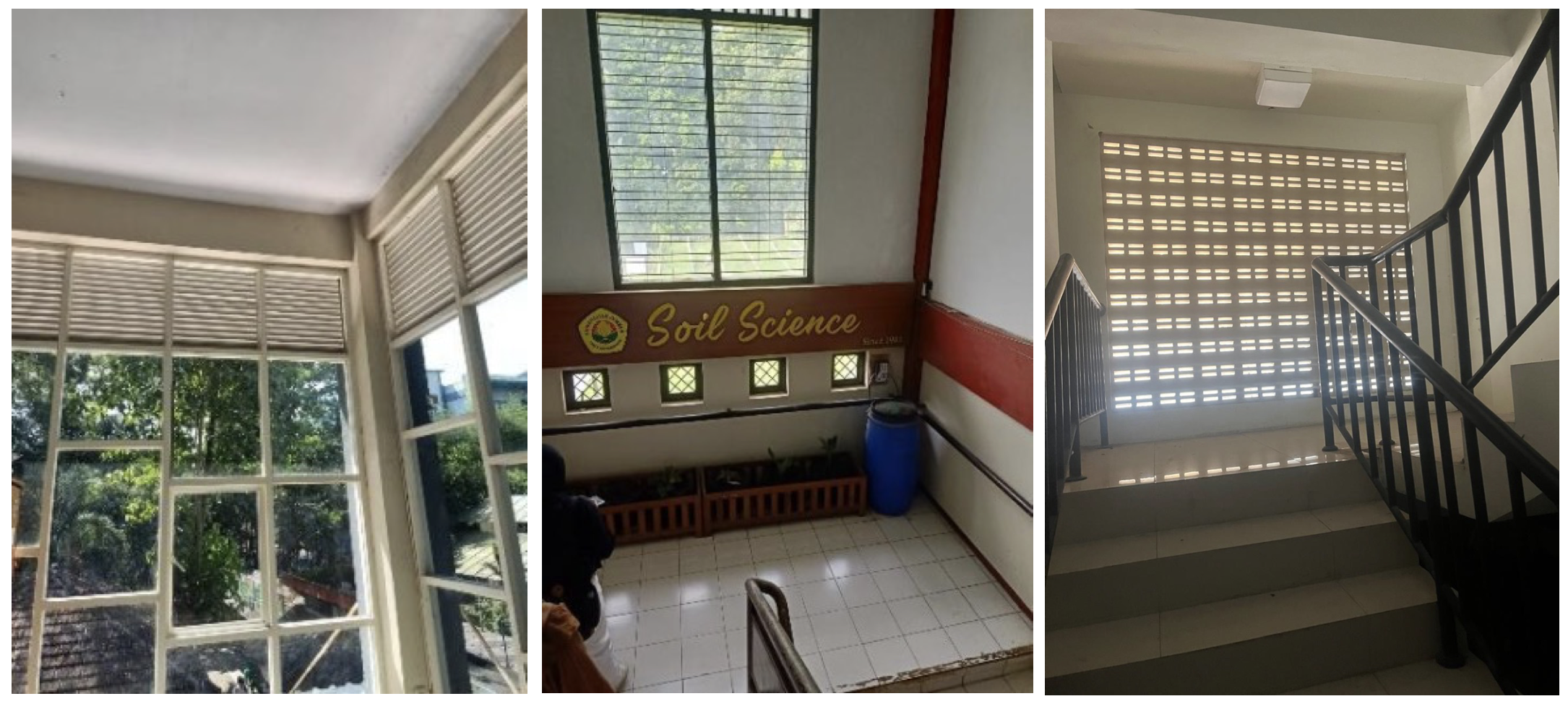
Photo: a UNEJ building with natural ventilation and natural lighting. Caption: building name and year.
JEMBER – Universitas Jember (UNEJ) no longer treats energy efficiency as optional in its buildings. Under the Green Building Implementation Standard, every construction and renovation policy on campus must apply green-building principles.
The standard is part of the Green Campus Standards approved by Rector's Decree No. 9026/UN25/KP/2018 of 1 August 2018, revised on 7 December 2019 and strengthened by the Internal Quality Assurance System (SPMI) Additional Standards on 1 December 2021. It requires university leaders to include a green-building programme in every construction and renovation policy, with at least four green-building elements. Its references are the Greenship rating tool and the Indonesian National Standard on energy conservation in lighting systems.
UNEJ keeps these standards under review. On 22–23 September 2025, at the Jubung campus, the university reviewed its SPMI documents against the latest regulation, Minister of Higher Education, Science and Technology Regulation No. 39 of 2025, and strengthened its additional standards, which include the Green Campus Standards, as a distinctive feature of UNEJ's quality.
This requirement is reinforced by the Energy Use Efficiency Standard, which requires leaders to prioritise energy-efficient equipment in every repair and new purchase. The results are visible on campus: all UNEJ buildings now use LED lighting, and inverter air conditioners have been installed in offices, laboratories and administrative rooms.
In UNEJ buildings, green-building elements are applied in three groups. For energy efficiency, buildings are designed for natural ventilation through large windows, side openings and high-level vents, supported by LED lighting, inverter air conditioners and maintenance of electrical panels to reduce distribution losses. For indoor quality, buildings make use of natural light, plants in corridors and atriums, and acoustic panels in rooms that need sound insulation. On site, the campus applies rainwater harvesting, retention ponds, biopores and tree protection.
Compliance is monitored every year by the Centre for Environment and Disaster Studies of UNEJ's Institute for Research and Community Service (LP2M). The centre assesses green-building performance, surveys building users and submits an annual recommendation document to university leaders as the basis for improvement.
Green-building elements at UNEJ
Group | Elements applied | Basis |
Energy efficiency | Natural ventilation, LED lighting in all buildings, inverter air conditioners, electrical panel maintenance | GC-03, GC-05 |
Indoor quality | Natural lighting, plants in corridors and atriums, acoustic panels | GC-03 |
Site | Rainwater harvesting, retention ponds, biopores, tree protection | GC-03 |
Building automation | Smart buildings covering 14,280 m² (2025) | GC-02 |
Supporting documents
▪ UNEJ Green Campus Standards book
▪ UNEJ SPMI Additional Standards
▪ SPMI document review, September 2025
SDG 7 · Indicator 7.2.2 · Upgrade buildings to higher energy efficiency
UNEJ Nearly Doubles Its Smart-Building Area in 2025
LED lighting now covers every building, while the area of automated buildings grew from 7,280 to 14,280 square metres.
JEMBER – Universitas Jember (UNEJ) continues to improve the energy efficiency of its existing buildings. In 2025, smart-building floor area on campus reached 14,280 square metres, almost double the 7,280 square metres of 2024 and more than double the 6,000 square metres of 2023.
These upgrades rest on two of UNEJ’s Green Campus Standards, in force since 2018. The Energy Use Efficiency Standard (GC-05) defines inverter air conditioners and LED lamps as energy-efficient equipment and sets a target of more than 75% of campus equipment being energy-efficient. UI GreenMetric data show that this target was met from 2023 to 2025. The Smart Building Implementation Standard (GC-02) requires deans and unit heads to equip buildings with automation for energy and water efficiency, such as a building management system.
Equipment is being replaced across the campus. Lighting in all buildings has been converted to LED, and every fit-out and renovation must use LED. Inverter air conditioners have been installed in offices, laboratories and administrative rooms. Lecture rooms at the Faculty of Agriculture now use LED screens and digital projectors in place of older, energy-intensive equipment.
In student buildings, UNEJ has installed key-card switches. When residents remove the card on leaving the room, power to lights and sockets is cut automatically, so no equipment is left running without a user.
Each faculty and unit also monitors its own electricity use and takes savings measures at unit level. The 2025 smart-building area equals 6.6% of UNEJ’s total floor area of 217,019 square metres, so expanding building automation remains a priority for the years ahead.
In 2025, campus development at UNEJ was guided by one of the university’s strategic activities: arranging campus space and the campus environment to be friendly and comfortable. To support it, UNEJ’s 2025 Business Plan and Budget (RBA) allocates IDR 36 billion of BLU funds for capital expenditure on buildings, and IDR 5.88 billion of State University Operational Assistance (BOPTN) funds for learning facilities for building maintenance. The 2025 RBA also lists the use of artificial intelligence (AI) and the Internet of Things (IoT) in the green campus environment, covering up to four UI GreenMetric criteria, as one of the university’s IT innovations.
All of this construction and maintenance follows UNEJ’s Green Campus Standards. The Green Building Implementation Standard requires at least four green-building elements in every construction and renovation, while the Energy Use Efficiency Standard requires every repair and equipment purchase to prioritise energy-efficient equipment, such as LED lamps and inverter air conditioners. As a result, every building constructed or maintained in 2025 also contributes to improving the campus’s energy efficiency.
Building energy-efficiency upgrades at UNEJ, 2023–2025
Year | Smart-building area (m²) | Energy-efficient equipment |
2023 | 6,000 | More than 75% |
2024 | 7,280 | More than 75% |
2025 | 14,280 (6.6% of 217,019 m²) | More than 75%; LED in all buildings |
Supporting documents
▪ UNEJ Green Campus Standards book
▪ UNEJ SPMI Additional Standards
SDG 7 · Indicator 7.2.3 · Carbon reduction and emission reduction process
UNEJ Has Measured Its Campus Carbon Footprint Since 2018 and Targets Net Zero Emissions by 2060
The 2025 greenhouse gas inventory recorded 7,113 tonnes of CO₂e, with electricity as the largest source.
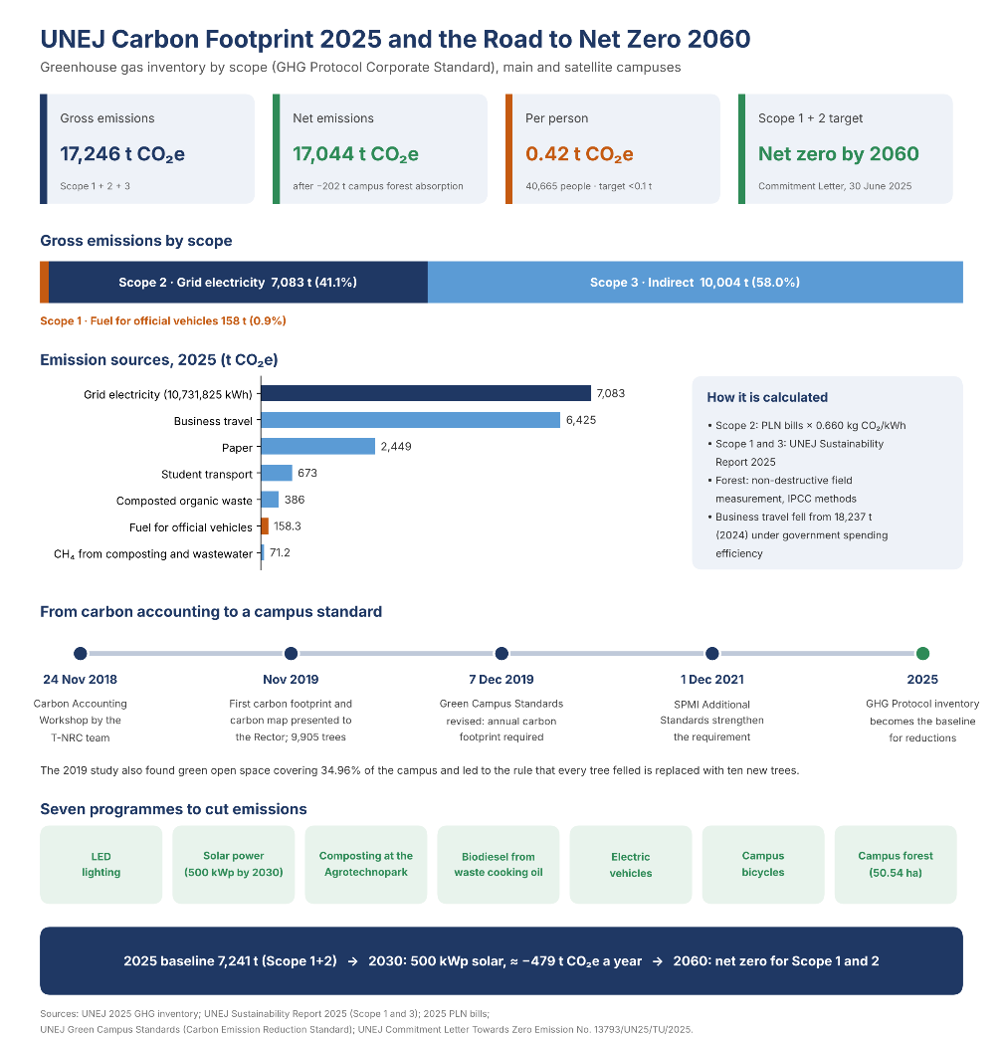
JEMBER – Universitas Jember (UNEJ) calculates its campus carbon footprint every year as the basis for reducing emissions. The 2025 greenhouse gas inventory recorded total emissions of 7,113 tonnes of carbon dioxide equivalent (CO₂e). After deducting absorption by the campus forest, UNEJ's net emissions were 6,911 tonnes CO₂e.
This work began in 2018. On 24 November 2018, UNEJ's Tropical Natural Resources Conservation (T-NRC) team held a Carbon Accounting Workshop at the Graduate School hall on the strategic role of higher education in responding to climate change. The workshop, attended by representatives of all student nature-lover associations, stressed that as a green campus UNEJ needs accurate, scientifically verifiable carbon data as the basis for managing campus carbon. A year later, in November 2019, the T-NRC team presented its carbon footprint calculation and a map of carbon distribution on campus to the Rector. The study recorded 9,905 trees on campus and green open space covering 34.96% of the campus area, and it became the basis for the policy that every tree felled must be replaced with ten new trees.
Annual carbon accounting then became a requirement of the Carbon Emission Reduction Standard, part of UNEJ's Green Campus Standards approved in 2018, revised on 7 December 2019 and strengthened by the SPMI Additional Standards on 1 December 2021. The standard assigns LP2M's Centre for Environment and Disaster Studies to calculate the campus carbon footprint every year and sets a target of less than 0.1 tonnes CO₂e per person per year.
The 2025 inventory follows the GHG Protocol Corporate Standard and covers the main and satellite campuses. About 30 tonnes come from Scope 1, namely generators and refrigerants. The largest source is Scope 2: 10,731,825 kWh of electricity from the state utility PLN, as billed in 2025, which produced 7,083 tonnes CO₂e at the national grid emission factor of 0.660 kg CO₂ per kWh. The 50.54-hectare campus forest absorbs 202 tonnes CO₂e.
With a campus population of 40,665, comprising 38,051 students and 2,614 academic and administrative staff, UNEJ's carbon footprint is 0.175 tonnes CO₂e per person, still above the 0.1-tonne target. The 2025 figure serves as the baseline for tracking emission reductions in the coming years.
To cut emissions, UNEJ runs seven programmes: replacing lamps with LED, expanding solar power (PLTS), composting organic waste at the Agrotechnopark, using biodiesel made from waste cooking oil in campus vehicles, developing electric vehicles, providing campus bicycles and protecting the campus forest. All of these steps are part of UNEJ's environmental strategy towards its Net Zero Emissions 2060 target. Expanding solar capacity to 500 kWp by 2030 alone is expected to avoid about 479 tonnes CO₂e a year.
UNEJ greenhouse gas inventory, 2025
Component | Emissions (t CO₂e) | Notes |
Scope 1: generators, refrigerants | ≈30 | Fuel and refrigerants owned by the university |
Scope 2: PLN electricity | 7,083 | 10,731,825 kWh × 0.660 kg CO₂/kWh |
Total carbon footprint | 7,113 | GHG Protocol Corporate Standard |
Campus forest absorption (50.54 ha) | −202 | Non-destructive field measurement followed by calculation using IPCC methods |
Net carbon footprint | 6,911 |
|
Per person | 0.175 | 7,113 ÷ 40,665 people |
Supporting documents
▪ UNEJ Green Campus Standards book
▪ UNEJ Zero Emission Commitment Letter
SDG 7 · Indicator 7.2.4 · Plan to reduce energy consumption
UNEJ Electricity Use at 263.9 kWh per Person, Below the 279 kWh Limit
Five energy-efficiency targets and a solar roadmap to 500 kWp by 2030 make up UNEJ's plan to reduce energy consumption.
JEMBER – Electricity consumption at Universitas Jember (UNEJ) in 2025 was 10,731,825 kWh, or 263.9 kWh per person per year, below the university's limit of 279 kWh. This result is part of the energy reduction plan set out in the Energy Use Efficiency Standard (GC-05) of UNEJ's Green Campus Standards.
The standard sets five measurable targets. Two have been met: electricity use below 279 kWh per person and more than 75% energy-efficient equipment. Three are still being pursued: smart buildings covering more than 75% of floor area (6.6% in 2025), at least three renewable energy sources (currently two, solar power and biodiesel), and renewable energy supplying 25% of total consumption (0.06% in 2025).
The standard also assigns clear responsibilities. University leaders must record electricity use every year and plan additional renewable energy. Deans and unit heads must apply energy-efficiency policies in their units, and every lecturer must apply energy-saving practices in teaching. At faculty level, the Faculty of Dentistry issued Green Dentistry Circular No. 053/UN25.1.8/LL/2025, which sets out energy-saving practices for the faculty.
To meet its renewable energy target, UNEJ has drawn up a phased solar expansion roadmap. Solar panels are currently installed at four sites: the Jubung Agrotechnopark, the Faculty of Engineering, and the rooftops of the CDAST building and the Rectorate, producing about 6,146 kWh a year. Capacity will increase by 50 kWp in 2025–2026, rise to 200 kWp in 2027–2028 and reach 500 kWp by 2030. At that stage, campus solar is expected to generate about 725,000 kWh a year, or 6.8% of current electricity use, as an interim step towards the 25% target.
UNEJ energy-efficiency targets (GC-05) and 2025 results
Target | 2025 result | Status |
Electricity use below 279 kWh per person per year | 263.9 kWh | Met |
More than 75% energy-efficient equipment | More than 75% | Met |
Smart buildings covering more than 75% of floor area | 6.6% | In progress |
At least 3 renewable energy sources | 2 (solar, biodiesel) | In progress |
Renewable energy at 25% of consumption | 0.06% | In progress |
Supporting documents
▪ UNEJ Green Campus Standards book
▪ Green Dentistry Circular, Faculty of Dentistry, No. 053/UN25.1.8/LL/2025
SDG 7 · Indicator 7.2.5 · Energy wastage identification
Monthly Bill Monitoring Helps UNEJ Pinpoint Energy Waste
Air conditioning, laboratories, health facilities, student residences and the central library are the main targets for savings.
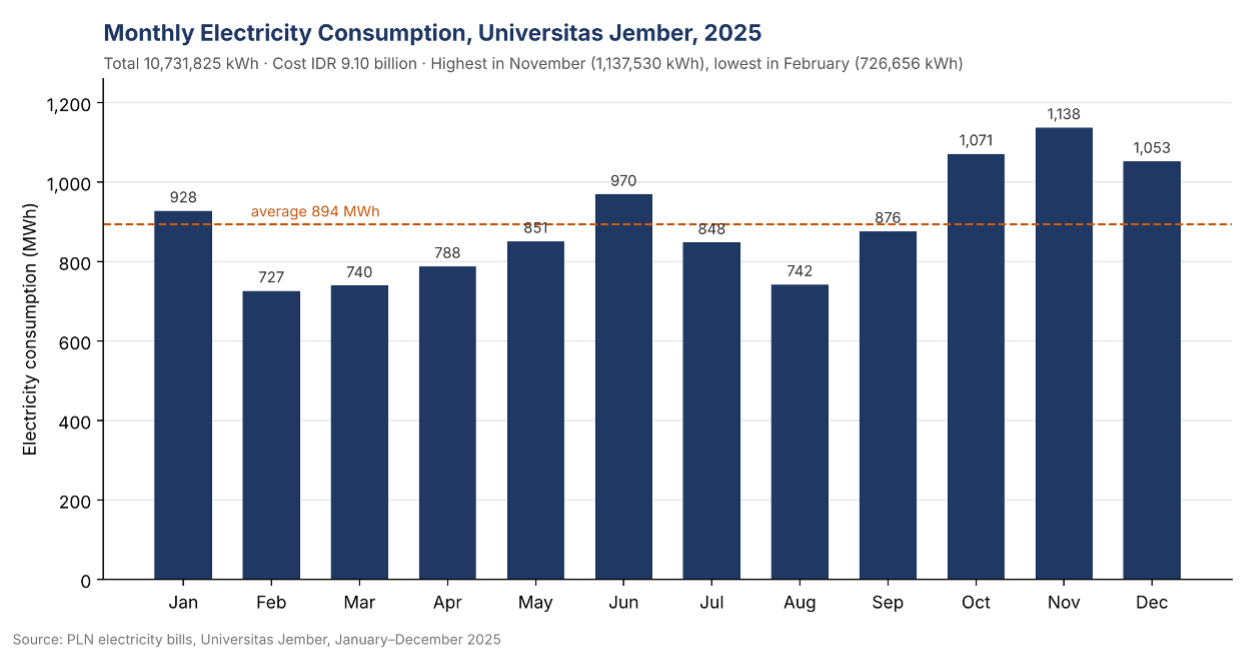
Monthly electricity consumption at Universitas Jember, 2025, based on PLN bills.
JEMBER – Universitas Jember (UNEJ) monitors its electricity use every month to find the parts of the campus that consume the most energy. Monitoring in 2025 showed that air conditioning, laboratories, health facilities, student residences and the central library are the largest energy users.
This monitoring is carried out under the Energy Use Efficiency Standard (GC-05) of UNEJ's Green Campus Standards. The standard requires university leaders to record electricity use in kWh every year and requires LP2M to calculate renewable energy production and its ratio to total consumption.
The Bureau of Finance and Asset Management compiles PLN electricity bills for every meter on all campuses each month. In 2025, UNEJ's bills recorded consumption of 10,731,825 kWh at a cost of IDR 9.1 billion, equal to 263.9 kWh per person and 49.5 kWh per square metre of floor area. Monthly data show a clear pattern: consumption averaged 894,319 kWh a month, but rose above 1 million kWh in each of the last three months of 2025, peaking at 1,137,530 kWh in November. The lowest consumption was in February (726,656 kWh), March and August. The gap of about 57% between the lowest and highest months shows that part of the load can be controlled, and this pattern is being used to schedule room use and manage electrical loads.
The bill records also map where consumption is concentrated. Air conditioning is the main load in office and teaching buildings. Laboratories at the CDAST centre and the faculties run equipment for long periods. Health facilities, namely UMC, the Dental and Oral Hospital (RSGM) and the UNEJ Hospital, operate long service hours. Student residences and the central library also draw large amounts of electricity because they are in use almost all day.
These areas are now the main targets for replacing air conditioners with inverter units and installing smart-building systems. In addition, every faculty and unit monitors its own electricity use and applies savings measures at unit level.
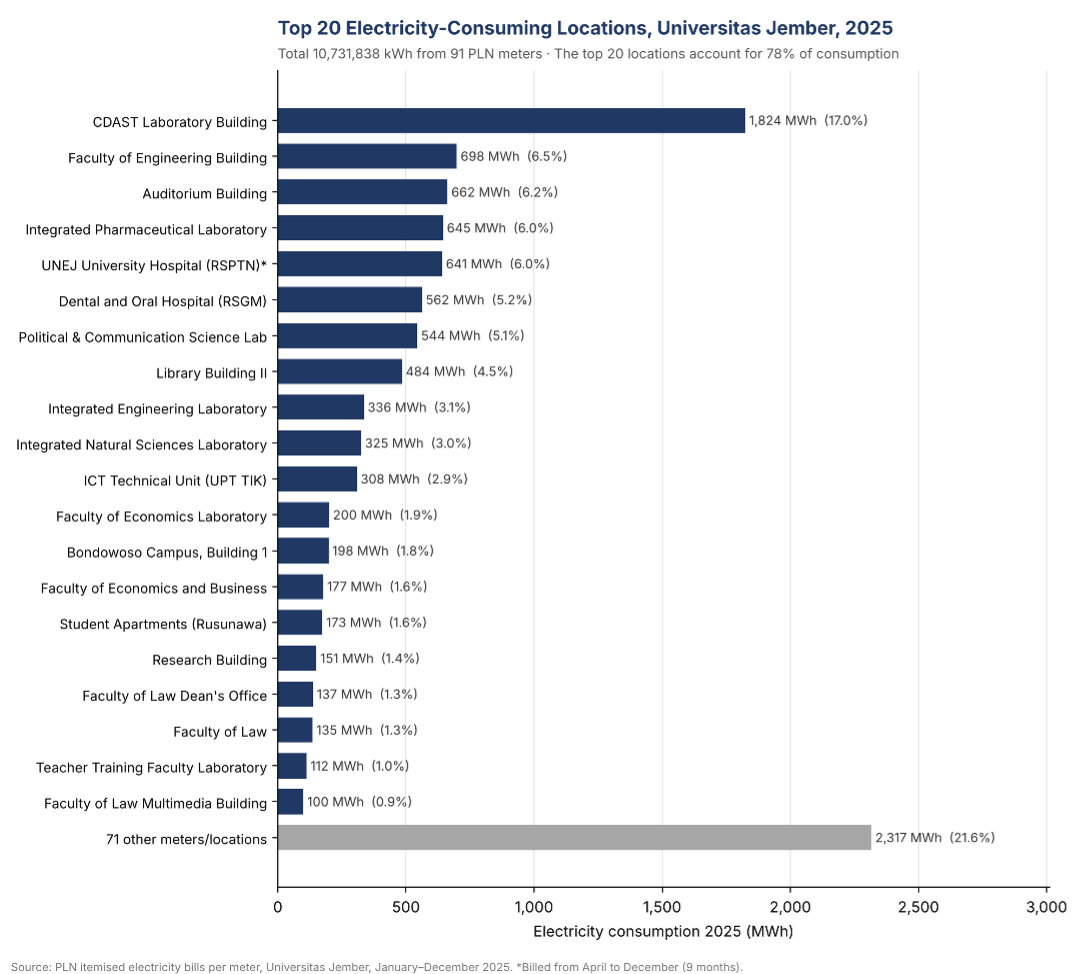
The 20 locations with the highest electricity consumption at Universitas Jember, 2025.
Largest energy users at UNEJ and savings measures
Energy user | Reason for high load | Savings measures |
Air conditioning | Used in almost every building | Replacement with inverter units |
Laboratories at CDAST and faculties | Equipment running for long periods | Energy-efficient equipment, automation |
UMC, RSGM, UNEJ Hospital | Long service hours | Smart-building systems, inverter air conditioners |
Student residences | Occupied all day | Key-card switches, LED lighting |
Central library | Long opening hours | LED lighting, load management |
Supporting documents
▪ UNEJ Green Campus Standards book
▪ Energy Review Report of Universitas Jember 2025, UNEJ Environmental Team
SDG 7 · Indicator 7.2.6 · Divestment policy
UNEJ Funds Are Free from Investment in Carbon-Intensive Energy
A cash management policy that keeps university funds in banks is in line with UNEJ's vision of sustainable industrial agriculture.
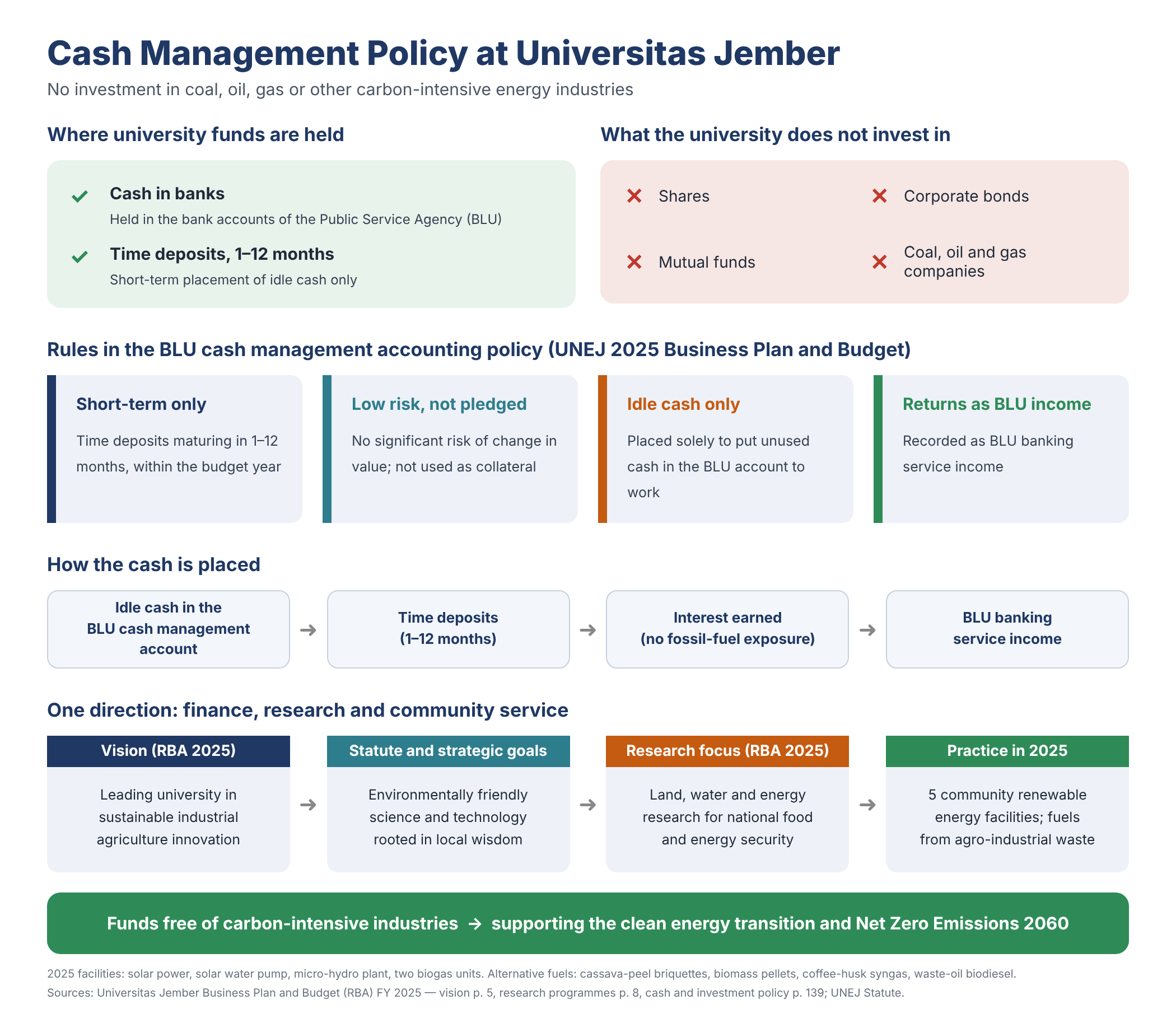
JEMBER – Universitas Jember (UNEJ) holds no investments in coal, oil or natural gas companies or in any other carbon-intensive energy industry. All university funds are held as cash in banks and as time deposits. The university does not invest in shares, corporate bonds or mutual funds.
This rule is set out in the accounting policy for cash management of UNEJ as a Public Service Agency (BLU), in UNEJ’s 2025 Business Plan and Budget (RBA). UNEJ prepares an RBA every year for the following fiscal year. The 2025 RBA was prepared and approved at the end of 2024, so its cash management policy applied throughout 2025. The policy states that BLU cash may be invested only short-term, as time deposits. These must mature within 1 to 12 months and no later than the end of the budget year, carry no significant risk of change in value, and may not be pledged as collateral. Such deposits are made solely to put idle cash in the BLU cash management account to use, and the returns are recorded as BLU banking service income. Under this rule, university funds do not flow to companies whose business depends on fossil energy.
The policy is in line with UNEJ’s vision, stated in the 2025 RBA: “To become a leading university in sustainable industrial agriculture innovation with an international reputation.” Two of the strategic goals supporting this vision are to produce innovative science, technology and arts grounded in sustainable industrial agriculture, and to produce appropriate technology rooted in local wisdom to empower communities. In its Statute, UNEJ also sets the goal of producing science, technology and arts that are environmentally friendly and rooted in local wisdom.
The same direction guides UNEJ’s research budget. Among the research and community service programmes in the 2025 RBA is “strengthening research and community service based on land, water and energy for national food and energy security”. These priorities are reflected in practice. In 2025, UNEJ built five renewable energy facilities with local communities: solar power, a solar-powered water pump, a micro-hydro plant and two biogas installations. UNEJ also develops alternative fuels from agro-industrial waste, such as cassava-peel briquettes, biomass pellets, syngas from coffee husks and biodiesel from waste cooking oil.
By keeping its cash free from carbon-intensive energy industries, UNEJ ensures that its financial resources support the same direction as its research and community service: the transition to clean energy and the Net Zero Emissions 2060 target.
reference:
SDG 7 · Indicator 7.3.1 · Energy usage per sqm
UNEJ Energy Intensity Reached 0.179 GJ per Square Metre in 2025
All campus energy, covering electricity from 91 PLN meters, campus solar power and fuel, divided by 217,019 square metres of floor area.
JEMBER – Universitas Jember (UNEJ) recorded an energy intensity of 0.179 gigajoules (GJ) per square metre of floor area in 2025, equivalent to 49.8 kWh per square metre.
The figure is based on all energy used on campus in 2025, a total of 38,893.9 GJ. The largest source, accounting for 99.3%, was PLN electricity of 10,731,825 kWh as billed in 2025, equivalent to 38,634.6 GJ (1 kWh = 0.0036 GJ). This electricity is supplied through 91 customer meters at the Tegalboto, Jubung, Bondowoso, Lumajang and Pasuruan campuses, including laboratories, hospitals, student residences and campus street lighting. Campus solar panels generated 6,146 kWh, or 22.1 GJ. Fuel for official vehicles and generators amounted to about 6,625 litres, equivalent to 237.2 GJ. This volume is estimated from fuel spending of IDR 79.5 million in 2025 at an average price of IDR 12,000 per litre.
The total floor area of UNEJ buildings is 217,019 square metres, according to State Property (BMN) records.
Electricity data come from itemised PLN bills for each meter, managed by the Bureau of Finance and Asset Management. Fuel data come from the university's fuel purchase records, and floor area from the university's asset register.
Meter-level analysis of the bills shows that UNEJ's electricity use is concentrated in a small number of buildings. Twenty locations account for 78.4% of consumption, and the CDAST Laboratory Building alone accounts for 17.0%. These findings set the priorities for energy audits in 2026.
This energy intensity serves as a benchmark for UNEJ's energy-efficiency programmes, from converting all lighting to LED and installing inverter air conditioners to expanding smart buildings, which covered 14,280 square metres in 2025.
UNEJ energy intensity, 2025
Component | Quantity | Energy (GJ) |
PLN electricity (91 meters) | 10,731,825 kWh | 38,634.6 |
Campus solar electricity | 6,146 kWh | 22.1 |
Fuel for official vehicles and generators | ≈6,625 litres | 237.2 |
Total energy |
| 38,893.9 |
Building floor area | 217,019 m² |
|
Energy intensity |
| 0.179 GJ/m² (49.8 kWh/m²) |
Conversion factors: electricity 0.0036 GJ/kWh; fuel 0.0358 GJ/litre (diesel).
Supporting documents
SDG 7 · Indicator 7.4.1 · Local community outreach for energy efficiency
From Micro-Hydro to Biogas, UNEJ Helps Villagers Run Their Own Clean Energy
In 2025, UNEJ built five clean-energy facilities with communities in four regencies and trained residents to manage them.
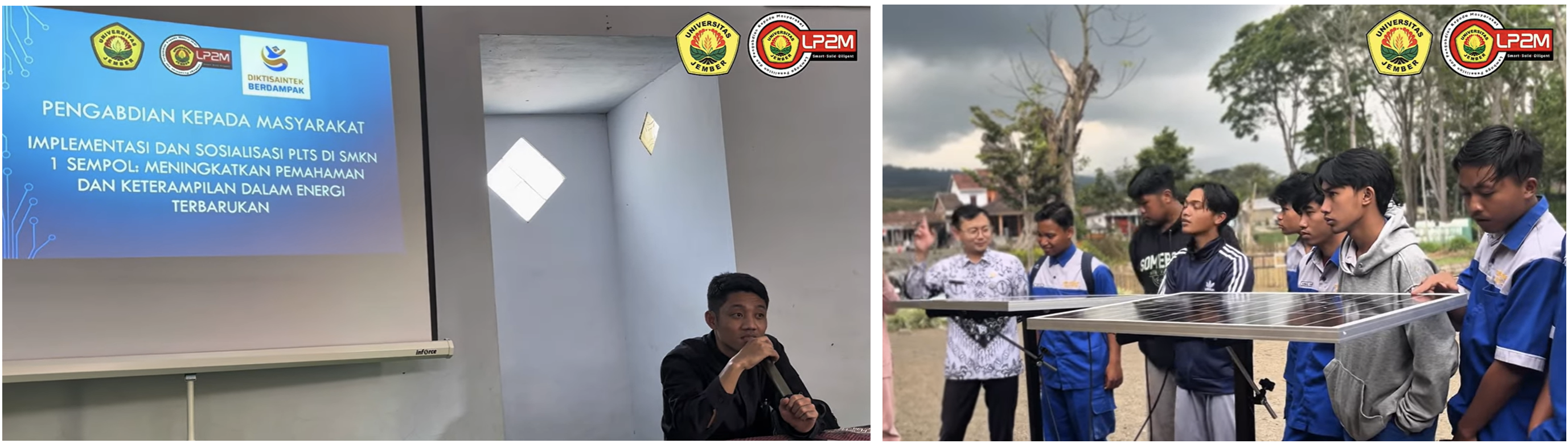
Photo: residents and students beside the biogas digester in Kemiren village, or the solar system at SMKN 1 Sempol.
JEMBER – Universitas Jember (UNEJ) is taking clean-energy technology directly to communities. In 2025, UNEJ built five clean-energy facilities with residents of Lumajang, Bondowoso, Jember and Banyuwangi regencies. Each facility was built alongside training for residents on how the technology works, how to maintain it and why switching to clean energy matters.
In Darungan hamlet, Kedawung village, Padang district, Lumajang, UNEJ and the Al-Barokah farming and livestock group installed a solar-powered submersible water pump. In Sumberwringin village, Bondowoso, UNEJ built a micro-hydro power plant with a local tourism operator, using the flow of a nearby river.
Livestock and farm waste is also turned into energy. In Lojejer village, Wuluhan district, Jember, UNEJ built a cattle-manure biogas reactor with livestock farmers and coconut-sugar producers. In July 2025, a team from UNEJ's Faculty of Engineering installed a geomembrane biogas digester fed with coconut husk in the Osing customary village of Kemiren, Glagah district, Banyuwangi, within the Ijen UNESCO Global Geopark. The work in Kemiren began with an awareness session involving livestock farmers, community leaders and students.
UNEJ is also reaching young people. At SMKN 1 Sempol, a vocational secondary school in Ijen district, Bondowoso, UNEJ installed a 200 Wp micro solar power system and ran renewable energy sessions for students and teachers, so the panels also serve as a hands-on learning tool.
The programme is funded by community service grants from the Ministry of Higher Education, Science and Technology (DPPM and DRTPM) and by UNEJ's Partner Village and Early-Career Community Service grants, so it is provided free of charge to residents. In addition to these five facilities, UNEJ recorded 25 sustainability-themed community service projects involving students in 2025.
Clean-energy facilities built with communities, 2025
Facility | Location | Partner | Energy source |
Solar-powered submersible pump | Kedawung, Padang, Lumajang | Al-Barokah farming and livestock group | Solar |
Micro-hydro power plant | Sumberwringin, Bondowoso | Local tourism operator | River flow |
Biogas reactor | Lojejer, Wuluhan, Jember | Livestock farmers and coconut-sugar producers | Cattle manure |
Geomembrane biogas digester | Kemiren, Glagah, Banyuwangi | Government of the Osing customary village of Kemiren | Coconut husk |
200 Wp micro solar system | SMKN 1 Sempol, Bondowoso | SMKN 1 Sempol | Solar |
Supporting documents
▪ https://www.youtube.com/watch?v=Wb6xmnzgVGY
SDG 7 · Indicator 7.4.2 · 100% renewable energy pledge
UNEJ Promotes the Shift to Renewable Energy from Campus to Village
UNEJ's Net Zero Emissions 2060 commitment is carried to a national competition, schools and partner villages.

Photo: competing vehicles at KMHE 2025 on the UNEJ campus circuit,
JEMBER – Universitas Jember (UNEJ) is not only cutting emissions on campus but also actively encouraging the wider public to switch to renewable energy. This commitment rests on the Net Zero Emissions 2060 target set out in UNEJ's environmental strategy. Its main step is a phased expansion of solar power to 500 kWp by 2030.
UNEJ has taken this commitment to the national stage. On 23–26 October 2025, UNEJ hosted the 2025 Energy-Efficient Car Competition (Kontes Mobil Hemat Energi, KMHE), organised by the Directorate of Learning and Student Affairs of the Ministry of Higher Education, Science and Technology. Under the theme "Saving Energy for Indonesia's Future", the competition brought 68 teams from 44 universities across Indonesia to the UNEJ campus circuit. The teams competed with vehicles powered by electricity, ethanol, petrol and diesel. The electric and ethanol classes showed the public vehicles that can run on renewable energy, in line with the competition's aim of strengthening national energy security.
UNEJ is also driving the energy transition directly in communities. In 2025, UNEJ built five renewable energy facilities with residents and schools in four regencies: a solar-powered water pump in Kedawung (Lumajang), a micro-hydro plant in Sumberwringin (Bondowoso), a biogas reactor in Lojejer (Jember), a geomembrane biogas digester in the Osing customary village of Kemiren (Banyuwangi) and a 200 Wp micro solar system at SMKN 1 Sempol (Bondowoso). Each installation came with sessions for residents, students and teachers on the benefits of renewable energy and how to manage it independently. In this way, partner villages and schools can reduce their dependence on fossil fuels.
Through a national competition, schools and partner villages, UNEJ carries the same message: renewable energy is the future, and universities have a role in accelerating the shift to fully renewable energy.
Activities promoting renewable energy beyond the campus, 2025
Activity | Date | Audience | Format |
KMHE 2025 (host) | 23–26 Oct 2025 | Students and universities from across Indonesia | Competition for electric, ethanol, petrol and diesel vehicles |
200 Wp micro solar system and awareness sessions | 2025 | Students and teachers at SMKN 1 Sempol | Solar installation and renewable energy education |
Kemiren geomembrane biogas | July 2025 | Residents of the Osing customary village of Kemiren | Installation and awareness sessions |
Solar pump, micro-hydro, Lojejer biogas | 2025 | Farming and livestock groups, tourism operator, livestock farmers | Installation and training |
Supporting documents
SDG 7 · Indicator 7.4.3 · Energy efficiency services for industry
From Cassava Peel to Coffee Husk, UNEJ Helps Local Businesses Turn Waste into Fuel
Four alternative-fuel technologies made from agro-industrial waste were developed with local businesses and producer groups in Jember in 2025.
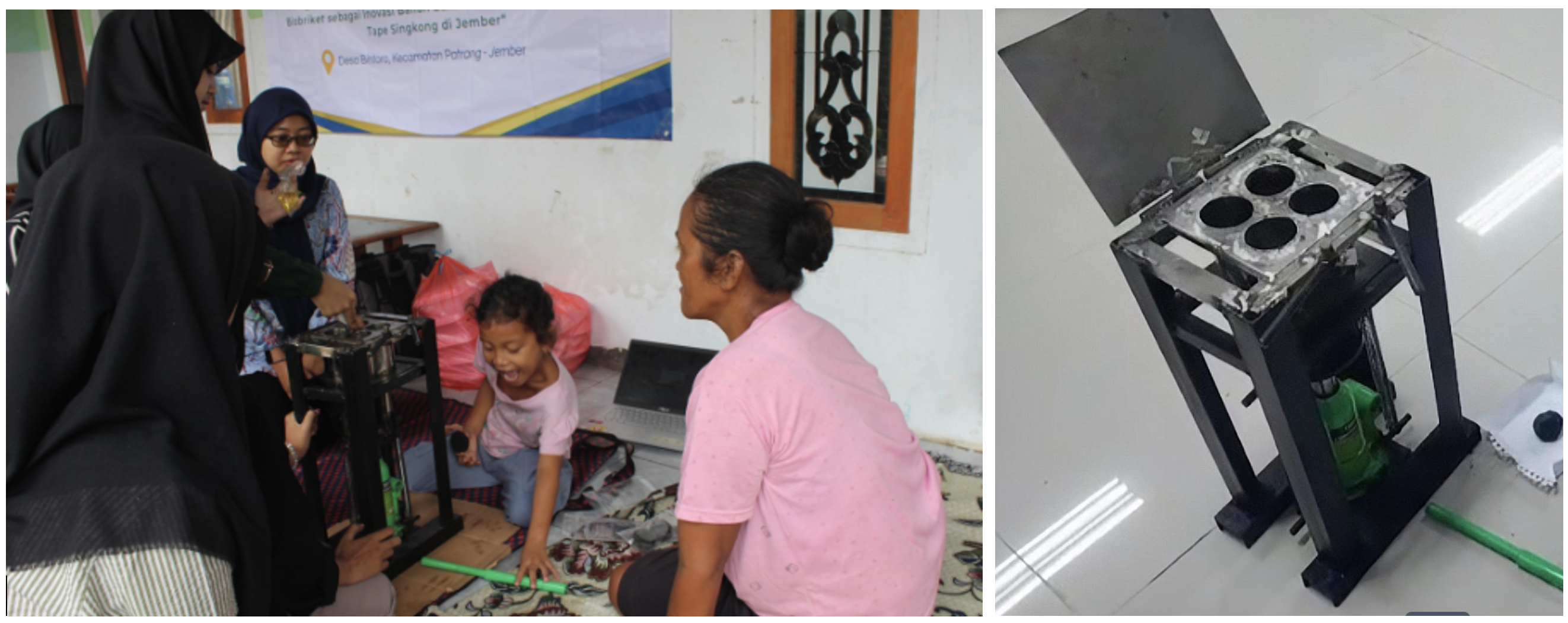
Photo: cassava-peel briquettes produced with a home-based fermented-cassava (tape) business in Jember.
JEMBER – Universitas Jember (UNEJ) helps local businesses turn their production waste into energy. In 2025, UNEJ researchers worked with home industries and producer groups in Jember Regency to develop alternative fuels from agro-industrial waste, enabling these businesses to use less fossil fuel while reducing waste.
With a home-based producer of tape (fermented cassava) in Jember, UNEJ converted cassava peel, the main waste from tape production, into fuel briquettes. In Kepanjen village, Gumukmas district, farm waste was processed into biomass pellets. In Pace village, Silo district, coffee husks were gasified to produce syngas, an alternative fuel gas.
In Lojejer village, Wuluhan district, UNEJ built a facility that turns cattle manure into biogas with livestock farmers and coconut-sugar producers. For the sugar producers, biogas provides an alternative source of heat for boiling palm sap, a process that has traditionally consumed large amounts of fuel.
All four technologies grew out of university research applied directly with partners. Feedstocks were chosen to match the waste each business produces, which secures supply and allows partners to continue using the technology independently.
Waste-to-fuel technologies for local businesses, 2025
Technology | Feedstock | Partner and location |
Fuel briquettes | Cassava peel | Home-based tape producer, Jember |
Biomass pellets | Farm waste | Kepanjen village, Gumukmas, Jember |
Syngas (gasification) | Coffee husk | Pace village, Silo, Jember |
Biogas | Cattle manure | Livestock farmers and coconut-sugar producers, Lojejer village, Wuluhan, Jember |
Supporting documents
SDG 7 · Indicator 7.4.4 · Clean energy technology policy development
Ministry of Villages Partners with UNEJ to Develop Climate-Resilient Villages
Through the UNEJ Climate Change Conference 2025, UNEJ offered clean-energy technology for the national climate-resilient village programme.
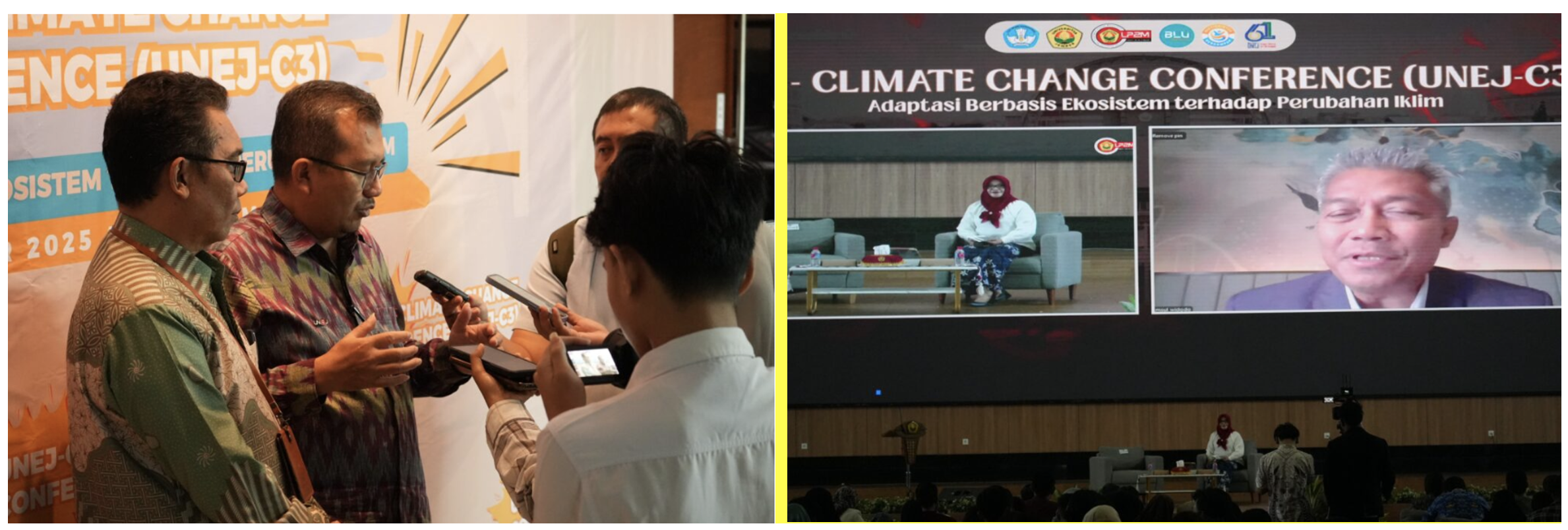
Photo: a session of the UNEJ Climate Change Conference (UNEJ-C3) 2025 with representatives of the Ministry of Villages.
JEMBER – The Ministry of Villages and Development of Disadvantaged Regions (Kemendes PDT) has asked Universitas Jember (UNEJ) to become a centre for developing climate-resilient villages. The request was made by the Directorate General for the Acceleration of Development of Disadvantaged Regions (Ditjen PPDT) at the UNEJ Climate Change Conference (UNEJ-C3), organised by LP2M's Centre for Environment and Disaster Studies in November 2025.
At the conference, the ministry encouraged UNEJ to develop studies on climate-resilient villages and to open a climate-resilient village training centre through LP2M. The studies and training centre are expected to build village capacity, raise residents' awareness, develop the local economy and open up international cooperation, so that villagers are better able to cope with climate change. The request is in line with the ministry's preparation of a national strategy for climate-resilient villages, part of the 2025–2029 National Medium-Term Development Plan (RPJMN) goal of increasing the number of climate-resilient villages.
UNEJ brings practical experience to this national agenda. Climate resilience in villages is not only about adaptation but also about mitigation through a shift to clean energy. In 2025, UNEJ built five renewable energy facilities with communities in four regencies: a solar-powered water pump in Kedawung (Lumajang), a micro-hydro plant in Sumberwringin (Bondowoso), a cattle-manure biogas reactor in Lojejer (Jember), a geomembrane biogas digester in the Osing customary village of Kemiren (Banyuwangi) and a micro solar system at SMKN 1 Sempol (Bondowoso). UNEJ also develops alternative fuels from agro-industrial waste, such as briquettes, biomass pellets, coffee-husk syngas and biodiesel from waste cooking oil.
At the conference, UNEJ recommended that village-scale renewable energy technologies, such as biogas, solar power and micro-hydro, be included in the national strategy for climate-resilient villages.
As a follow-up, LP2M is preparing to support villages preparing to join the Climate Village Programme (ProKlim), combining ecosystem-based adaptation with the use of clean-energy technology in villages.
UNEJ contributions to clean-energy and village climate-resilience policy
Level | Institution | Type of support | Date |
National | Ministry of Villages (Ditjen PPDT) | Asked to become a centre for climate-resilient village studies and training through UNEJ-C3 | November 2025 |
Local (village) | Government of the Osing customary village of Kemiren, Banyuwangi | Application of geomembrane biogas technology as a village energy model | July 2025 |
Supporting documents
▪ Director General of PPDT encourages UNEJ to study climate-resilient villages (unej.ac.id)
▪ Ministry of Villages asks UNEJ to become a centre for climate-resilient village development (ANTARA)
▪ UNEJ holds the UNEJ Climate Change Conference (RRI)
SDG 7 · Indicator 7.4.5 · Assistance to low-carbon innovation
UNEJ Supports 17 Low-Carbon Start-Ups, from Research Labs to Student Businesses
Start-ups led by lecturers and students turn waste into valuable products and replace synthetic chemicals.

Photo: products of UNEJ-supported start-ups
JEMBER – Universitas Jember (UNEJ) supported 17 start-ups contributing to a low-carbon economy in 2025: six research-based start-ups led by lecturers and eleven student start-ups. Most turn agricultural and household waste into valuable products or offer alternatives to fertilisers, pesticides and plastics whose production generates high emissions.
Through its Innovation-Based Start-up Research Programme, UNEJ funded six research-based start-ups with a total of IDR 151.05 million, an average of about IDR 25.2 million each. All have been supported to early operation and hold business registration or operating documents. DuriCarb turns durian-peel waste into activated carbon for water purification. SoyaFlow Innovations converts soybean waste into an eco-friendly detergent. KOMPOS-MAG+ develops a bio-organic fertiliser, and another start-up produces a biopesticide based on the fungi Beauveria bassiana and Metarhizium anisopliae as an alternative to chemical pesticides.
Among students, UNEJ supports eleven green start-ups that grew out of the Student Creativity Programme (PKM) and campus student units. Secangkang Pot turns eggshells and rice-husk charcoal into biodegradable plant pots. PaperComboo makes biodegradable packaging from bamboo-leaf waste as an alternative to plastic. Kompos-In and the UNEJ Waste Bank process organic and inorganic waste, reducing methane emissions from landfill. SeKa recycles cathodes from used batteries into polishing products. In agriculture and aquaculture, POC Jakaba Probiotik and KASBIONITA produce bio-organic fertilisers, Myco Met provides a biological pest-control agent, PINO makes fish feed from water lettuce and pond waste, Exterto makes a mosquito-repellent gel from cocoa pod husks, and Bioclare purifies water using moringa seeds. Start-ups emerging from PKM receive mentoring and support from the university through seminars and workshops.
Beyond supporting start-ups, UNEJ is developing low-carbon technologies with the potential to become new businesses, including biodiesel from waste cooking oil, now used in campus vehicles, and electric vehicle prototypes.
Research-based start-ups funded by UNEJ, 2025
Start-up / product | Faculty | Funding (IDR) |
DuriCarb: activated carbon from durian-peel waste | Engineering | 22,562,500 |
SoyaFlow Innovations: detergent from soybean waste | Engineering | 19,712,500 |
KOMPOS-MAG+: bio-organic fertiliser | Agriculture | 22,325,000 |
UV-protected fungal biopesticide | Agriculture | 24,462,500 |
ZPT 4+: plant growth regulator | Agriculture | 26,837,500 |
AgriMeterV2: IoT and AI-based tree-stem measuring device | Agricultural Technology | 35,150,000 |
Total |
| 151,050,000 |
Supporting documents
SDG 7 · Indicator 7.5.1 · Low-carbon energy use
Solar Panels at Four Sites Generate 6,146 kWh as UNEJ Prepares to Expand to 500 kWp
UNEJ's low-carbon energy comes from solar power and biodiesel made from waste cooking oil, with a solar roadmap to 2030.
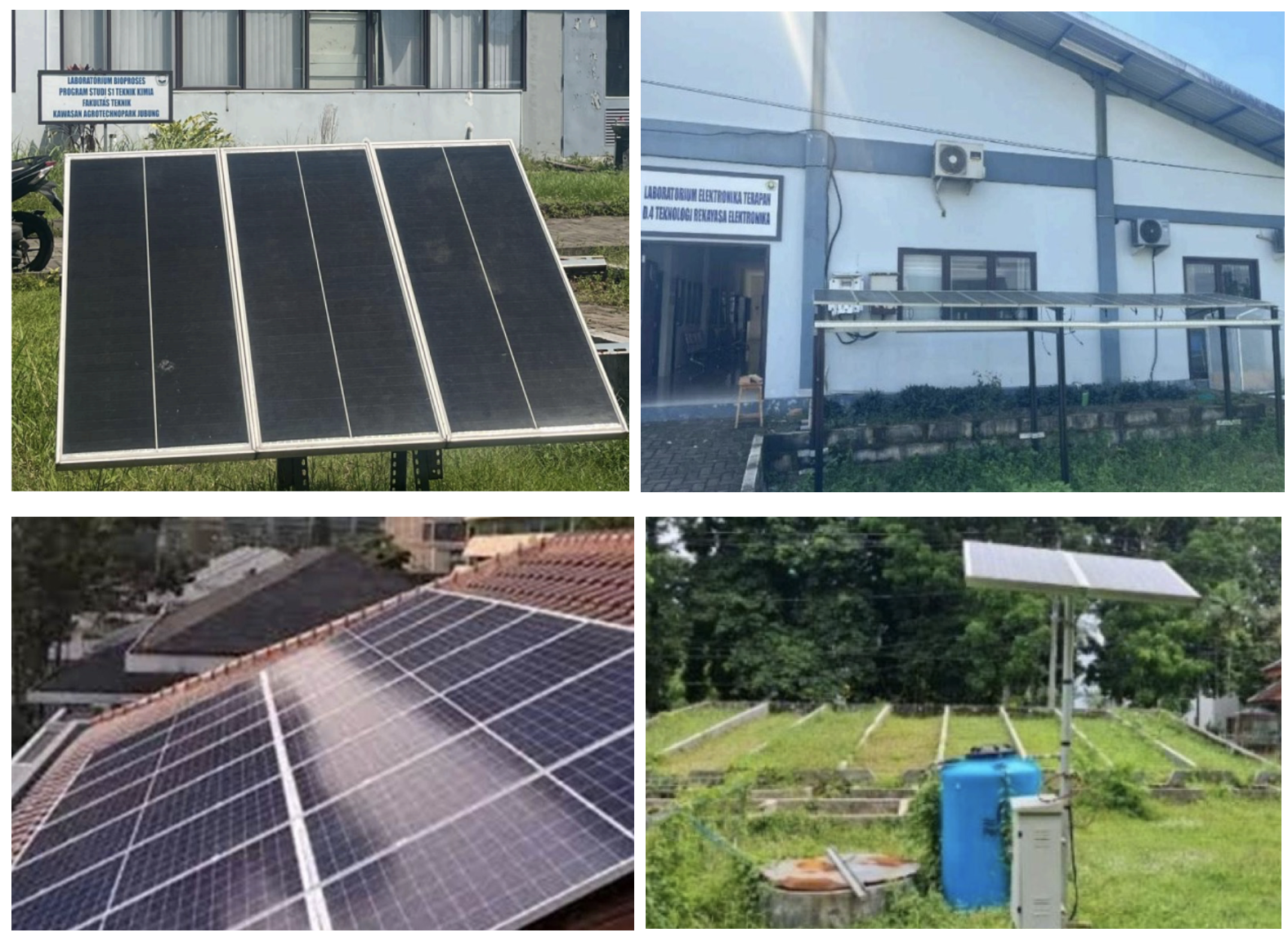
Photo: solar panels at the Jubung Agrotechnopark, the Faculty of technic, and on the rooftops of the CDAST building and the Rectorate.,
JEMBER – Universitas Jember (UNEJ) uses two low-carbon energy sources on campus: solar power and biodiesel made from waste cooking oil. In 2025, solar power systems (PLTS) installed at four sites generated about 6,146 kWh, or 22.1 gigajoules of electricity.
The four solar systems are located at the Jubung Agrotechnopark, the Faculty of technic, and on the rooftops of the CDAST building and the Rectorate. Output is recorded from the kWh meter installed on the inverter of each system.
Of total campus energy use of 38,893.9 GJ, low-carbon energy from solar power accounted for only 0.06%; almost all of the rest came from PLN electricity of 10,731,825 kWh, as billed in 2025. To raise this share, UNEJ has drawn up a phased solar expansion roadmap: adding 50 kWp in 2025–2026 to reach about 0.7% of electricity use, increasing to 200 kWp in 2027–2028, or about 2.7%, and reaching 500 kWp by 2030, or about 6.8%.
The roadmap is part of the Energy Use Efficiency Standard (GC-05), which targets at least three renewable energy sources and a 25% renewable share of consumption, and part of UNEJ's commitment to Net Zero Emissions by 2060. At 500 kWp, campus solar power is expected to avoid about 479 tonnes CO₂e a year.
UNEJ low-carbon energy and solar roadmap
Stage | Solar capacity | Estimated output | Share of campus electricity |
2025 (4 sites) | 40 kWp | 6,146 kWh (22.1 GJ) | 0.06% |
Phase 1 (2025–2026) | +50 kWp | 72,500 kWh | 0.7% |
Phase 2 (2027–2028) | 200 kWp | 290,000 kWh | 2.7% |
2030 target | 500 kWp | 725,000 kWh | 6.8% |
Supporting documents