
SDG 6 Universitas Jember 2025
Universitas Jember’s 2025 SDG 6 report covers campus water consumption tracking, wastewater treatment and reuse, free drinking water stations, water-saving buildings and landscaping, and clean water programmes with local communities and governments.
Water volume taken in (treated water / water withdrawn) = 100,548 cubic meters
Campus population (students + lecturers + staff) = 44,342 people
6.2.1 Tracking Water Consumption
Jember University (UNEJ) measures the total volume of water used across the campus. This is the basis for sustainable water management. Tegalboto Campus gets its water from deep wells (groundwater) and the PDAM Tirta Pandalungan network. The Household Unit records the incoming water through installed water meters. The recorded volume is 100,548 m³. It is distributed to the Rectorate, faculties, laboratories, dormitories, and public facilities.
The data is analyzed every year. It is used to calculate average water use per person and to detect leaks in the pipe network. The meter results also help university leaders write water efficiency policies. This step shows UNEJ's commitment to SDG 6, which is to ensure the availability and sustainable management of clean water and sanitation. The table below shows data for the last three years.
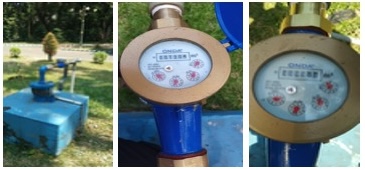
Figure 1. Water meter
6.3 Water Use and Management
6.3.1 Wastewater Treatment
UNEJ Treats Campus Wastewater at Its Wastewater Treatment Plant
Jember University (UNEJ) runs an integrated water pollution control system to protect water resources and support sustainable campus operations. The system covers collecting, treating, and reusing wastewater, monitoring water quality, and involving the whole campus community.
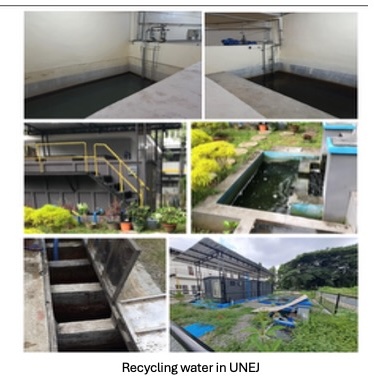
Wastewater from laboratories, canteens, dormitories, lecture buildings, and other campus facilities is collected and treated at the Wastewater Treatment Plant (WWTP), which can handle 156 cubic meters per day. In 2025, the plant treated about 37,440 cubic meters of wastewater.
Controlling Pollution at the Source
To stop pollutants from entering the drainage system, the university has installed grease traps in 8 campus canteens. These grease traps are cleaned once a year.
Water Quality Monitoring
The university tests the treated wastewater every month at 6 sampling points. The parameters measured are pH, BOD, COD, TSS, oil and grease, and total coliform. The results are compared with the national standards in the Regulation of the Ministry of Environment and Forestry No. P.68 of 2016 on Domestic Wastewater Quality Standards.
Reusing Treated Water
As part of its sustainable water management strategy, the university reuses treated water to irrigate gardens and maintain green open spaces. Each year, about 30,148 cubic meters of treated water are used to water green areas around the campus.
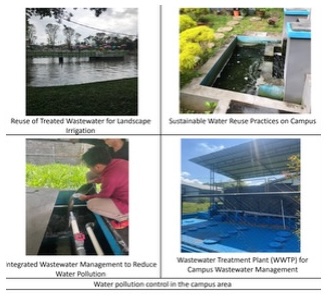
6.3.2 Preventing Water System Pollution
UNEJ Applies Procedures to Prevent Water Pollution on Campus
Jember University has procedures to stop polluted water from entering the campus water system. Every laboratory must collect chemical waste and liquid hazardous waste (B3 waste) separately and hand it over to the Integrated Waste Management Service Unit (UPA PL2T). This procedure is set out in the Jember University Green Campus Standard, which also requires waste containers to be labeled and waste volumes to be recorded every month.
Jember University also operates a water treatment facility that produces water for reuse. The raw water for this facility comes from ablution (ablution) water and air conditioner (AC) condensate.
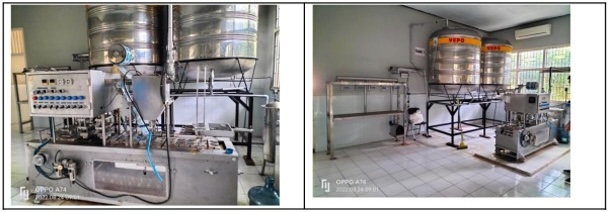
6.3.3 Free Drinking Water
UNEJ Provides Free Drinking Water for Students, Staff, and Visitors
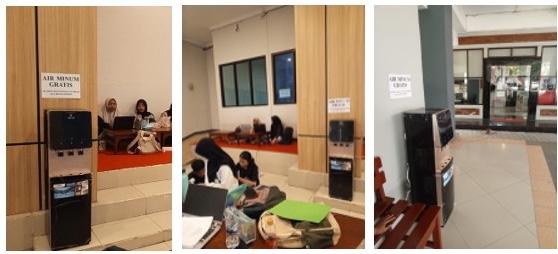
UNEJ provides free drinking water through 329 free water stations. They are spread across the Rectorate, the central library, faculties, and public areas on campus. Students, lecturers, education staff, and visitors can use them at no cost. Each unit can supply about 19 liters of drinking water per day. It means that the total capacity reaches 6,251 liters per day.
The water quality is checked every three months by the UNEJ Wastewater Treatment and Integrated Laboratory Unit (UPA). The check follows Minister of Health Regulation No. 2 of 2023. The program also encourages the campus community to bring their own bottles. This reduces single-use plastic bottle waste. So, free drinking water supports the community's health and the plastic-free campus program.
6.3.4 Water-Saving Building Standards
New UNEJ Buildings Follow Water-Saving Standards
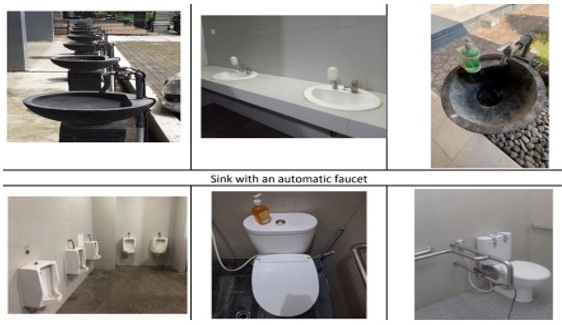
UNEJ uses green building standards to reduce water use in new and renovated buildings. The standard is Minister of Public Works and Housing (PUPR) Regulation No. 21 of 2021 on the Performance Assessment of Green Buildings. It can be seen in the sensor taps, dual-flush toilets, and water-saving urinals in UNEJ buildings.
Besides water-saving fixtures, new buildings have rainwater storage systems and infiltration wells. They reduce surface runoff. The university's planning division makes sure every building plan includes a calculation of water needs and efficiency. This policy lowers building water consumption by up to 15% compared to old buildings.
References:
6.3.5 Water-Saving Landscaping
UNEJ Plants Trees and Drought-Resistant Plants in the Campus Landscape
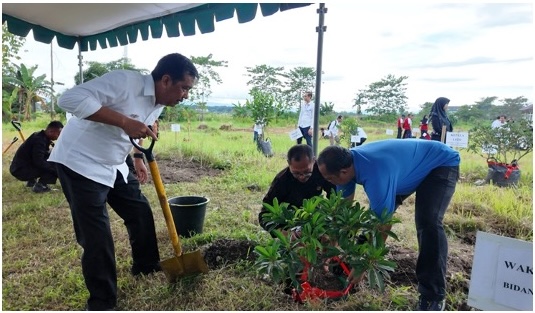
UNEJ designs its campus landscape with plants that need little water. On 18 November 2025, UNEJ planted 530 trees at Jubung Campus. Some of them were planted to congratulate newly inaugurated professors. This tradition adds green cover and strengthens water catchment areas.
Drought-resistant plants reduce the need for watering, especially in Jember's dry season. Gardens are watered in the morning or evening to reduce evaporation. The water comes from treated IPAL water. In this way, Tegalboto Campus stays green without putting pressure on the clean water supply.
6.4 Water Reuse
6.4.1 Water Reuse Policy
UNEJ Sets a Policy to Maximize Water Reuse
Jember University has a policy to maximize water reuse across the entire campus. This policy is part of the Jember University Green Campus Standard, which was established in 2018 and reviewed in 2020. The policy requires every work unit to use treated water from the Wastewater Treatment Plant (WWTP), rainwater, and air conditioner condensate for non-drinking purposes.
The reused water is used to water gardens, clean parking areas, and fill campus ponds and reservoirs (embung). Through this policy, UNEJ reduces its dependence on groundwater, which is becoming increasingly limited.
6.4.2 Measuring Water Reuse
UNEJ Measures the Volume of Reused Water on Campus
UNEJ measures the volume of reused water to evaluate its water management policy. The measurement uses water meters on the IPAL outlets and rainwater storage tanks at Tegalboto Campus. These are the IPAL of the Dental and Oral Hospital (RSGM), the IPAL of the Faculty of Medicine, and the rainwater tanks at the Rectorate, Soetardjo Building, and Joint Lecture Building (GKB). In 2025, the volume of reused water reaches 18,600 m³. It is about 18.4% of the total water used on campus.
The data is reported every quarter to university leaders through the Green Campus Management Unit. It is also included in the UI GreenMetric World University Rankings report and the UNEJ SDGs Report (SDG 6 and SDG 12). The results are the basis for setting next year's reuse target, which is 20% in 2026. This process keeps the policy measurable and accountable.
6.5 Water in the Community
6.5.1 Water Management Education for the Community
UNEJ Lecturers and Students Educate Residents on Clean Water Management
UNEJ gives local communities a chance to learn good water management. In 2025, a UNEJ community service team, led by university leaders, held a water purification training using the filtration method in Trenggalek Regency. Residents, posyandu cadres, and village officials took part.
Participants learned to build a simple water filter from silica sand, gravel, palm fiber (fiber), and activated carbon. Then they tested the water clarity before and after filtering. The team also explained how to protect wells from septic tanks and household waste pollution. Through this activity, residents can provide clean water on their own. They also understand the link between clean water and family health.
References:
https://mojokerto.disway.id/news/read/10266/kolaborasi-kauje-dan-unej-turun-tangan-hadapi-kekerringan-di-5-kabupaten-di-jatim
6.5.3 Water Conservation Support Outside Campus
UNEJ Collaborates to Support Spring Water Conservation in East Java
UNEJ supports water conservation outside campus through cooperation with the Pamekasan Regency Government. On 17 July 2025, KKN students and lecturers went to Pamekasan. They built and handed over an FS-UV (Ultraviolet Light Filter) machine, designed by UNEJ researchers. The machine was made because people there often lack clean water. Drilling a well means going 30 to 100 meters deep. The machine has become a reliable help for residents. It also supports spring water conservation in East Java.
Besides planting trees, the team made 535 biopore holes and infiltration wells in residents' settlements. Spring discharge is monitored for every 100 holes. The work was done together with the village water management group. This collaboration widens UNEJ's role in keeping water available for communities upstream and downstream.
6.5.4 Sustainable Water Extraction Technology
UNEJ Uses Sustainable Groundwater Extraction Technology
UNEJ takes water from wells to meet part of the campus needs. To protect the aquifer, UNEJ uses IoT on 50 wells. Extraction follows the rules in Jember Regency, with a limit of 10 m³ per day.
To balance groundwater extraction, UNEJ built 1 reservoir (embung) that returns rainwater to the ground. The environmental management unit checks the groundwater level twice a year. This prevents an excessive drop in the water level. The step keeps a balance between campus needs and the sustainability of water sources for the surrounding community.
References:
6.5.5 Cooperation on Water Security
UNEJ Works with Governments to Strengthen Water Security
UNEJ works with local, regional, national, and global governments on water security. At the local level, UNEJ collaborates with the Jember Regency Government and PDAM Tirta Pandalungan to manage clean water use on campus.
At the national and global level, UNEJ joins KKN projects on clean water management in East Nusa Tenggara Province. UNEJ experts also act as resource persons in writing policy documents, for example the Bedadung watershed (DAS) management plan. This collaboration makes UNEJ a scientific partner in shaping evidence-based water policy.
References:
https://www.kompasiana.com/agustinasetyari2567/6a9f725bed64151a65793563/bukan-sekadar-bangunan-lppm-unej-hadir-bawa-air-dan-harapan-untuk-perempuan?page=all
6.5.6 Promoting Conscious Water Use on Campus
UNEJ Encourages the Campus Community to Use Water Wisely
UNEJ promotes wise water use through the KAMTAB program (Disaster Response Village, or Disaster-Ready Village) in Nogosari Village, Rambipuji District, Jember. The PPK Ormawa team of the Student Executive Board (BEM) of the Faculty of Public Health (FKM) UNEJ launched the program with the Nogosari Village Government. It includes SI-Tunjung/SI-INFO, an IoT-based water level monitoring system. It also includes SI-Larung, which develops aquaponics so water is reused efficiently. Through SI-Rasa, residents learn to sort and process organic waste. It means that waste does not pollute drains and rivers.
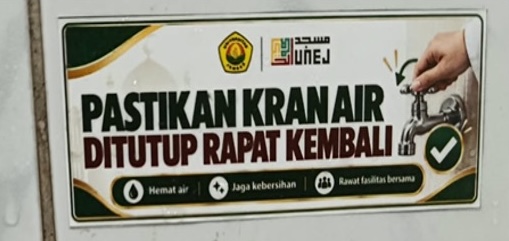
The same spirit is applied on campus. UNEJ has put up 15 stickers and posters that ask people to save water in toilets, ablution areas, and laboratories. The message is also spread through official social media and orientation activities for new students. Through continuous activities in the village and on campus, UNEJ builds a water-saving culture in daily life.
References:
6.5.7 Promoting Conscious Water Use in the Community
UNEJ Innovations Helps Households and Farmers Save Water
On 17 July 2025, a research team from the UNEJ Faculty of Agriculture and Faculty of Engineering introduced the FS-UV (Ultraviolet Filter) machine to residents of Panaguan Village, Proppo District, Pamekasan Regency. The village is dry, so residents struggle to get clean water and to farm. Before designing the machine, the team, led by Dimas B. Zahrosa, S.P., M.P., mapped the village's water potential using a geoelectric test. The FS-UV machine filters water through three tubes. The first has gauze cloth. The second has five types of sand and carbon. The third has an ultraviolet lamp that kills germs. With this technology, residents can use their limited water sources properly and safely for daily needs.
For households in Jember, Rahayu Sri Pujiati, a researcher at the UNEJ Faculty of Public Health, developed activated charcoal from banana tree trunks to clean well water. A trial on residents' wells near the Pakusari landfill (TPA) showed that this charcoal can reduce lead (Pb) in the water. The raw material is abundant and eco-friendly. So, residents can reuse polluted well water without looking for a new water source. The research even attracted Kyoto University researchers and Japanese entrepreneurs to cooperate. Both programs show that UNEJ research gives real benefits for water and food security in Jember and nearby areas.
References: