
SDG 2 Universitas Jember 2025
Universitas Jember’s 2025 SDG 2 report covers food waste monitoring, free meals for students and staff, affordable and vegetarian canteen options, knowledge transfer to farmers, and procurement that prioritises campus-made products.
2.2.1 — Measurement of Food Waste
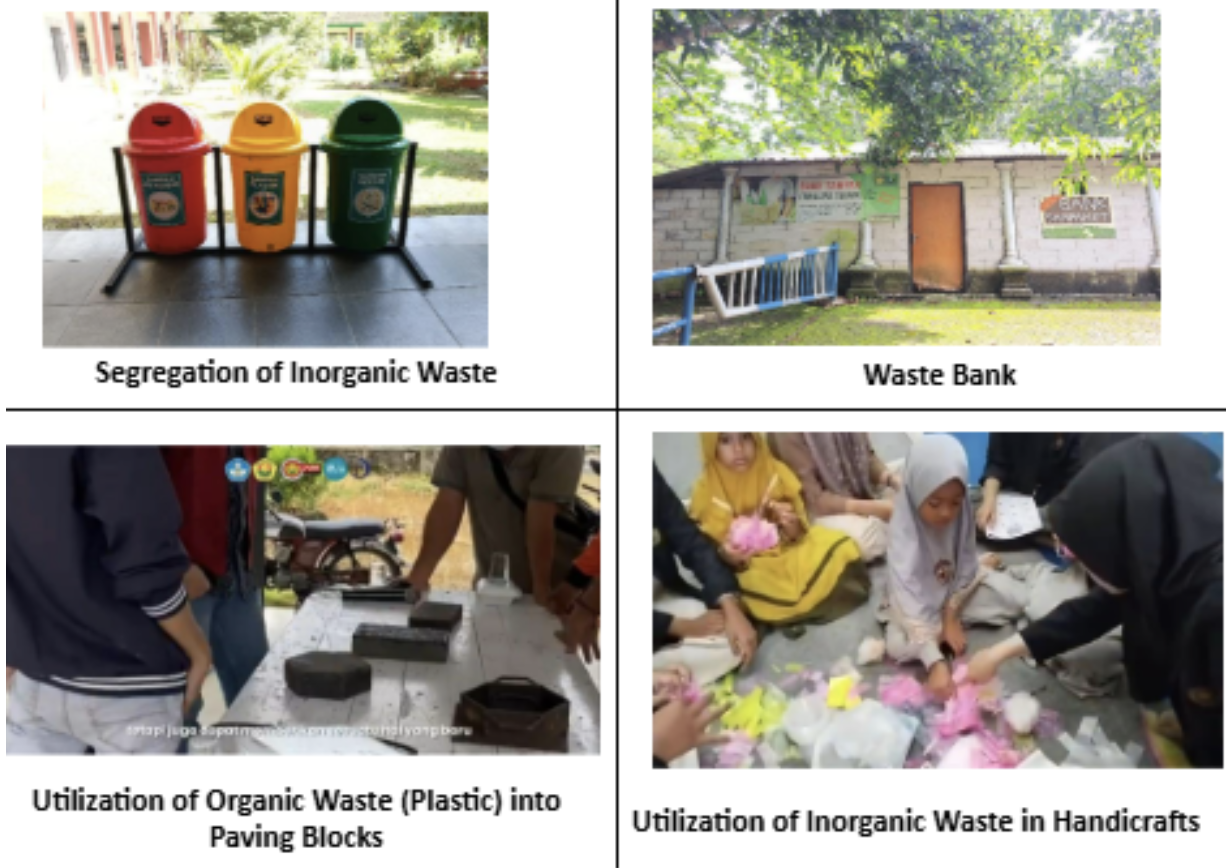
Jember University (UNEJ) has undertaken research and campus sustainability initiatives related to waste generation, waste composition, and waste management within its academic environment. These activities provide an important foundation for understanding food waste generated by campus food services, including canteens and other food-serving facilities. Food waste measurement is particularly important for identifying the amount of edible food and food-related materials discarded during preparation, distribution, and consumption. Reliable measurement data can help universities identify the main sources of waste, evaluate existing management practices, and develop targeted strategies to reduce unnecessary food disposal.
The study reported an average total waste generation of 11.10 kilograms per day at the Faculty of Engineering and 13.59 kilograms per day at the Faculty of Agriculture. In terms of volume, the respective figures were 192.0 liters per day and 156.2 liters per day. The research also found that organic and plastic materials accounted for more than 60% of the waste composition. At the Faculty of Agriculture, food leftovers, low-density polyethylene plastic, and greaseproof paper were among the prominent waste components, whereas polyethylene terephthalate plastic and paper were prominent at the Faculty of Engineering. These findings demonstrate the relevance of food-related waste within the broader campus waste stream and provide a baseline for improving waste separation and management practices.
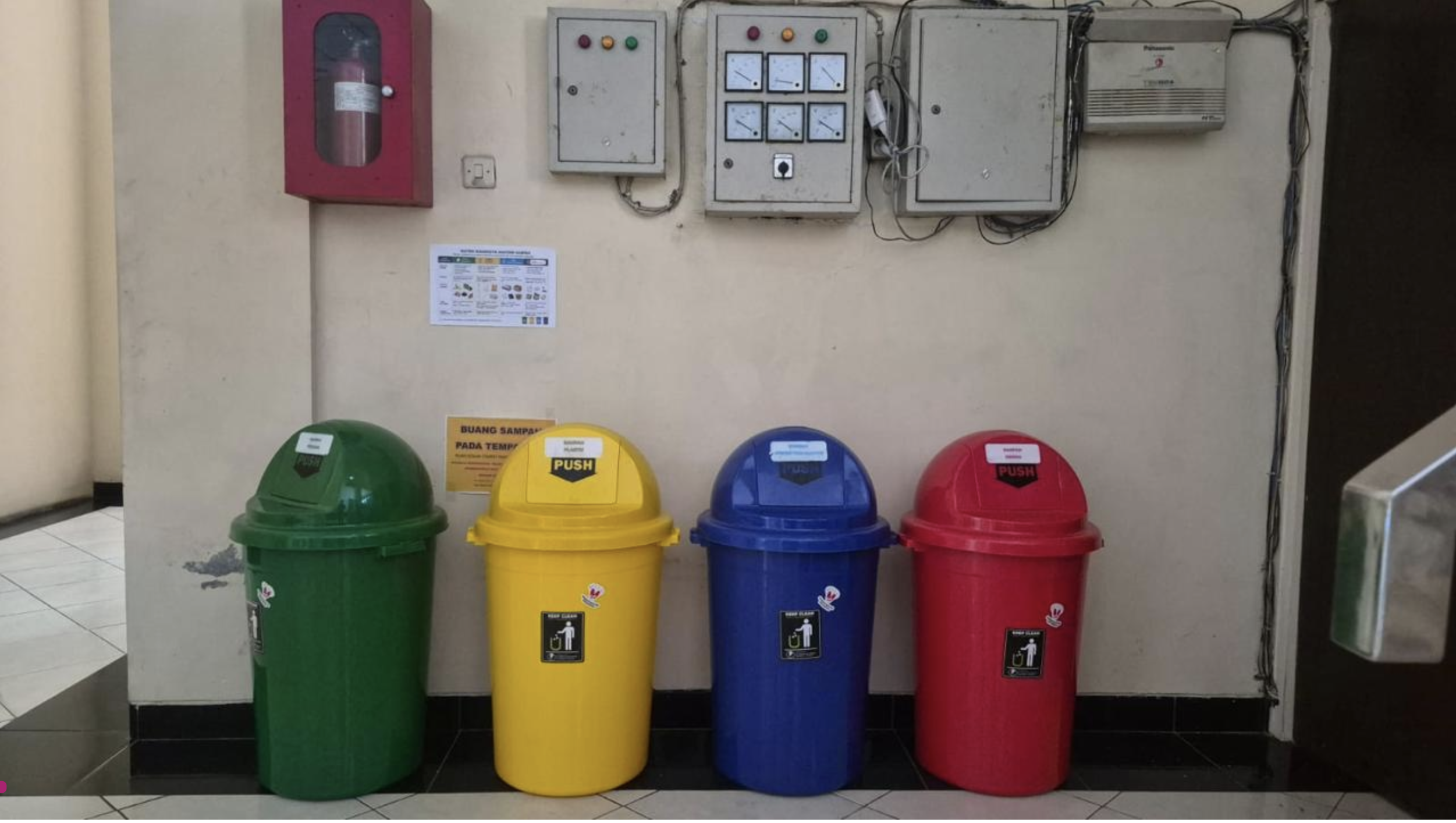
In addition to research activities, UNEJ has promoted waste separation and environmental responsibility through campus sustainability initiatives. Building on these findings, UNEJ is improving waste-separation facilities, introducing clearly labelled containers for organic, inorganic and residual waste, and integrating organic waste into composting, which supports more consistent recording of food waste from campus canteens.
The program describes a dedicated category for food scraps, leftover food ingredients, kitchen waste, and fruit residues. These materials are placed in separate containers and transported for organic waste processing, including composting and maggot cultivation. This example illustrates how food-related waste can be distinguished from garden waste, recyclable materials, and residual waste within a campus waste-management system. While this is a useful institutional comparator, the published description primarily documents separation, collection, and processing arrangements; it should not be interpreted as evidence of routine food waste weighing at UNEJ or, by itself, as evidence that the comparator institution records all food waste by weight.
Through these research findings and campus initiatives, UNEJ continues to build a data-driven approach to measuring and reducing food waste across its food-service operations.
2.3.1 Student Food Insecurity Program and 2.3.2 Student Hunger Interventions
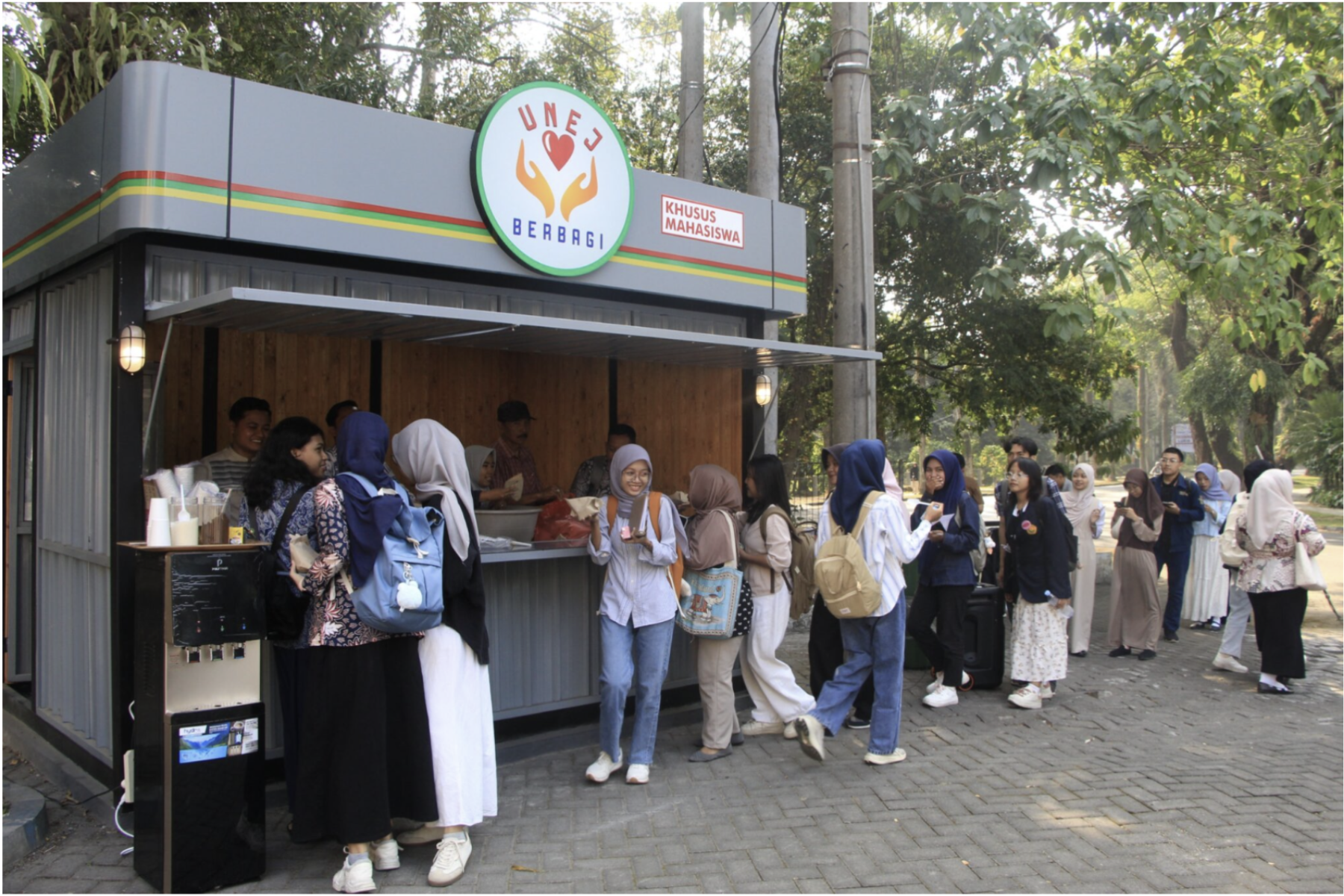
Jember University (UNEJ) has implemented several student food assistance initiatives to improve food accessibility and support the well-being of its academic community. These programs provide free meals to students, particularly those who may face financial constraints or have limited access to regular and nutritious food while pursuing their education. Through regular food distribution and student orientation programs, UNEJ demonstrates its commitment to supporting student welfare and reducing the financial burden associated with daily food expenses.
One of the university's initiatives is UNEJ Share, a food assistance program conducted every Monday and Friday. Through this program, UNEJ distributes approximately 500 packed meals (packaged rice) to students as part of its efforts to provide accessible food on campus. The initiative encourages solidarity and mutual support within the university community while helping students meet their daily food needs. The program is supported by voluntary contributions from lecturers, administrative staff, and other donors, with coordination involving the university's relevant administrative units and student organizations.
In addition to UNEJ Sharing, the university also supports the Blessed Friday program, which provides free meals to students every Friday after congregational prayers at the Al Hikmah Mosque. The program distributes approximately 100–150 packed meals per week using contributions from the mosque's funds. This initiative provides an additional source of food assistance and reflects the involvement of the university's religious and student communities in supporting students who need access to free meals.
UNEJ also provides free meals during student orientation programs. During the university-level Introduction to Campus Life for New Students (PKKMB), free food is provided throughout the six-day program. Similarly, the faculty-level New Student Guidance and Development (PPMB) also provides free meals throughout its six-day implementation period. These initiatives reach approximately 10,000 new students, helping ensure that participants have access to food while taking part in orientation and student development activities.
These food assistance programs provide practical support for students by reducing daily food expenses and improving access to meals during academic and university activities. The combination of regular food distribution through UNEJ Sharing and Friday Berkah, alongside free meals during PKKMB and PPMB, demonstrates that food assistance is incorporated into several aspects of student life at Jember University.
UNEJ also provides student welfare and scholarship opportunities through programs such as Kartu Indonesia Pintar–Kuliah (KIP-K), the Higher Education Affirmation Program (ADik), and other financial assistance schemes. These initiatives complement food assistance programs by helping students from economically disadvantaged backgrounds access higher education and manage their educational expenses.
Overall, Jember University demonstrates its commitment to supporting student food accessibility through several initiatives in 2025, including UNEJ Sharing, Friday Berkah, and free meal distribution during PKKMB and PPMB. With approximately 500 packed meals distributed through UNEJ Sharing, 100–150 meals provided through Friday Berkah each week, and free meals reaching approximately 10,000 new students during orientation programs, these initiatives represent meaningful institutional and community-based efforts to support student well-being and food accessibility. These programs reflect UNEJ's sustained commitment to ensuring that no student has to study on an empty stomach.
2.3.3 Sustainable Food Choices
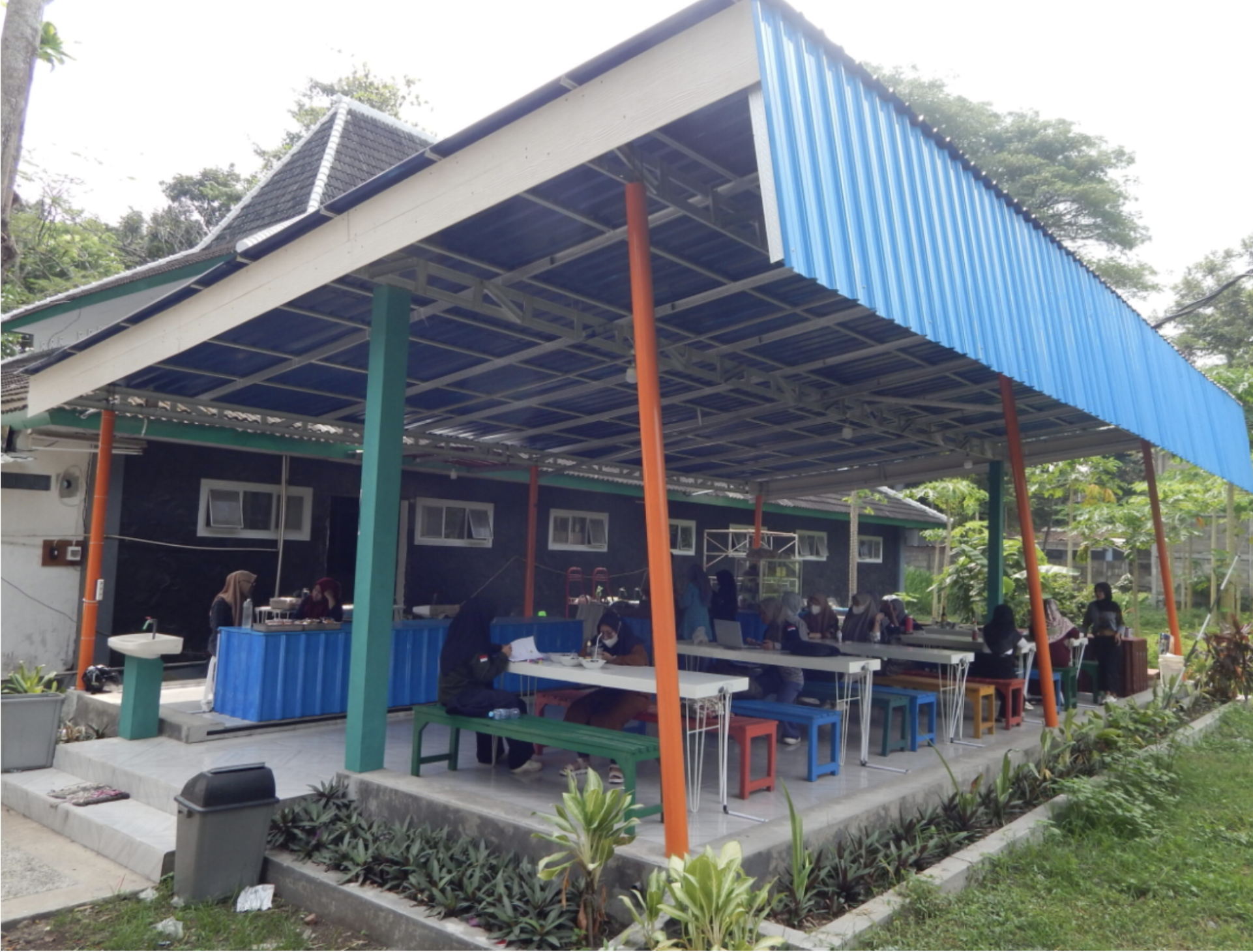
Jember University (UNEJ) has identified the diversification of food options, including healthy and vegetarian meals, as part of its strategy for developing campus food services. Through its Business Services Agency (BLU) development strategy for 2025–2029, the university outlines plans to provide varied food options for the campus community, including healthy menus, vegetarian meals, and products made from local ingredients. This strategy establishes a direction for expanding food choices within UNEJ's cafeteria and canteen services.
In addition to its canteen development plans, UNEJ has supported food innovation involving plant-based ingredients. An official university article, "Can be Adopted by MSMEs, FTP UNEJ Shows Off Dozens of New Innovation Products Made by Students", describes student-developed food products, including vegan dim sum made with pak choy, edamame, and oyster mushrooms, as well as vegan shredded meat made using jackfruit stem. These examples demonstrate UNEJ students' involvement in developing plant-based food alternatives.
Members of the Jember University (UNEJ) community have little difficulty finding plant-based food on campus. Of the 77 canteen tenants operating across UNEJ's faculties, the central library, and the Vocational Campus, 36 tenants, or nearly half, include vegetarian dishes on their daily menus. Because these tenants are spread across academic buildings rather than concentrated in a single food court, students, lecturers, administrative staff, and visitors can find vegetarian options close to where they study and work, without having to travel across campus or bring food from outside.
Most of the vegetarian dishes served on campus come from East Javanese culinary traditions that have long relied on vegetables, legumes, tofu, and tempeh as main ingredients. Gado-gado and ketoprak combine boiled vegetables, tofu, and rice cakes with peanut sauce, while nasi pecel serves rice with blanched vegetables and a spiced peanut dressing. Sayur lodeh and vegetable asem are vegetable soups cooked in coconut milk and tamarind broth, respectively, and urap mixes steamed vegetables with seasoned grated coconut. Tumpang pecel, a specialty of the Kediri and Jember region, uses fermented tempeh as the base of its sauce. These dishes draw on ingredients that are widely grown and sold in East Java, which makes them affordable, familiar to most of the campus community, and less dependent on long supply chains or animal-based products.
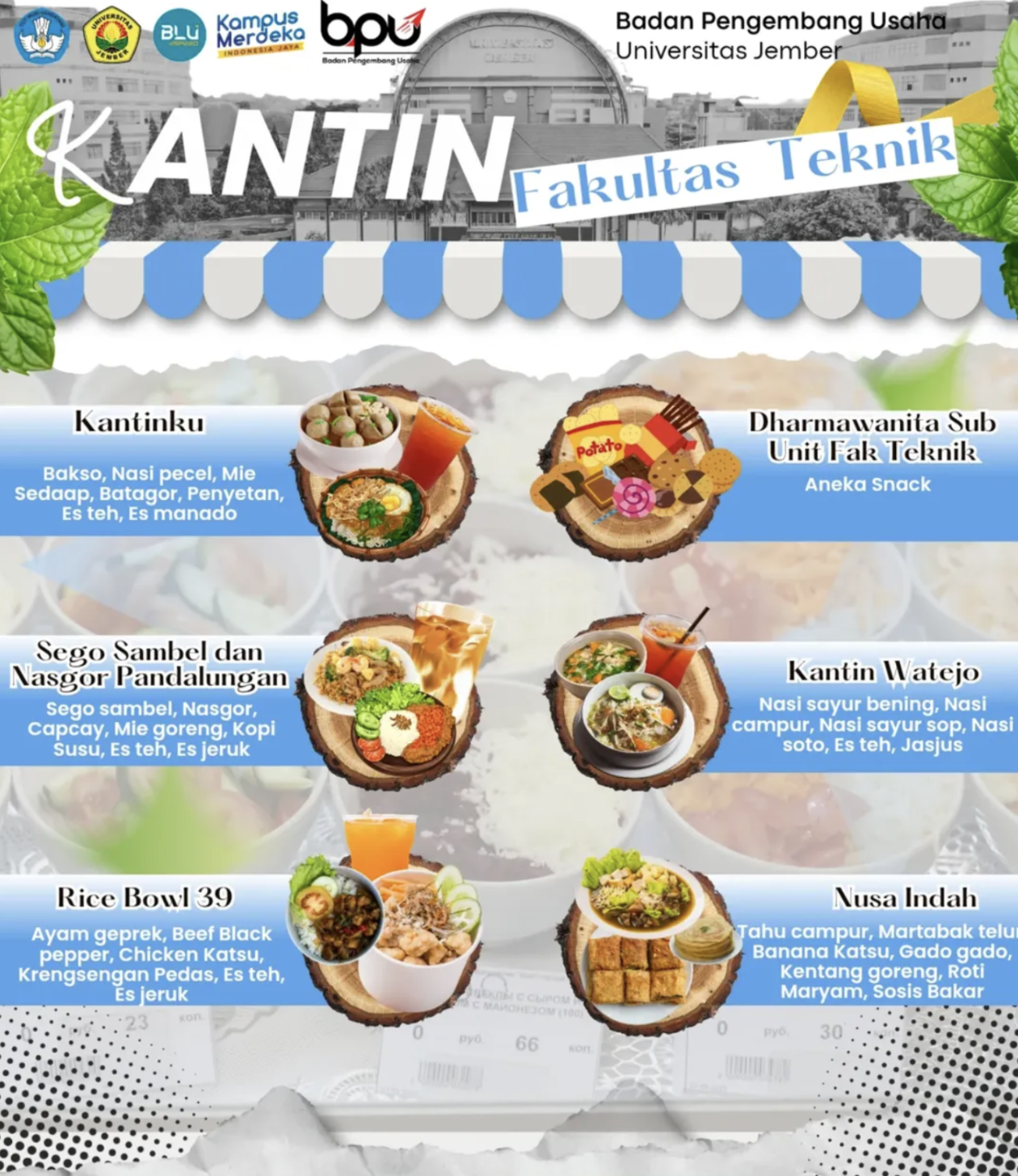
Plant-based options are available in almost every faculty, and each faculty offers its own variations. At the Faculty of Agriculture, Kantin Bu Edi serves nasi pecel, vegetable clear (a clear vegetable soup), and a range of tofu and tempeh dishes, while Dapur QiQi adds to the choices available in the same area. At the Faculty of Economics and Business, Rengganis Culinary offers gado-gado, ketoprak, and nasi pecel. At the Faculty of Teacher Training and Education, Kantin Bunda Leha serves nasi corn urap-urap, a traditional dish that replaces rice with corn as the staple and pairs it with seasoned vegetables, while Nasi Pecel Elmarom provides another option for nasi pecel and gado-gado.
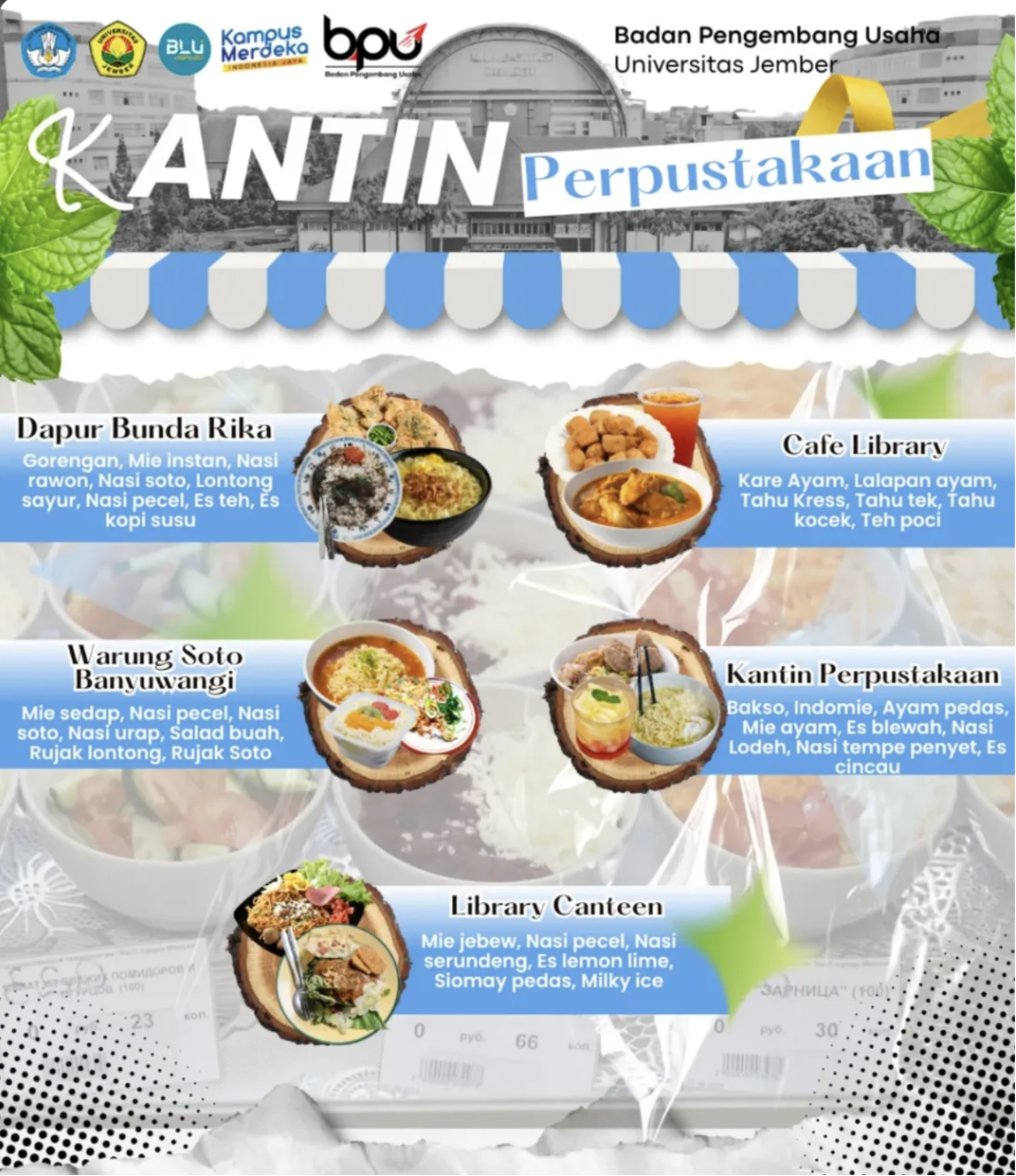
The same pattern can be seen elsewhere on campus. At the Faculty of Mathematics and Natural Sciences, Kantin Nila and WEARL Kantin serve vegetable lodeh, stir-fried vegetables, tempe orek (sweet and savory fried tempeh), gado-gado, and vegetable tamarind. At the Faculty of Agricultural Technology, Warung Wareg Rakyat and Yuliswati offer pecel, gado-gado, and vegetable lontong. At the Faculty of Pharmacy, Kantin Pharmacy Bu Dian and MBK Meme provides gado-gado, nasi pecel, and nasi ikan lodeh, and at the Faculty of Engineering, Dapur Nusa Indah serves gado-gado and nasi corn. Visitors to the UNEJ Library can also choose nasi pecel, urap, and nasi lodeh from Warung Banyuwangi and Dapur Bunda Rika.
Plant-based options can be found in canteens across UNEJ's faculties and the library. At the Faculty of Economics and Business, Rengganis Culinary serves gado-gado, ketoprak, and nasi pecel, while at the Faculty of Pharmacy, Kantin Pharmacy Bu Dian and MBK Meme offers gado-gado, nasi pecel, and nasi ikan lodeh. At the Faculty of Teacher Training and Education, Kantin Bunda Leha and Nasi Pecel Elmarom provide nasi corn urap-urap, gado-gado, and nasi pecel, and at the Faculty of Mathematics and Natural Sciences, Kantin Nila and WEARL Kantin serves vegetable lodeh, stir-fried vegetables, tempe orek, gado-gado, and vegetable tamarind. At the Faculty of Agriculture, Kantin Bu Edi and Dapur QiQi offer nasi pecel, vegetable clear, and tofu and tempeh dishes, while at the Faculty of Agricultural Technology, Warung Wareg Rakyat and Yuliswati serve pecel, gado-gado, and lontong vegetable. At the Faculty of Engineering, Dapur Nusa Indah provides gado-gado and nasi corn, and visitors to the library can choose nasi pecel, urap, and nasi lodeh from Warung Banyuwangi and Dapur Bunda Rika.
Overall, UNEJ's strategic plans for healthy and vegetarian menus, its efforts to develop environmentally friendly canteen facilities, and its students' plant-based food innovations provide relevant evidence of institutional direction toward more sustainable food choices. With 36 of 77 canteen tenants offering vegetarian dishes daily, sustainable and plant-based food choices are a routine part of campus dining at UNEJ.
2.3.4 Healthy and Affordable Food
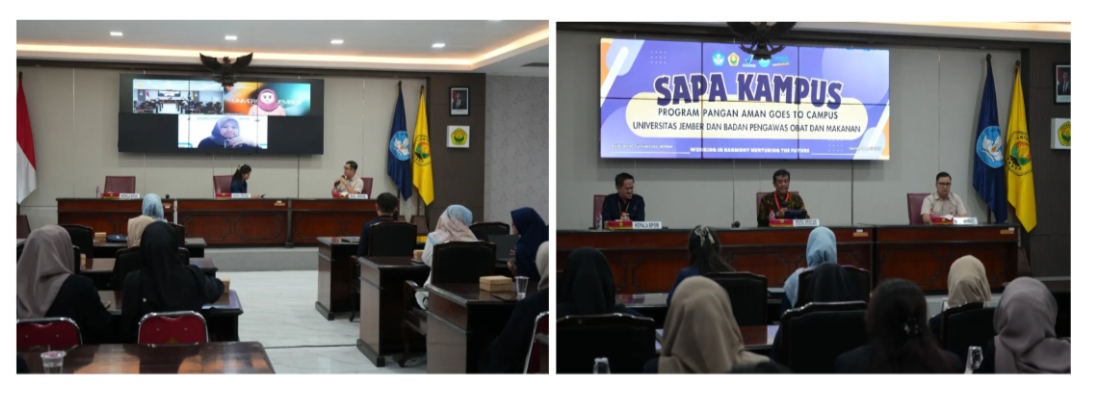
The collaboration continued through theSapa Campus, Safe Food Program Goes to Campusprogramme. According to UNEJ's official announcement, "20 UNEJ Students Prepared to Become Safe Food Facilitators", published on 28 April 2025, twenty students from the Faculty of Agriculture, the Faculty of Agricultural Technology, and FMIPA were selected to participate in the program. The students received food safety training from UNEJ lecturers and BPOM practitioners before undertaking internships in BPOM Jember's working area. The program was designed to prepare them to assist small and medium-sized food businesses with food safety practices.
In addition to canteen services and food safety initiatives, UNEJ has introduced direct food assistance through the UNEJ Share program. The initiative was supported by donations from lecturers, educational staff, and other contributors, with plans for distribution on Monday and Friday mornings. Students interviewed in the announcement described the free breakfast as helpful in reducing their daily food expenses. This initiative provides evidence of UNEJ's efforts to improve access to food for students, particularly those managing limited financial resources.
Canteens at Jember University (UNEJ) offer meals at prices that fit comfortably within a student budget. Based on tenant menu lists, main dishes are priced between Rp. 8,000 and Rp. 16,000, with the most falling in the Rp. 10,000–Rp. 12,000 range per portion. Everyday staples such as nasi pecel, nasi campur, and nasi soto start from Rp. 8,000–Rp. 10,000, while drinks are available from Rp. 3,000. At these prices, students can buy a complete meal with a drink for less than Rp. 15,000, which allows them to eat regularly on campus without placing heavy pressure on their daily living expenses. The same affordable prices also apply to lecturers, administrative staff, and visitors, so a filling meal is within reach for everyone in the campus community.
Affordability does not come at the expense of nutrition. Many of the most popular menus on campus are complete meals that combine rice with vegetables and a protein source. Nasi pecel is served with blanched vegetables, peanut sauce, and side dishes such as egg, tofu, or tempeh, while nasi campur offers rice with a mix of vegetables and protein dishes on a single plate. Vegetable soups and other dishes with broth are also widely available and form part of the daily meals of students and staff. Gado-gado and tofu tek, both built around vegetables, tofu, and peanut sauce, provide plant-based protein at around Rp. 12,000 per portion, and grilled or fried chicken with fresh vegetables (nasi lalapn and grilled chicken rice) are available for Rp. 12,000–Rp. 13,000.
Healthy drinks and fresh fruit are equally easy to find. A total of 23 tenants sell fresh fruit juice, cut fruit, fruit salad, or smoothies, giving the campus community a convenient alternative to sugary packaged drinks and snacks. Several tenants also serve traditional Javanese herbal drinks such as jamu turmeric and tamarind, nasi kencur (rice and aromatic ginger), sinom (young tamarind leaf and turmeric), and wedang ginger (warm ginger drink), which have long been consumed in Indonesia as part of everyday health practices.
Overall, UNEJ has documented several relevant efforts, including affordable canteens across campus, collaboration with BPOM to promote food safety, student training in food safety practices, and the UNEJ Share free-breakfast initiative. These activities provide evidence of institutional efforts to improve access to food and strengthen food safety awareness. Together, affordable canteen prices, nutritious everyday menus, food safety collaboration with BPOM and the UNEJ Share breakfast program ensure that healthy food is within reach of the whole campus community.
2.3.5 Staff Hunger Interventions
Jember University (UNEJ) demonstrates its commitment to staff welfare through employee meal allowances and food assistance initiatives, particularly for supporting staff and contract employees. These efforts reflect the university's contribution to supporting employees' basic food needs and promoting an inclusive working environment.
One of UNEJ's institutional support mechanisms is the provision of meal allowances for eligible civil servants (PNS) and government employees under work agreements (PPPK). Based on UNEJ's 2025 Financial Realization Report, the university recorded IDR 5,166,400,000 in meal allowance expenditure for PNS and IDR 581,460,000 for PPPK as of 30 June 2025. This represents a combined realization of IDR 5,747,860,000, demonstrating the allocation of institutional resources to support employees' daily welfare.
The financial report can be accessed via the following link: UNEJ 2025 Financial Realization Report.
Beyond formal employee benefits, UNEJ also demonstrates social concern for staff members who may require additional support. On 21 March 2025, Dharma Wanita PBB (DWP) of the Faculty of Social and Political Sciences (FISIP) UNEJ organized a Ramadan social assistance program. Through this initiative, basic food packages were distributed to contract educational staff, security personnel, and cleaning staff. The program also included educational assistance for the child of an educational staff member.
Further details are available in the official article: Blessing Ramadhan, Dharma Wanita FISIP Unej Holds Social Service.
Together, these initiatives illustrate two forms of institutional support: regular meal allowances for eligible employees and targeted food assistance for supporting staff. It demonstrates UNEJ's efforts to support employee welfare through financial benefits and direct food assistance.
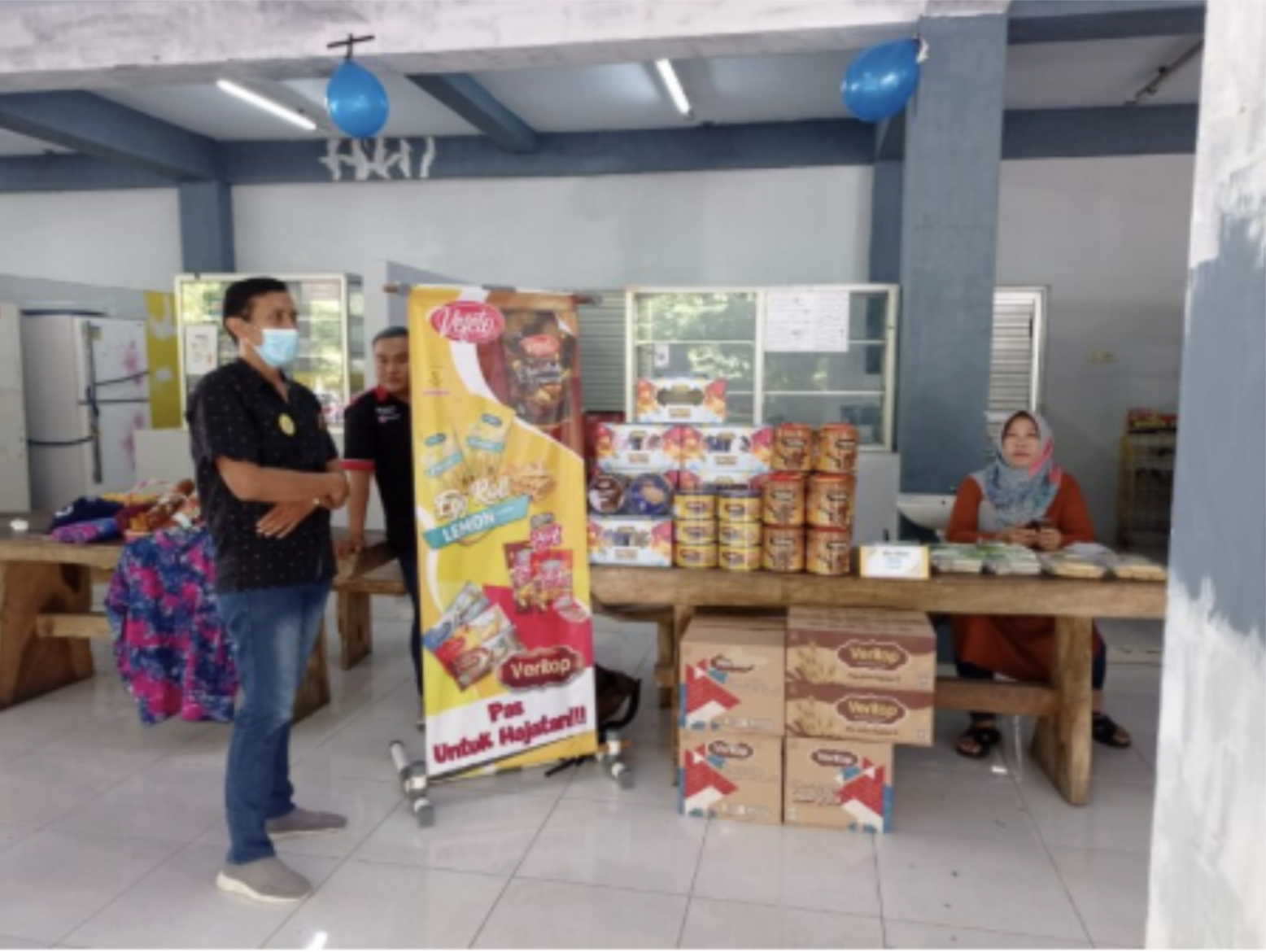
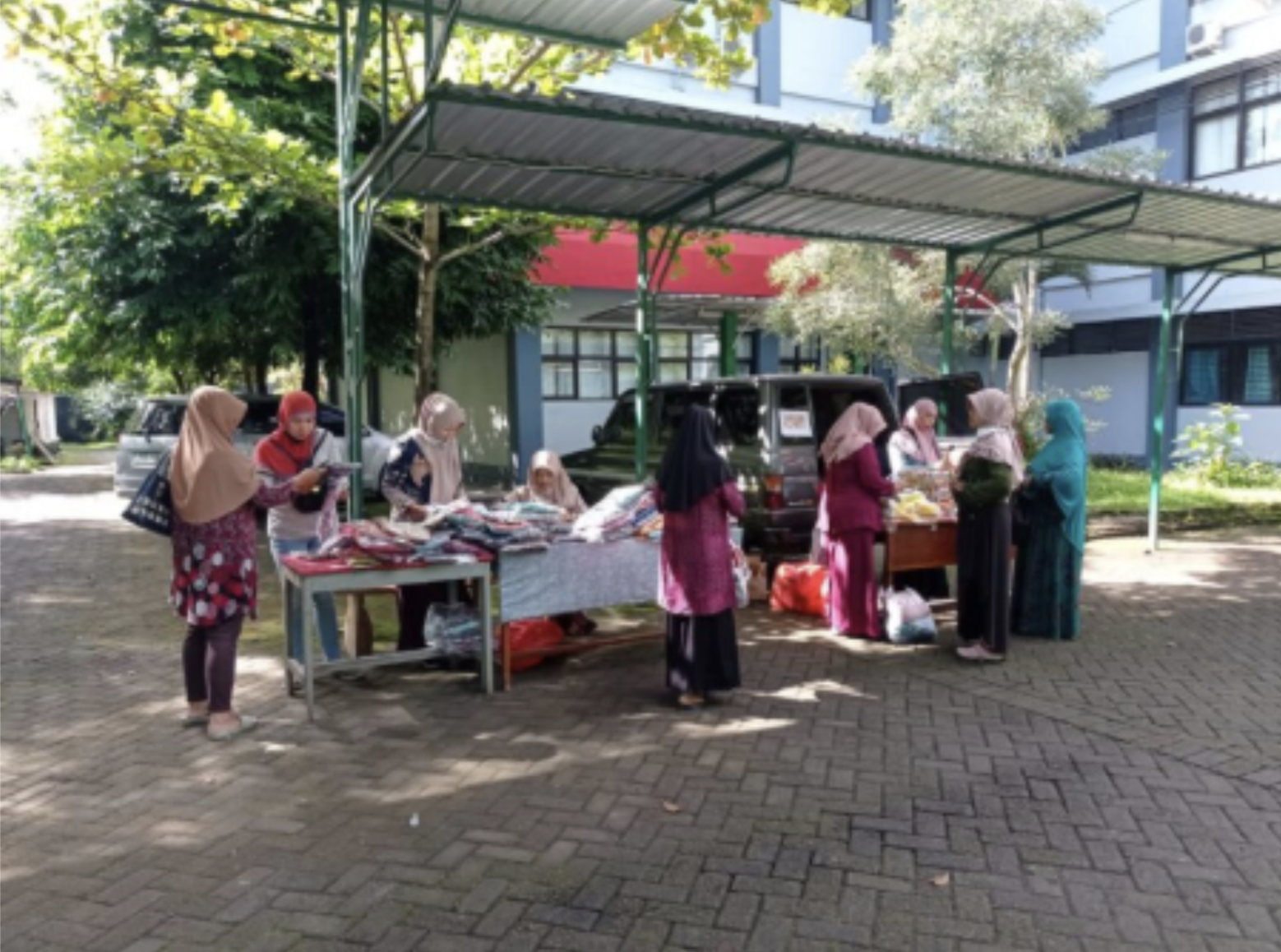
UNEJ's Faculty of Engineering also organized an affordable Ramadan market and social assistance program in April 2023. The official announcement, "Faculty of Engineering, University of Jember Holds Romadhon Market and Social Service in 2023", explains that the Ramadan market was organized by the faculty's DWP on 10 April 2023. Thirteen stalls offered goods at reduced prices, including basic food necessities, snacks, traditional cakes, clothing, and other household products. The market was initially intended for Faculty of Engineering employees, security personnel, and cleaning staff before being opened more broadly to members of the public in need. The event was followed by the distribution of basic food packages to contract employees and cleaning personnel. This initiative combined affordable access to essential goods with direct food assistance for workers.
Taken together, these initiatives demonstrate several approaches to supporting food security staff at UNEJ. Meal allowances and meals provided during official activities offer regular, everyday support for employees. University-level Eid al-Fitr packages provide staple food supplies to non-civil-servant staff each Ramadan, while faculty-level programs such as the DWP social service and Pasar Romadhon specifically assist contract workers and cleaning personnel, both through direct food packages and through access to essential goods at reduced prices. These measures show that support reaches employee groups with different employment arrangements, including non-civil-servant staff, contract workers, and cleaning personnel, through both routine provisions and recurring targeted assistance.
Overall, UNEJ's food-related support for employees provides relevant evidence for Indicator 2.3.5, which concerns interventions addressing hunger among university staff. Through regular meal allowances and recurring targeted food assistance, UNEJ supports the food security of its entire workforce, including contract, security and cleaning staff. These records would help demonstrate the reach and continuity of UNEJ's efforts to support food security among its workforce.
2.5.1 Knowledge Transfer to Farmers
Jember University (UNEJ) contributes to sustainable agriculture and food security by transferring scientific knowledge, practical skills, and appropriate technologies to farmers and local food producers. Through community engagement programs, research-based assistance, field training, and institutional collaboration, UNEJ helps local communities improve agricultural practices, utilize local resources, and develop more sustainable food production systems.
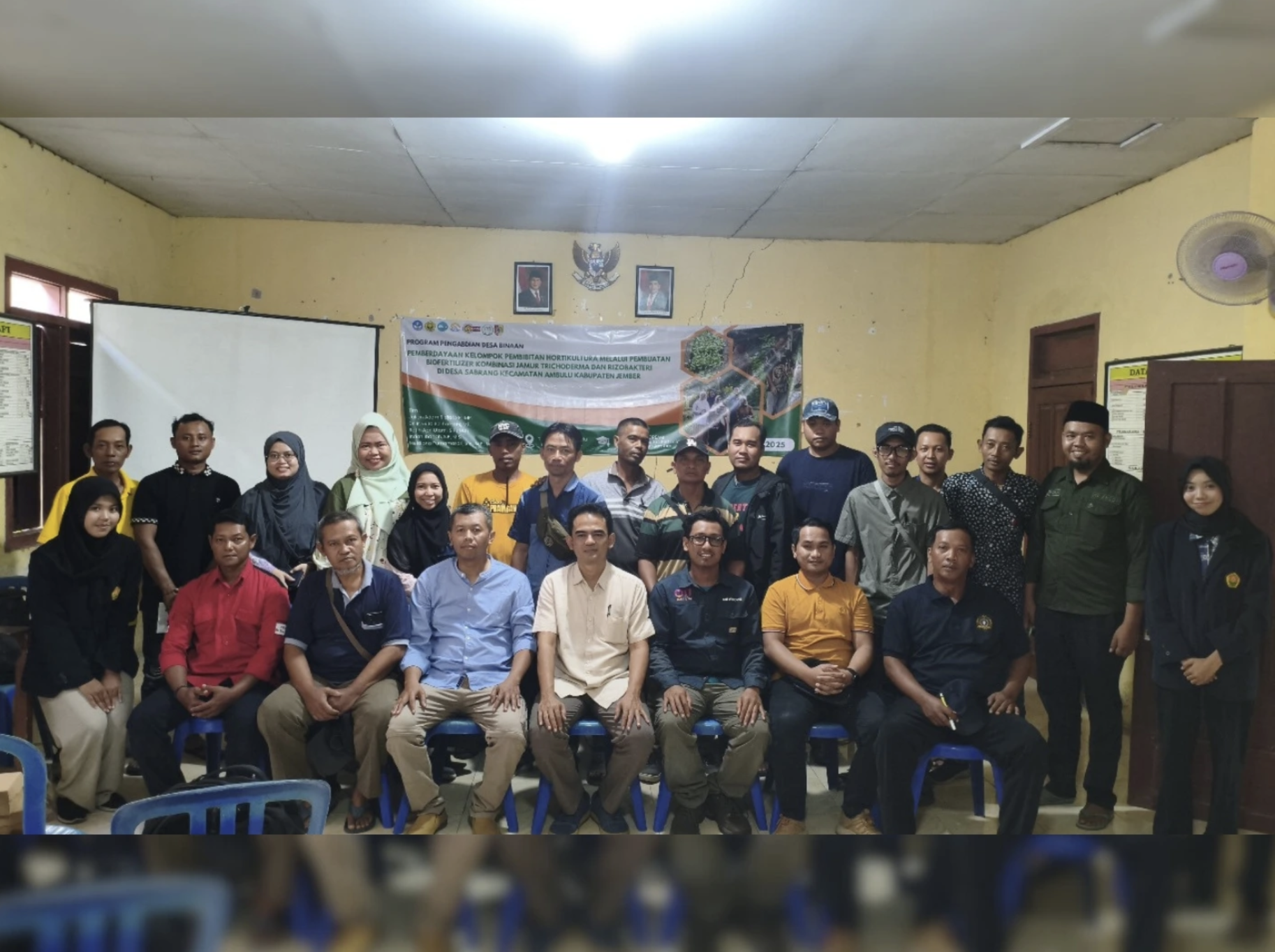
One example is the community empowerment program conducted by the Agribusiness Study Program, Faculty of Agriculture, through the CREAM Research Group (Centre of Research on Entrepreneurship and Agribusiness Management). On 12 July 2025, the team carried out a Village Development Program in Sabrang Village, Ambulu District, Jember Regency. The program focuses on empowering horticultural nursery groups through training and assistance in producing liquid organic fertilizer as a biofertilizer and biological pest-control agent.
In addition to introducing locally sourced organic fertilizer production, the program provided assistance in farm management and institutional development. This initiative aims to improve agricultural productivity, strengthen local farming capacity, and support an integrated agricultural system that contributes to village self-reliance.
Official reference: UNEJ FAPERTA Research Group Team (KeRis) Encourages Empowerment of Sabrang Village Horticulture Nursery Groups in the Assisted Village Development Program – 15 July 2025.
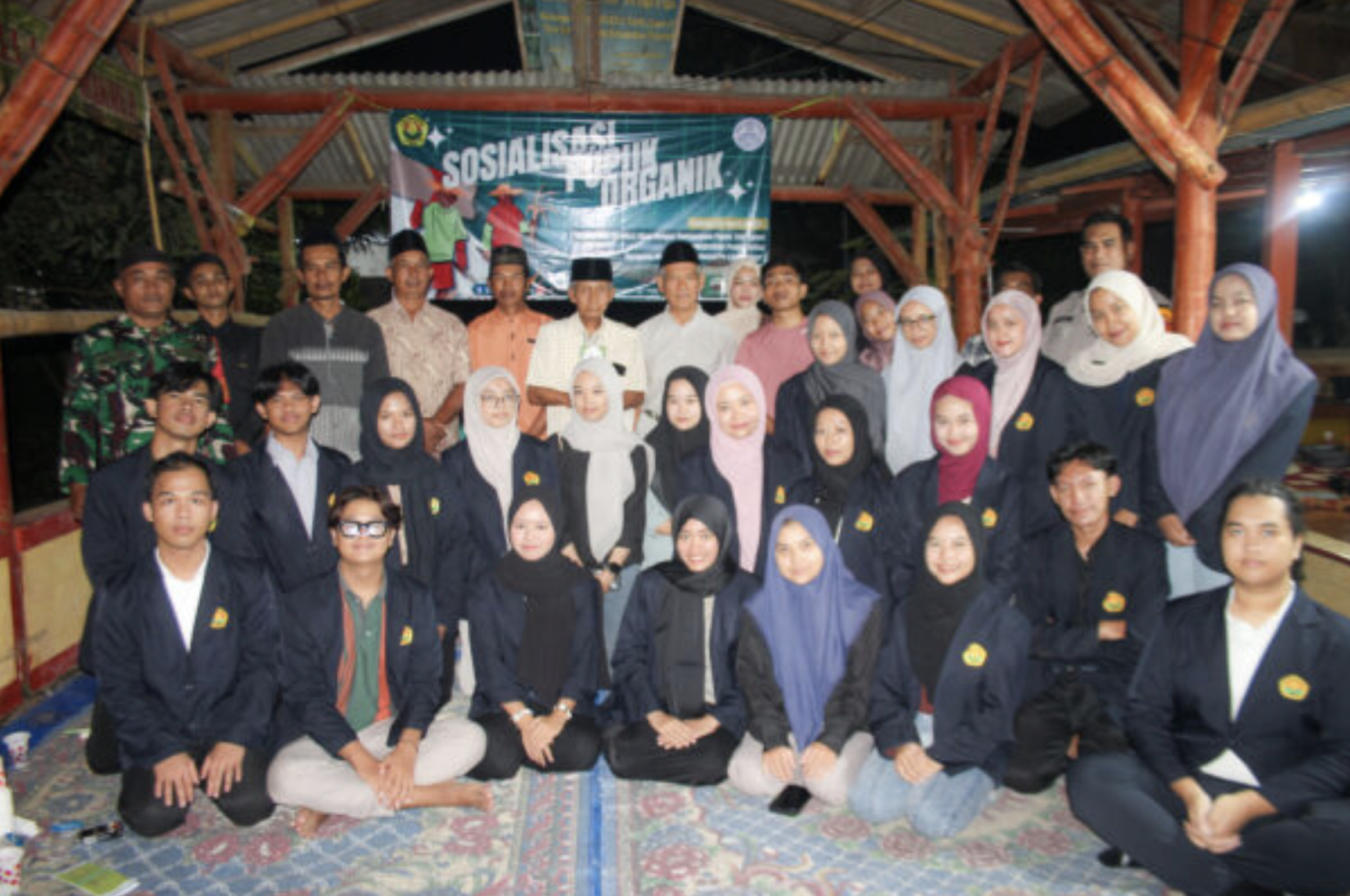
UNEJ also transferred knowledge about organic fertilizer to farmers through the Organic Fertilizer Socialization Program (Organic Fertilizer Socialization/SPO), organized by the Chemistry Student Association, Zirconium, at the Faculty of Mathematics and Natural Sciences. The activity was held on 13 April 2025 in Sumberpinang Village, Pakusari District, Jember. It introduced local farmers and community members to Tirta Sari Mirna (TSM) organic fertilizer, an innovation developed through research by UNEJ Chemistry lecturers.
This activity provided an opportunity to introduce research-based agricultural products directly to farmers and explain the potential use of organic fertilizer in agricultural activities. It demonstrates how UNEJ connects academic research and student community engagement with the practical needs of local agricultural communities.
Official reference: Socialization of Organic Fertilizer (SPO) – Chemistry Department, Faculty of Mathematics and Natural Sciences UNEJ, 13 April 2025.
Beyond direct agricultural assistance, UNEJ also supports local food production through community-based food processing and product diversification. On 2–4 December 2025, the Department of Agroindustrial Technology conducted a community service program in Ambulu Village, Jember Regency. The program focuses on increasing the added value of locally available commodities, particularly bananas, corn, and cassava, by introducing opportunities to process them into higher-value agro-industrial products.
The activities included practical food-processing workshops, interactive discussions, and presentations on business development strategies based on local agricultural potential. Through these activities, community members gain exposure to food diversification and processing techniques that can support local enterprise development and strengthen the utilization of agricultural commodities.
Official reference: Community Empowerment: TIP UNEJ Initiates Local Food Downstreaming in Ambulu Village – 5 December 2025.
UNEJ further strengthened its contribution to food safety and local food enterprise development through its collaboration with the Indonesian Food and Drug Authority (BPOM). On 28 April 2025, twenty UNEJ students participated in the Sapa Kampus, Safe Food Program Goes to Campus initiative. The program prepared selected students to become food safety facilitators who would assist micro and small enterprises producing processed food.
The program began in February 2025 with food safety training delivered by UNEJ lecturers and practitioners from BPOM Jember. The students were subsequently assigned to BPOM's working areas, covering Jember, Banyuwangi, Bondowoso, Lumajang, and Situbondo, for an internship period until June 2025. Through this collaboration, UNEJ contributed to strengthening food safety knowledge and facilitating the transfer of technical knowledge to local food businesses.
Official reference: 20 UNEJ Students Prepared to Become Safe Food Facilitators – 28 April 2025.
Overall, UNEJ's community engagement activities in 2025 demonstrate several approaches to transferring knowledge and practical skills to local communities. These include organic fertilizer production and farm management assistance for horticultural nursery groups, the introduction of research-based organic fertilizer to farmers, food-processing training for local communities, and food safety facilities for micro and small food enterprises.
These programs illustrate UNEJ's contribution to sustainable agriculture and food production through the application of academic research, practical training, and collaboration with local stakeholders. Through these programs, UNEJ ensures that its research and expertise reach farmers and local food producers directly in the field.
2.5.2 Events for Farmers and Food Producers
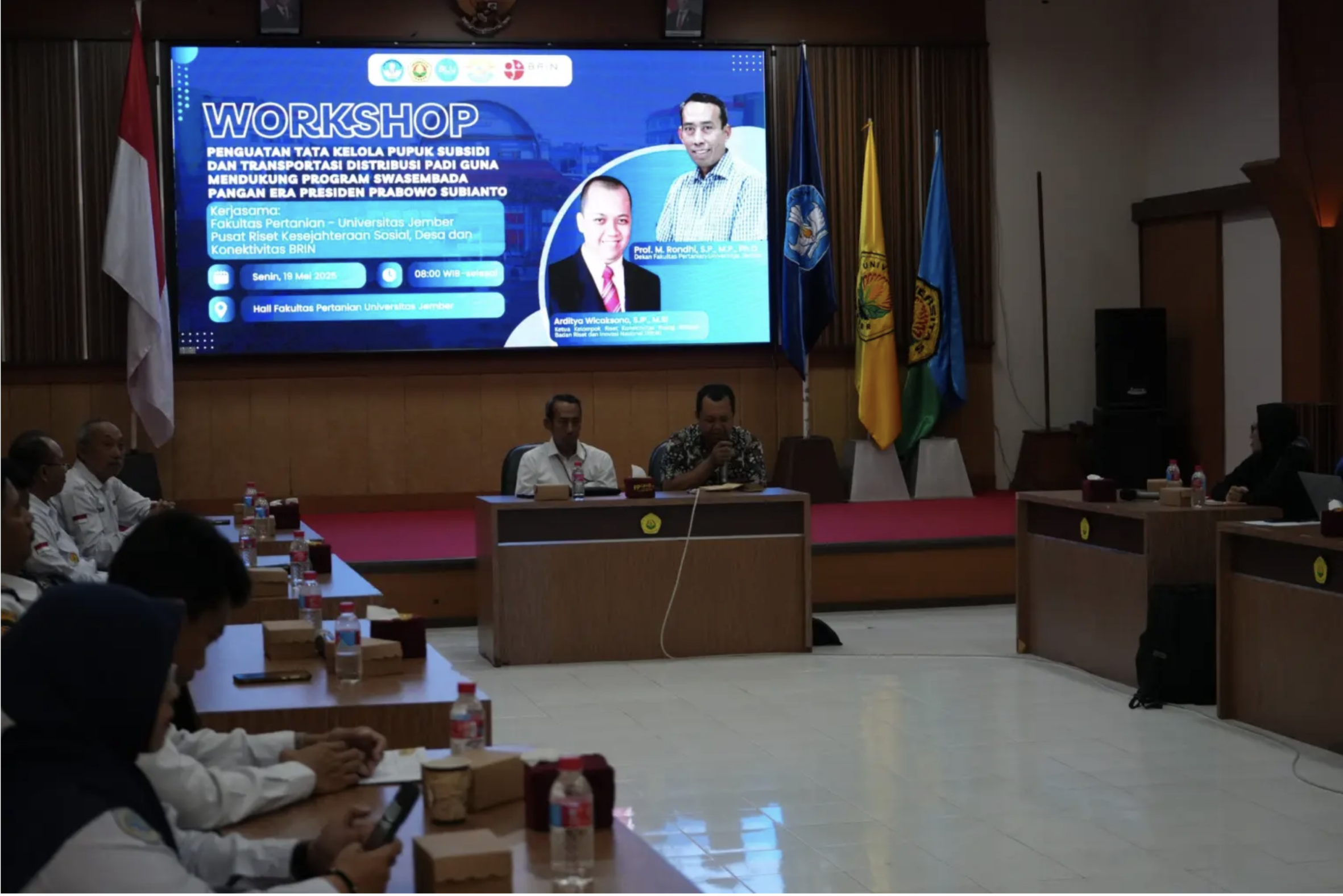
Jember University (UNEJ) provides opportunities for farmers, food producers, academics, government institutions, and agricultural stakeholders to exchange knowledge, discuss challenges, and strengthen collaboration in the agricultural and food production sectors. Through public discussions, technical training, collaborative forums, and community-based events, UNEJ facilitates interaction between academic expertise and the practical needs of local agricultural communities.
One example was the Farmers' Aspirations Forum organized by the Faculty of Agriculture UNEJ in collaboration with the National Research and Innovation Agency (BRIN) on 19 May 2025. The event, entitled "Strengthening Subsidized Fertilizer Governance and Rice Harvest Transportation Distribution to Support National Food Self-Sufficiency," was held at the Faculty of Agriculture Auditorium.
The forum brought together farmers, agricultural extension officers, academics, local government representatives, military representatives, and agricultural industry stakeholders. It provided a platform for participants to discuss challenges related to subsidized fertilizer distribution, production inputs, and the transportation of rice harvests. Farmers also share their experiences concerning fertilizer prices, availability, and transportation constraints during harvest periods. The discussion aimed to collect field-level aspirations and develop evidence-based policy recommendations to support agricultural productivity and national food security.
Official reference: Faculty of Agriculture, UNEJ and BRIN Hold Aspiration Network, Discuss Fertilizer Management and Harvest Distribution.
UNEJ also facilitated agricultural technology learning through the CERDIG–CERDAS DIGITAL training program, held in collaboration with the East Java Provincial Communication and Information Office on 11 November 2025. The event, titled "AI for Farmers: Mastering Future Precision Agriculture Technology," took place at the Soerachman Building, UNEJ.
The training was attended by 106 participants from various farmer groups in Jember Regency. It introduced participants to the potential application of artificial intelligence and digital technology in modern agricultural practices. By bringing together farmers and technology-related expertise, the event created an opportunity for agricultural communities to improve their digital literacy and understand how emerging technologies can support more precise and efficient farming activities.
Official reference: Collaboration between UNEJ and East Java Kominfo Presents AI Training for Farmers Towards Precision Agriculture.
Another example was the Financial Smart Talk program organized by the Faculty of Agriculture UNEJ in collaboration with the Financial Services Authority (OJK), Obihiro University, and Rakuno Gakuen University from Japan. The event was held on 3 July 2025 at a tobacco farmer's residence in Tanjungrejo Village, Wuluhan District, Jember Regency.
The program involved members of the Maju Trisno Satu and Maju Trisno Dua farmer groups. It focuses on improving financial literacy among tobacco farmers, particularly regarding financial management and access to safe financing. By conducting the event directly within the farming community, UNEJ and its partners provided an opportunity for farmers to discuss financial challenges and gain knowledge relevant to managing their agricultural businesses.
Official reference: Synergy between UNEJ, OJK and Japanese Universities to Increase Financial Literacy of Jember Tobacco Farmers.
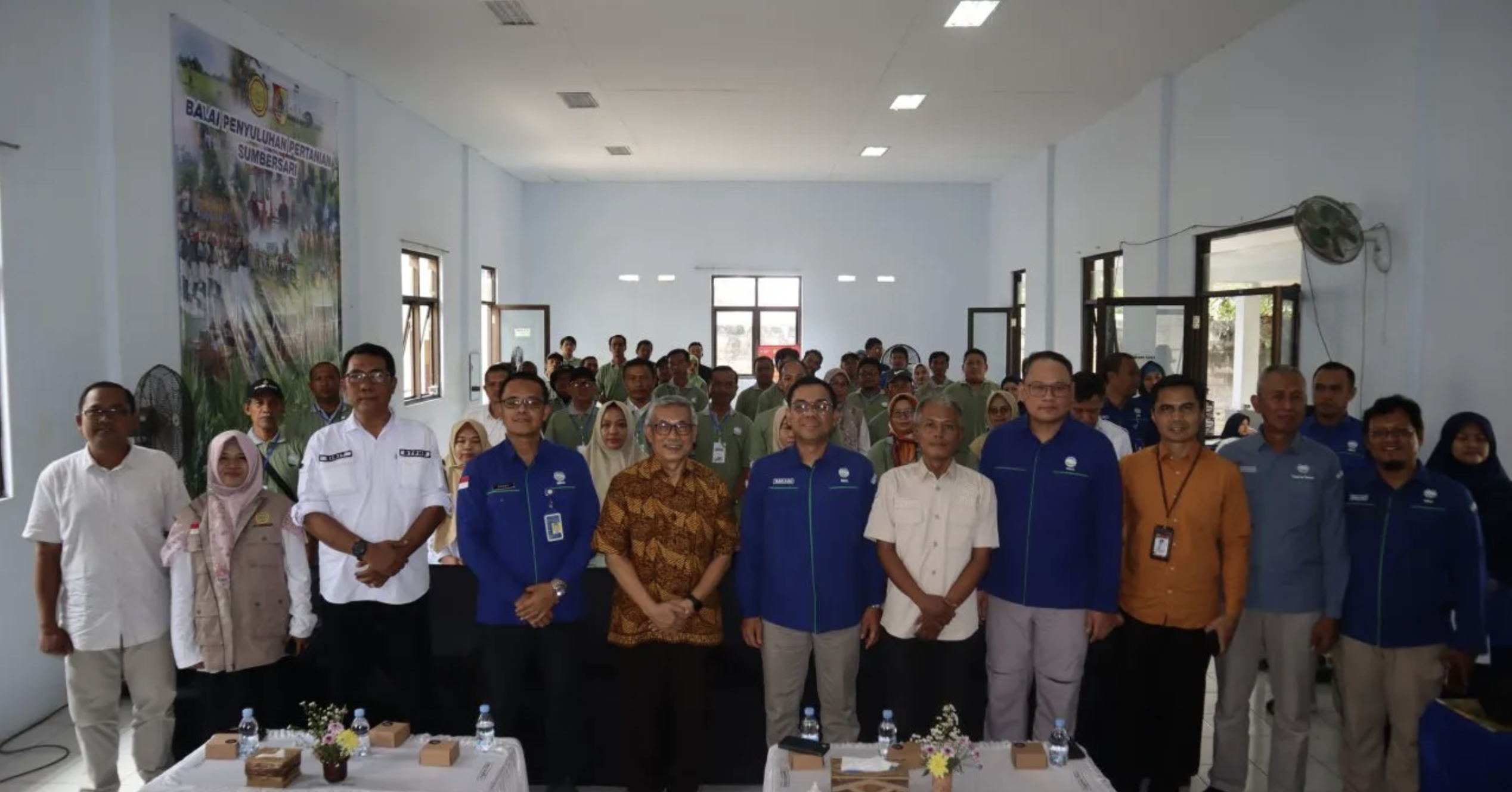
UNEJ also participated in the Climate Field School (SLI) organized by the Meteorology, Climatology, and Geophysics Agency (BMKG) at the Sumbersari Agricultural Extension Center (BPP Sumbersari), Jember, on 29 October 2025. The program brought together BMKG representatives, agricultural extension officers, the local Department of Food Crops, Horticulture and Plantations, farmer groups, and UNEJ academics.
Through this activity, participants were introduced to climate-related information and its relevance to agricultural planning and food security. UNEJ contributed academic expertise and supported discussions on the importance of climate literacy in helping farmers understand weather conditions and respond to climate-related challenges in agricultural production.
Official reference: UNEJ–BMKG Collaboration Increases Climate Literacy of Jember Farmers for Food Security.
In addition, UNEJ's Faculty of Agriculture collaborated with Chiang Mai University, Thailand, and other academic and agricultural partners to organize an International Community Service program at the Rengganis Forest Farmers Group (KTH Rengganis) in Pakis Village, Panti District, Jember Regency, beginning on 2 November 2025. The activity provided a platform for dialogue and knowledge exchange between academics and local farmers, particularly concerning sustainable coffee cultivation and agroforestry practices. The collaboration connected local agricultural experiences with international academic perspectives and promoted discussion on sustainable farming and the development of agricultural value chains.
Official reference: FAPERTA UNEJ Collaborates with Chiang Mai University to Hold International Community Service at KTH Rengganis.
Overall, these activities demonstrate UNEJ's role in creating platforms for interaction and knowledge exchange among farmers, food producers, academics, government institutions, and other agricultural stakeholders throughout 2025. The events addressed a range of issues, including agricultural policy, fertilizer distribution, precision farming, financial literacy, climate information, and sustainable agroforestry. Through these initiatives, UNEJ strengthened connections between higher education and agricultural communities while supporting collaboration to address practical challenges in food production and agricultural development.
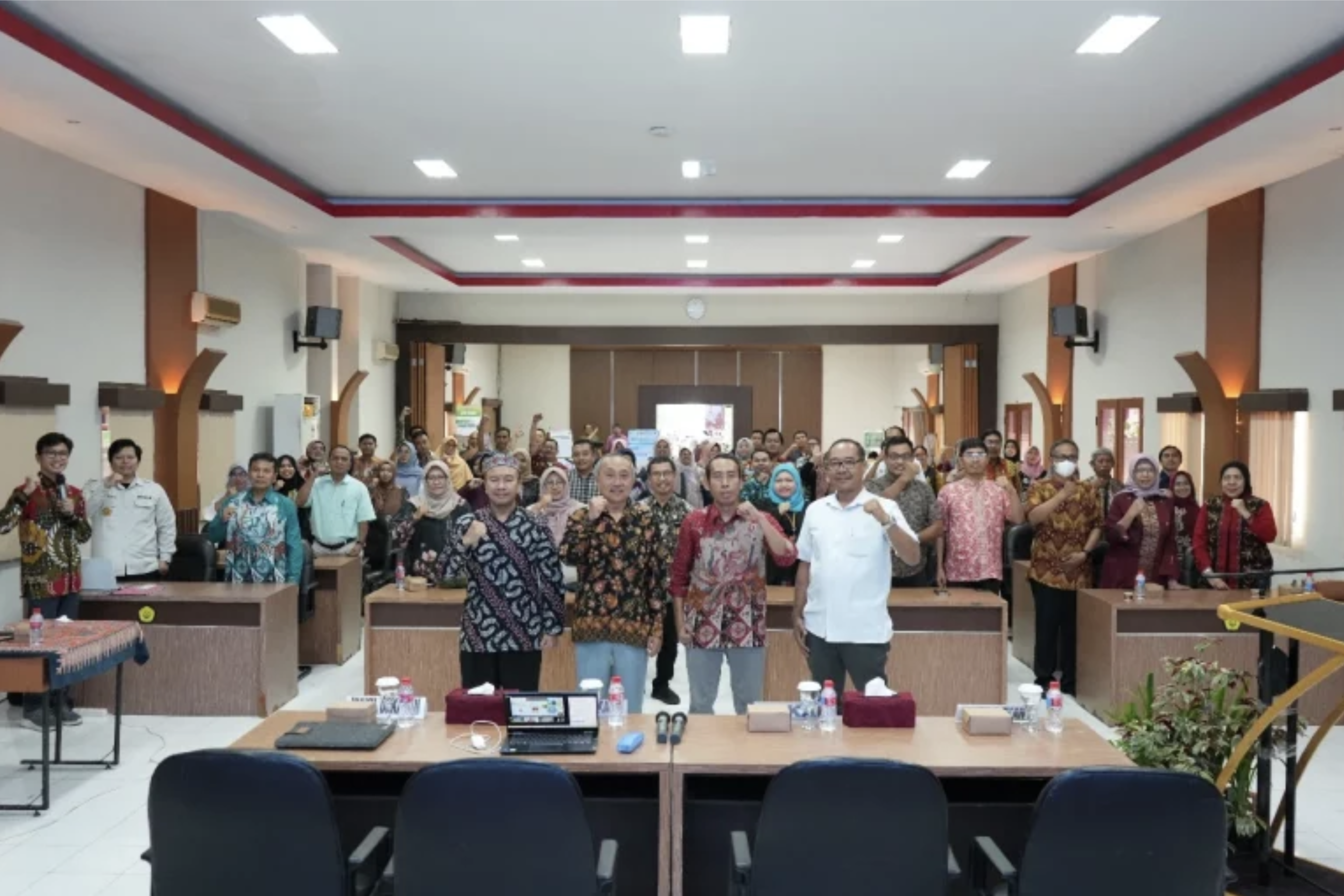
The program included a discussion on agricultural innovation and food sovereignty, as well as an exhibition highlighting research and community-service outputs from the faculty's study programs. Exhibited innovations included organic fertilisers, post-harvest processing technologies, and digital applications for agricultural land management. The event provided a setting in which research findings could be introduced to potential users and stakeholders, creating opportunities for discussion and future collaboration between the university, farming communities, and industry.
The exhibition presented innovative agricultural products, processed foods, and other locally developed products. By creating a shared space for students and local businesses to showcase their work, Agrifest offered opportunities for product exposure, interaction, and the development of connections between academic innovators and local food producers.
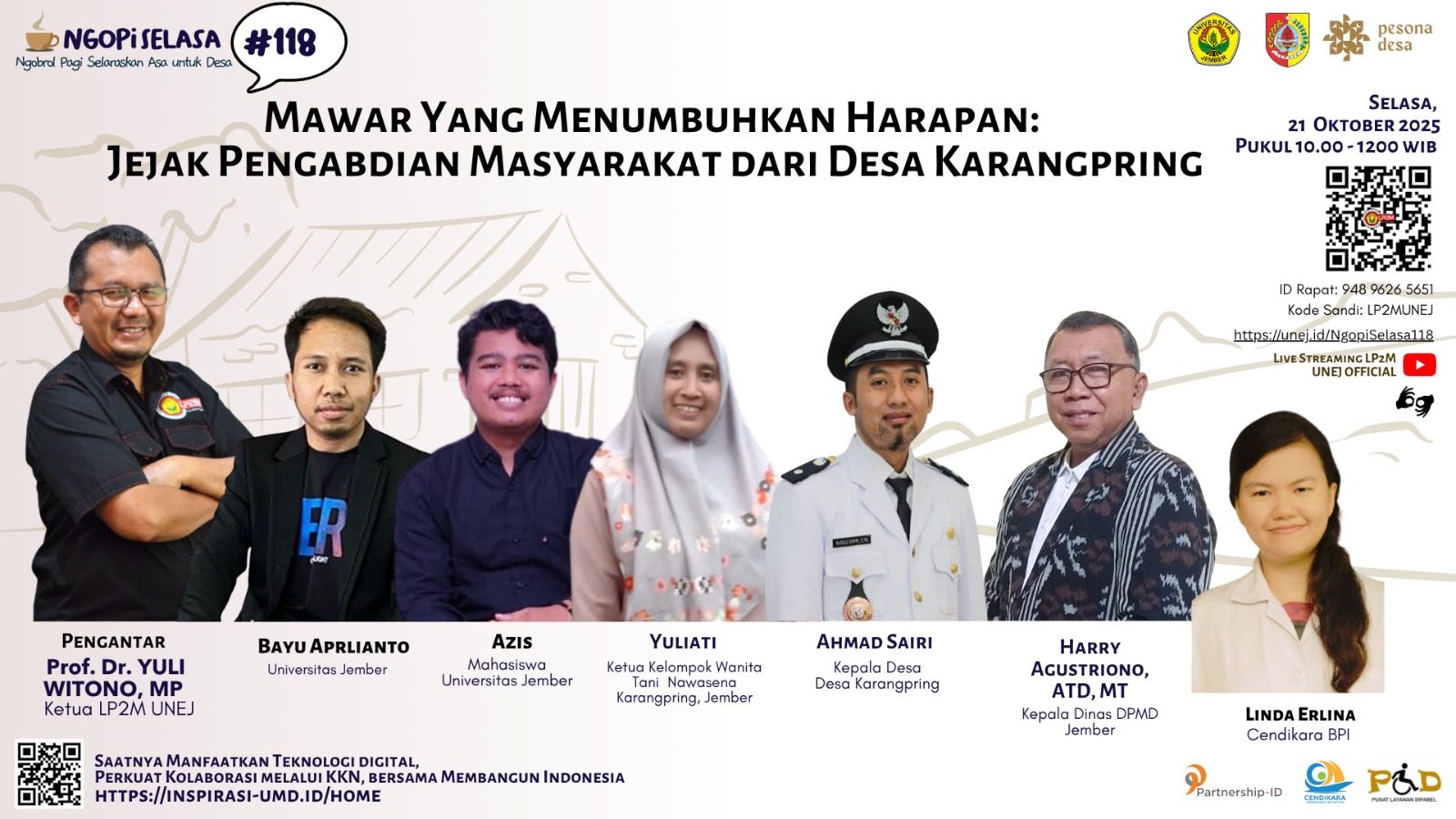
UNEJ's Institute for Research and Community Service (LP2M) runs Ngopi Tuesday (Morning Chat to Harmonize Hope for Villages), a regular discussion forum on village development that brings together farmers, local food producers, village governments, regional authorities, academics, and students. Held online and streamed publicly through the LP2M UNEJ Official YouTube channel, the forum allows farmer groups and village communities to share their experiences directly with policymakers and researchers, while giving the wider public open access to practical knowledge on agriculture and rural development. Each edition highlights a different village initiative, often linked to UNEJ's community service programs and the student community service program (KKN), and gives farmers a voice alongside government and university representatives. Having reached more than one hundred editions, Ngopi Tuesday has become a sustained platform for knowledge exchange between the university and the farming communities it serves. One example is the 118th edition, held in October 2025, which featured a women farmers' group from Karangpring Village, Jember, together with the village head and the regional village empowerment office.
2.5.3 Access to Facilities for Farmers
Jember University (UNEJ) supports agricultural development through its laboratory facilities, agricultural research infrastructure, farm machinery, and services related to soil, agricultural products, and halal analysis. These resources can help farmers, local food producers, and other agricultural stakeholders obtain scientific information and technical support to improve cultivation practices, soil management, mechanisation, and the quality and market readiness of agricultural products.
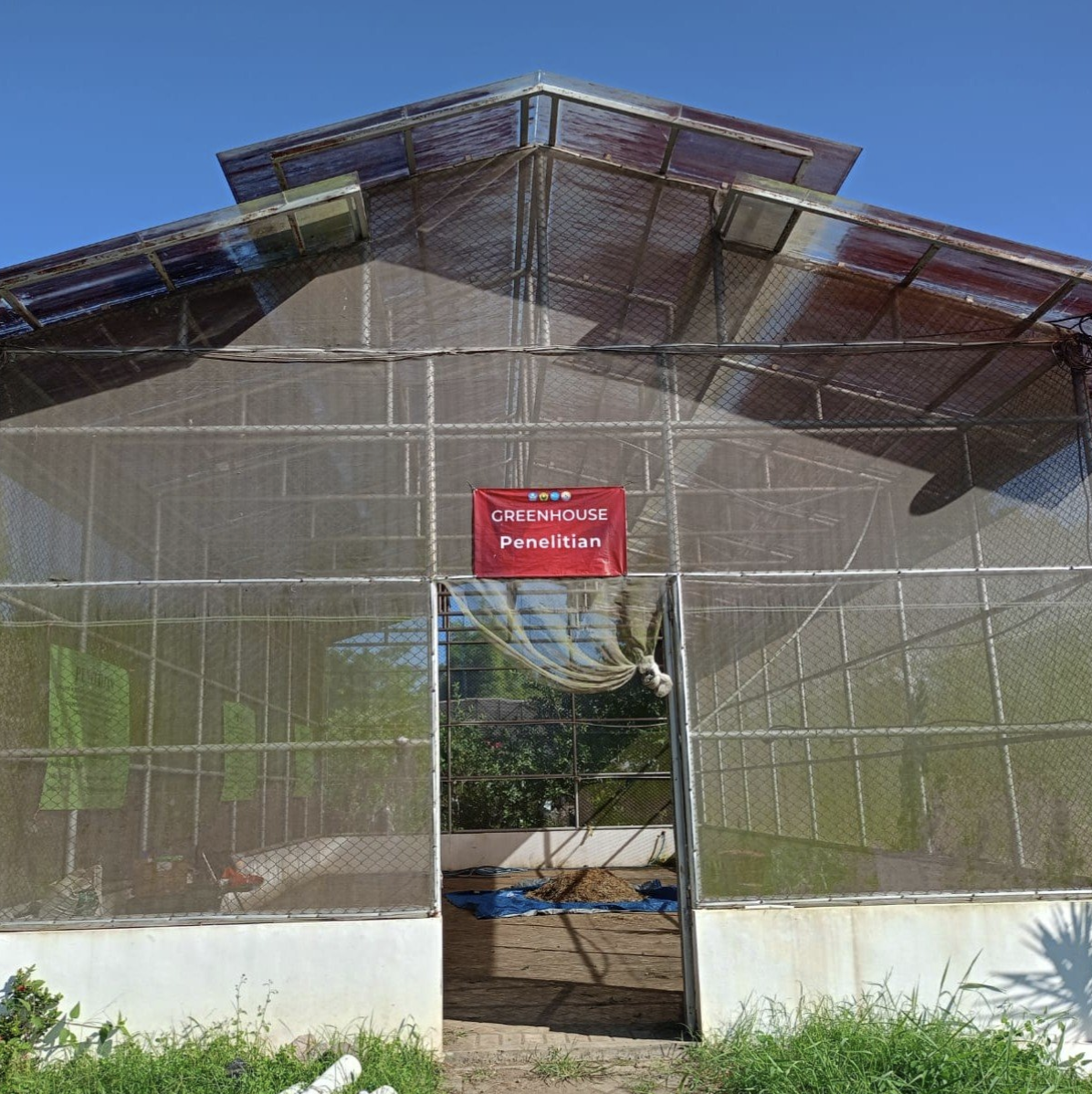
In addition, UNEJ's Faculty of Agriculture has experimental gardens, greenhouses, and other agricultural facilities that support research and practical activities. These facilities provide infrastructure for testing cultivation methods and developing agricultural technologies. Information about agricultural facilities is available through the Faculty of Agriculture.
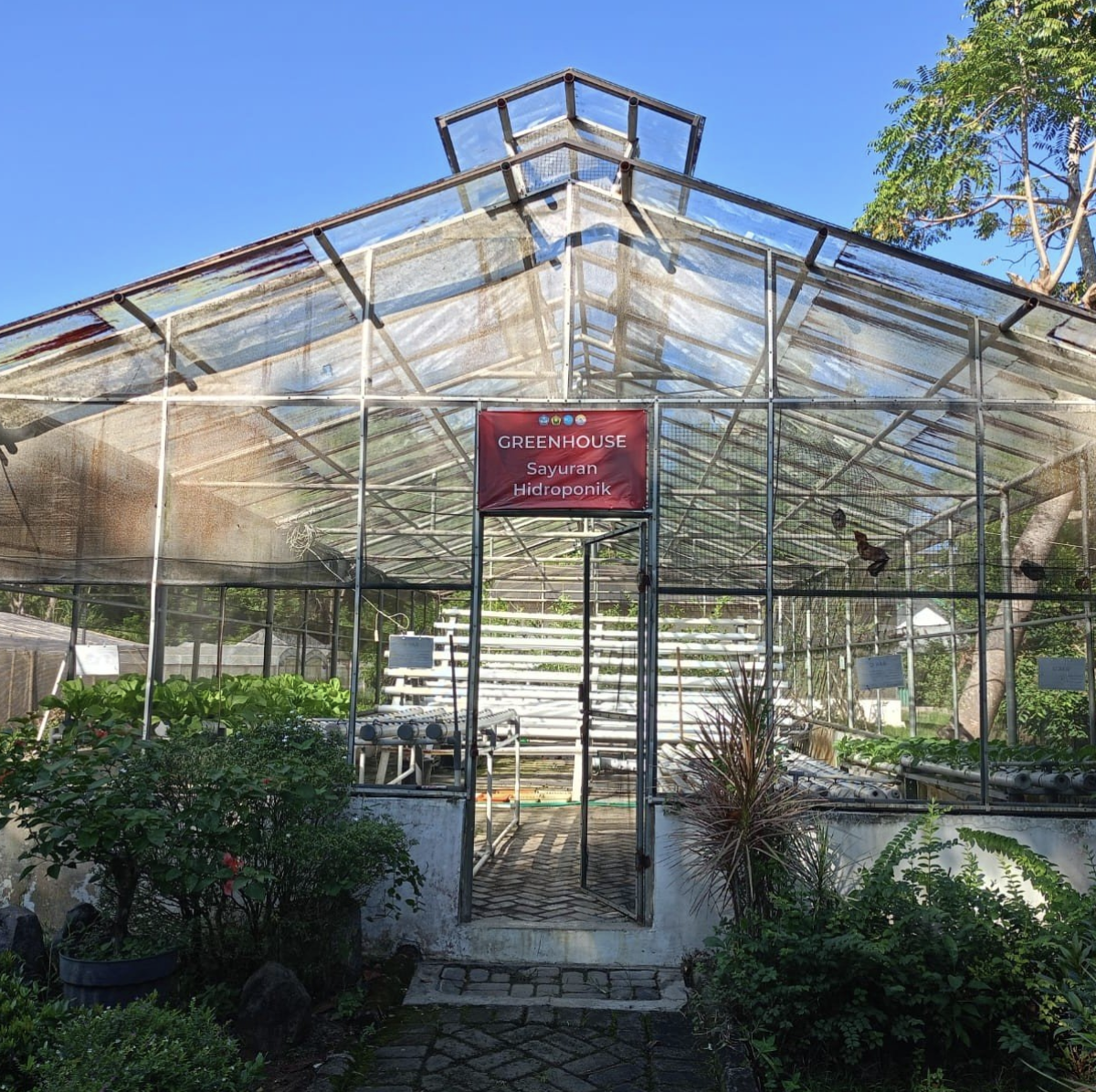
At the university level, the UPA Agrotechnology Park serves as UNEJ's academic support unit for agriculture on the main Tegalboto campus. It supports education, research, and services to the community based on industrial, business-oriented, and environmentally friendly agriculture, offering practical learning, research, institutional visits, training, and professional internships. Its facilities include experimental fields, greenhouses, an orchid tissue culture laboratory, hydroponic vegetable cultivation, and a composting unit that processes organic waste into compost, which is also sold to the public. Through visits and training, community groups can observe and practice cultivation techniques directly, from seedling propagation and grafting to hydroponics and organic waste management. Further information is available through the UPA Agrotechnology Park.
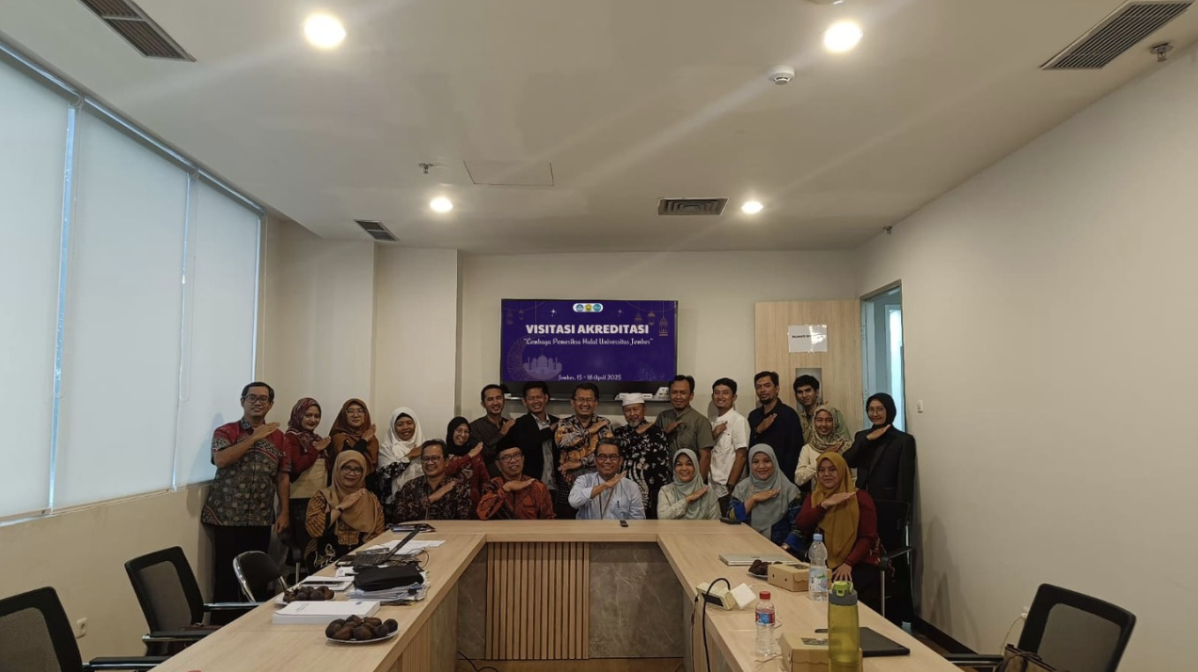
UNEJ also supports local food producers through its Halal Examination Agency (Halal Examination Agency, LPH), which received accreditation from the national Halal Product Assurance Agency (BPJPH) in 2025 and operates as an LPH Pratama serving East Java. Supported by its laboratory and halal auditors, LPH UNEJ examines products from raw materials and production processes to packaging and distribution to ensure they meet halal standards. This service builds on the work of UNEJ's Halal Center and its Halal Product Process Assistance Institution (LP3H), which assists micro, small, and medium enterprises in registering for halal certification. For small food producers, access to a nearby accredited examination body and laboratory reduces the cost and time needed to obtain certification, helping them reach wider markets. Further details are available through the UNEJ announcement on LPH accreditationand the LPH UNEJ website.
These facilities demonstrate UNEJ's capacity to contribute scientific knowledge and technical resources to agricultural development. Through the Agrotechnology Park, Faculty of Agriculture facilities and LPH UNEJ, farmers and local food producers can learn cultivation techniques, obtain compost and seedlings, and access testing and halal certification services close to home.
2.5.4 Local and Sustainable Purchasing Priorities
Jember University (UNEJ) supports responsible and sustainable purchasing practices through institutional procurement policies and initiatives that prioritize products produced within the university. These demonstrate how procurement efforts can contribute not only to meeting institutional operational needs but also to supporting local production, strengthening university business units, and encouraging more efficient use of institutional resources.
UNEJ maintains transparency in its procurement activities through the Public Information and Documentation Management Office (PPID). The university provides public access to procurement information, including its General Procurement Plan (RUP), procurement packages, and supporting procurement documents. The PPID portal also provides a dedicated section for 2025 procurement information, including procurement plans and selected procurement packages for the 2025 fiscal year. This mechanism supports accountability and enables the public to access information about the university's purchasing activities.
Official reference: UNEJ Public Procurement Information – 2025.
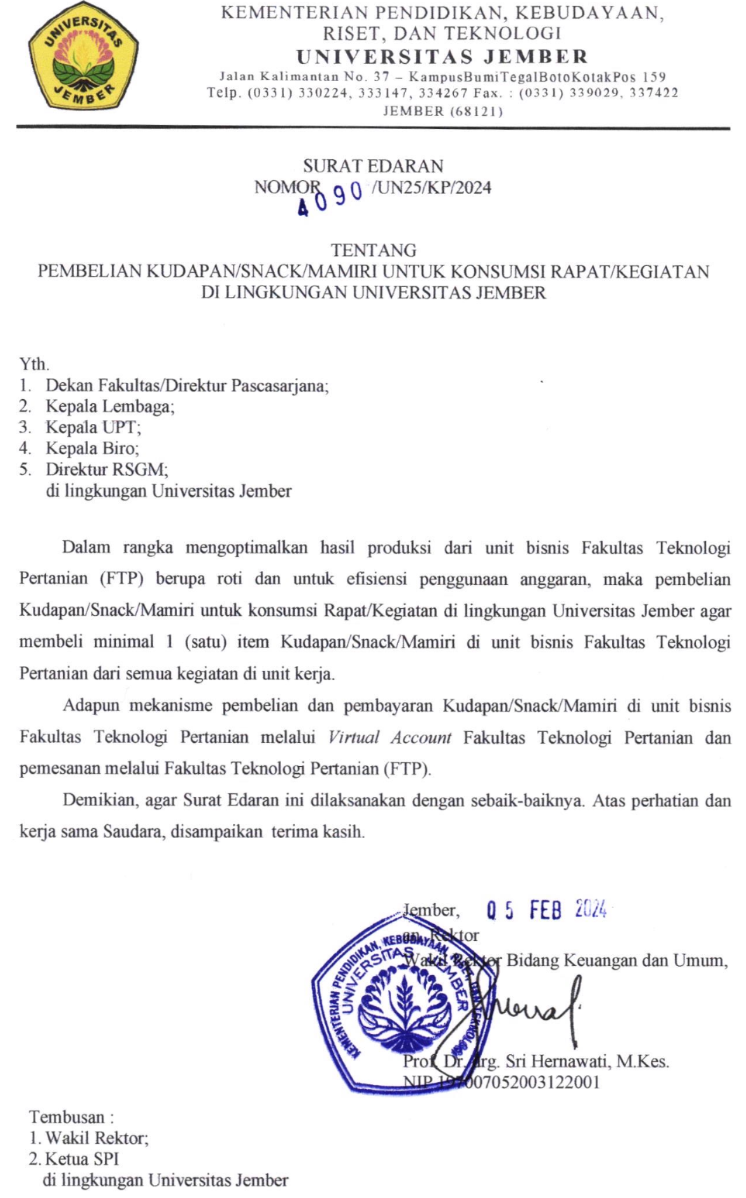
A more direct example of UNEJ's purchasing priorities is outlined in Circular Letter No. 4090/UN25/KP/2024 concerning the Purchase of Snacks and Refreshments (Kudapan/Snack/Mamiri) for Meetings and Activities, issued on 5 February 2024 by the Vice Chancellor for Finance and General Affairs.
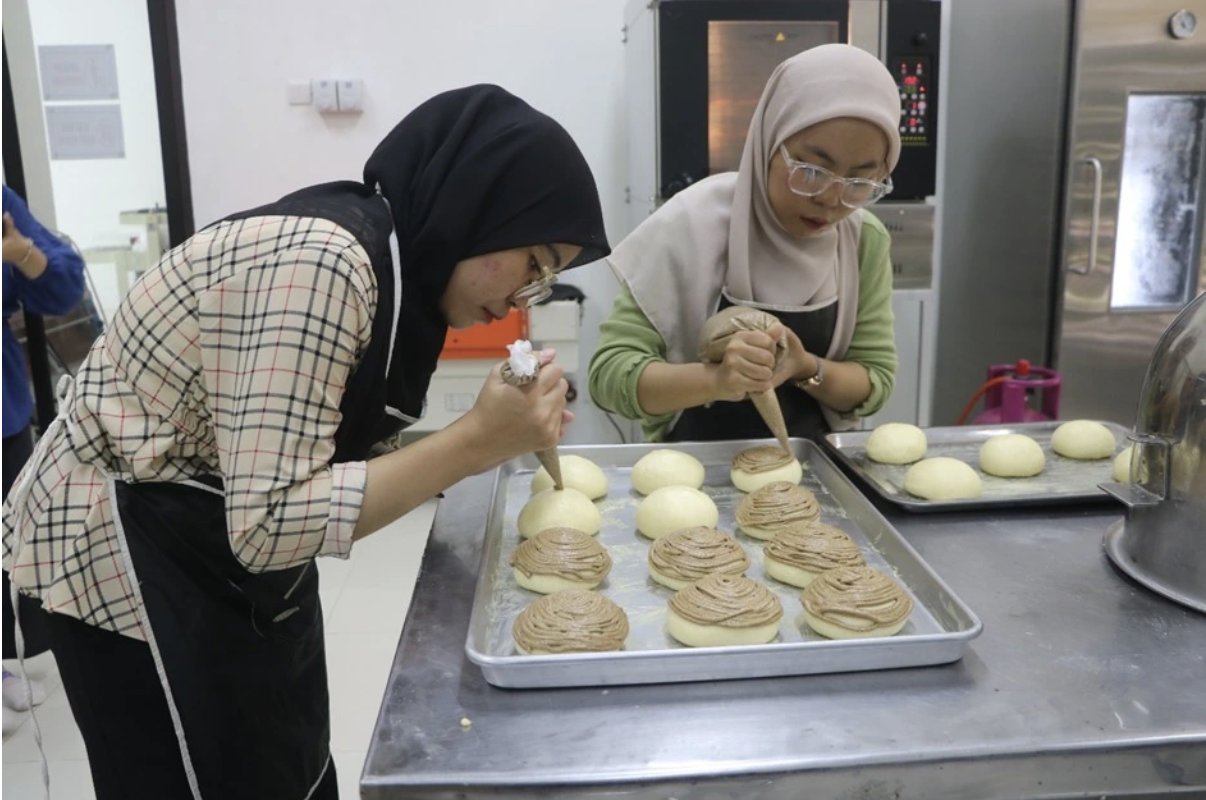
Under this policy, faculties, the Graduate School, institutes, technical units, bureaus, and the Dental Hospital are instructed to purchase at least one snack or refreshment item for each meeting or institutional activity from the business unit of the Faculty of Agricultural Technology (Faculty of Agricultural Technology/FTP). The policy identifies two main objectives: optimizing the use of bread products manufactured by the FTP business unit and improving the efficiency of institutional expenditure.
The purchasing process is also supported by a designated ordering and payment mechanism. Orders are coordinated via FTP, while payments are made through the faculty's virtual account. This arrangement establishes a traceable purchasing procedure and provides a regular institutional market for food products manufactured by a university business unit.
By directing routine purchases of meeting refreshments toward products made by FTP, UNEJ creates a connection between institutional spending and its internal food production activities. This approach helps strengthen the university's food-processing business unit, supports the utilization of locally produced food products within the campus environment, and demonstrates how procurement can encourage institutional support for local production.
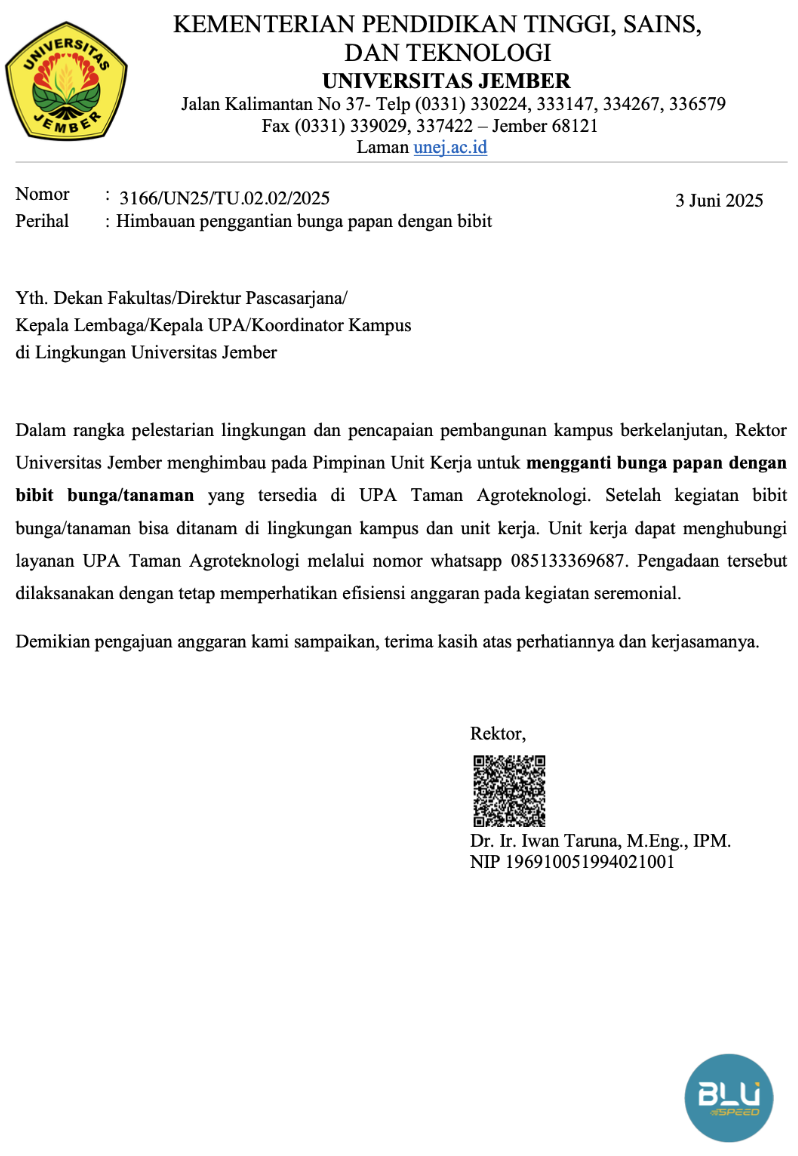
The same priority applies to other purchases linked to campus agriculture. Through Circular Letter No. 3166/UN25/TU.02.02/2025, dated 3 June 2025, the Rector of UNEJ called on all faculties, institutes, academic support units, and campuses to replace congratulatory flower boards (flower boards) with flower or plant seedlings supplied by the UPA Taman Agro Teknologi, the university's own agrotechnology park. The letter states that the policy aims to preserve the environment and support sustainable campus development, and that the seedlings should be planted in the campus and unit environments after each event. The seedling packages offered by the UPA include fruit trees such as durian, crystal guava, longan, water apple, and avocado, together with orchids and other ornamental plants. This redirects a recurring ceremonial expense from short-lived, single-use products to living plants produced on campus, many of which are food crops that continue to grow after the event.
UNEJ has also identified opportunities to develop its food-service business through UNEJ Food. The university's 2025–2029 Business Strategic Plan discusses the potential for catering services to meet the food needs of students, lecturers, and staff, as well as external customers. The plan highlights the use of local resources and the provision of healthy, nutritious, and affordable meals as opportunities for developing the university's catering business. Together with the requirement to buy activity snacks from FTP, this initiative provides a relevant starting point for connecting institutional food services with local economic activity. Further information is available in the UNEJ Public Service Agency Business Strategic Plan 2025–2029.
These initiatives indicate that UNEJ has procurement transparency mechanisms, directs its institutional food and seedling purchases to producers within the university, and recognizes the potential contribution of local resources to its food services. Through these circular letters and business plans, UNEJ directs recurring institutional spending toward food and plant products made on campus, strengthening local production and sustainable campus development