
SDG 17 Universitas Jember 2025
17.2.1 Relationships with Regional NGOs and Government for SDG Policy
Universitas Jember (UNEJ) strengthens its contribution to Sustainable Development Goals (SDGs) through strategic partnerships with government institutions, regional administrations, non-governmental organisations (NGOs), village governments, and community groups. These collaborations support the development and implementation of evidence-based policies, community empowerment, poverty reduction, sustainable economic development, and improvements in public welfare.
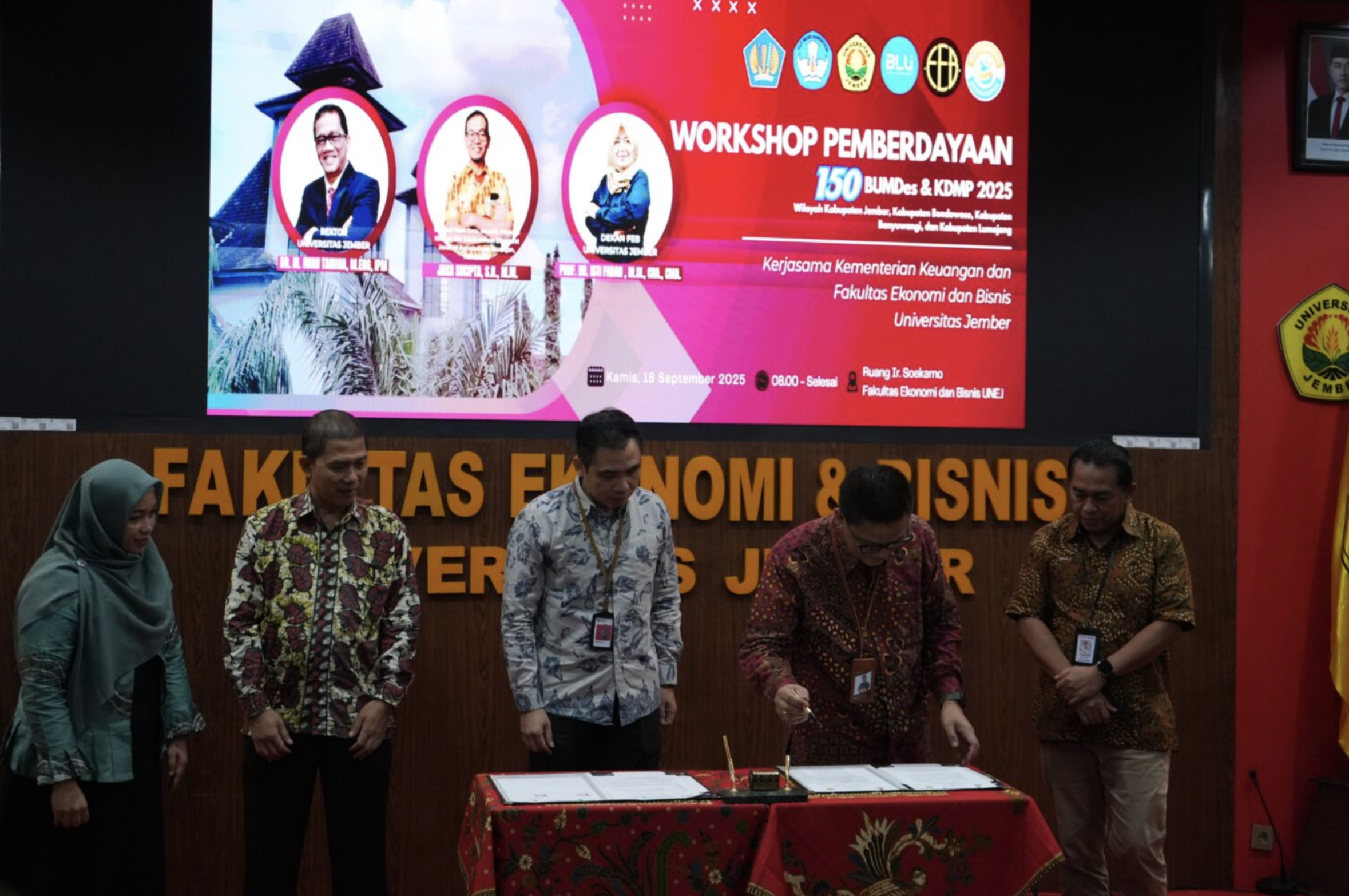
At the national level, UNEJ collaborates with government institutions to strengthen regional economic development and community capacity. On 18 September 2025, the Faculty of Economics and Business (FEB) of UNEJ was appointed by the Ministry of Finance of the Republic of Indonesia to support 150 Village-Owned Enterprises (BUMDes) and Village/Sub-district Cooperative Development initiatives (KDMP). The programme involved participants from Jember, Bondowoso, Banyuwangi, and Lumajang Regencies.
Through this partnership, UNEJ contributes academic expertise and capacity-building support to strengthen village-based economic institutions. The collaboration demonstrates the university's role in connecting national development programmes with regional implementation through education, assistance, and institutional development.
UNEJ also maintains strategic partnerships with regional governments to support evidence-based development planning and address local development challenges.
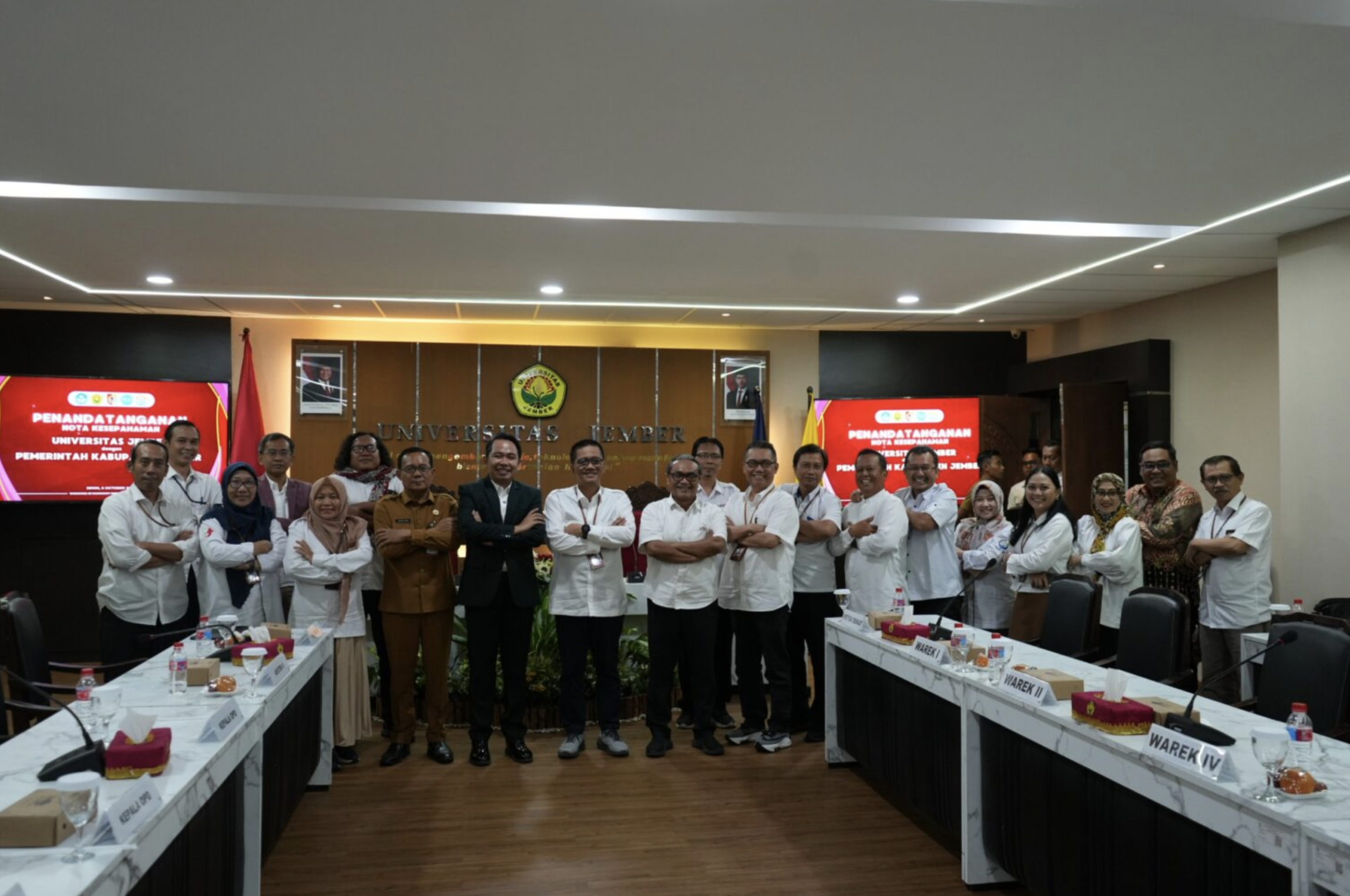
On 6 October 2025, UNEJ and the Jember Regency Government signed a Memorandum of Understanding (MoU) to address extreme poverty and improve community welfare. The collaboration focuses on using academic expertise and research to support development planning and policy formulation. The partnership is particularly relevant to the approximately 124,000 residents identified in welfare deciles 1 and 2, who are among the priority groups for poverty alleviation programmes. Potential areas of collaboration include education, tourism, and agriculture.

Previously, on 17 September 2025, UNEJ signed an MoU with the Situbondo Regency Government to strengthen human resource quality and promote research-based regional development. The agreement covers collaboration in education, research, and community service, with an emphasis on addressing development challenges and reducing poverty in Situbondo and the wider Tapal Kuda region.
These partnerships provide a framework for connecting university research and academic resources with regional government priorities, enabling both parties to work together on development issues.
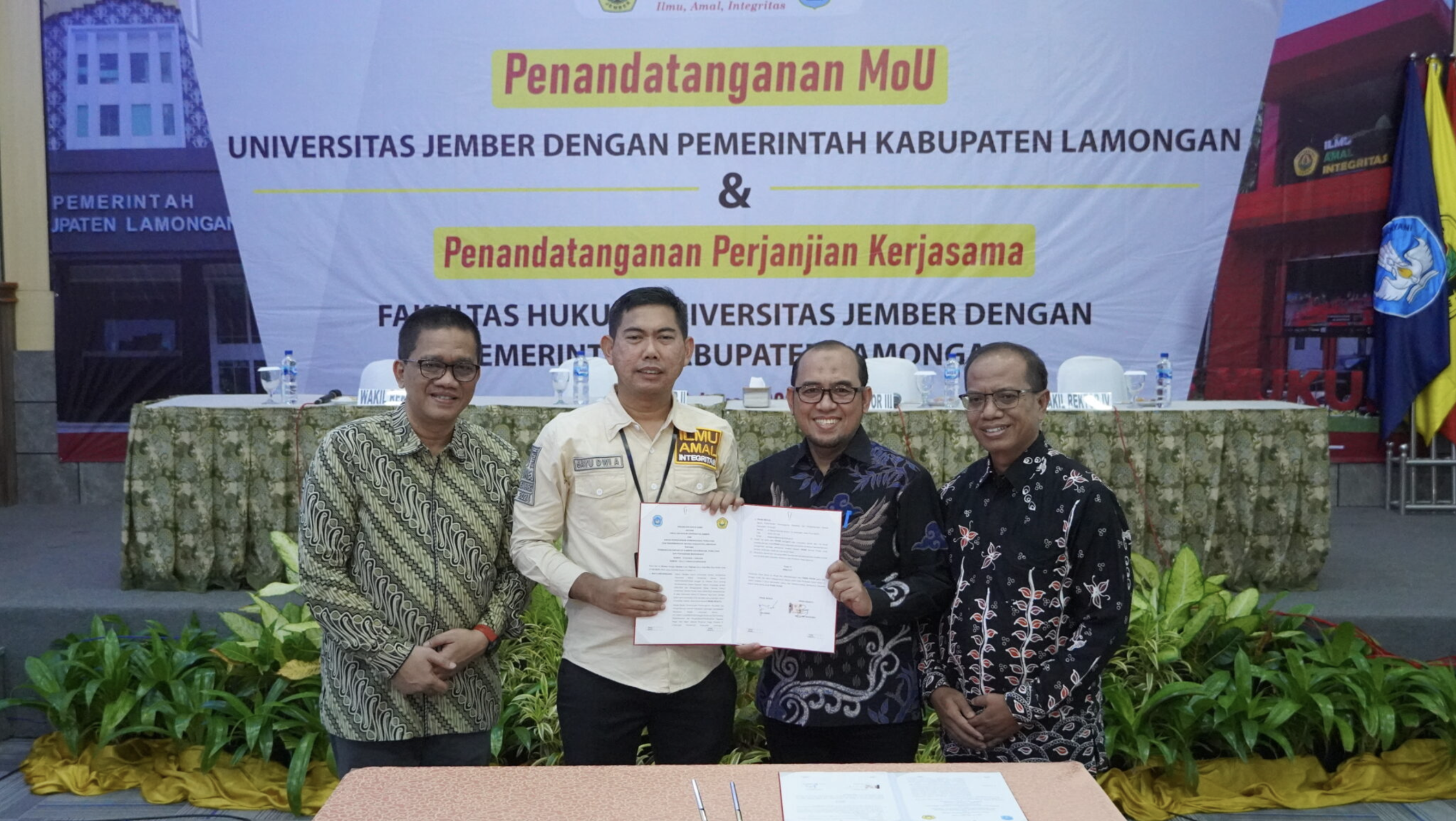
UNEJ's collaboration with local governments also extends beyond East Java's immediate regional partnerships. Through its Faculty of Law, UNEJ established cooperation with the Lamongan Regency Government on 11 February 2025. The partnership was accompanied by a Focus Group Discussion (FGD) to evaluate the implementation of the university's Three Pillars of Higher Education (Tri Dharma Perguruan Tinggi) during the previous semester and to plan future collaborative activities. Discussions covered education, research, community service, legal issues, and public policy.
These collaborations create opportunities for academic knowledge and legal expertise to contribute to regional governance and public policy discussions.
In addition to government institutions, UNEJ collaborates with NGOs and civil society organisations to address social, economic, environmental, and community development issues.
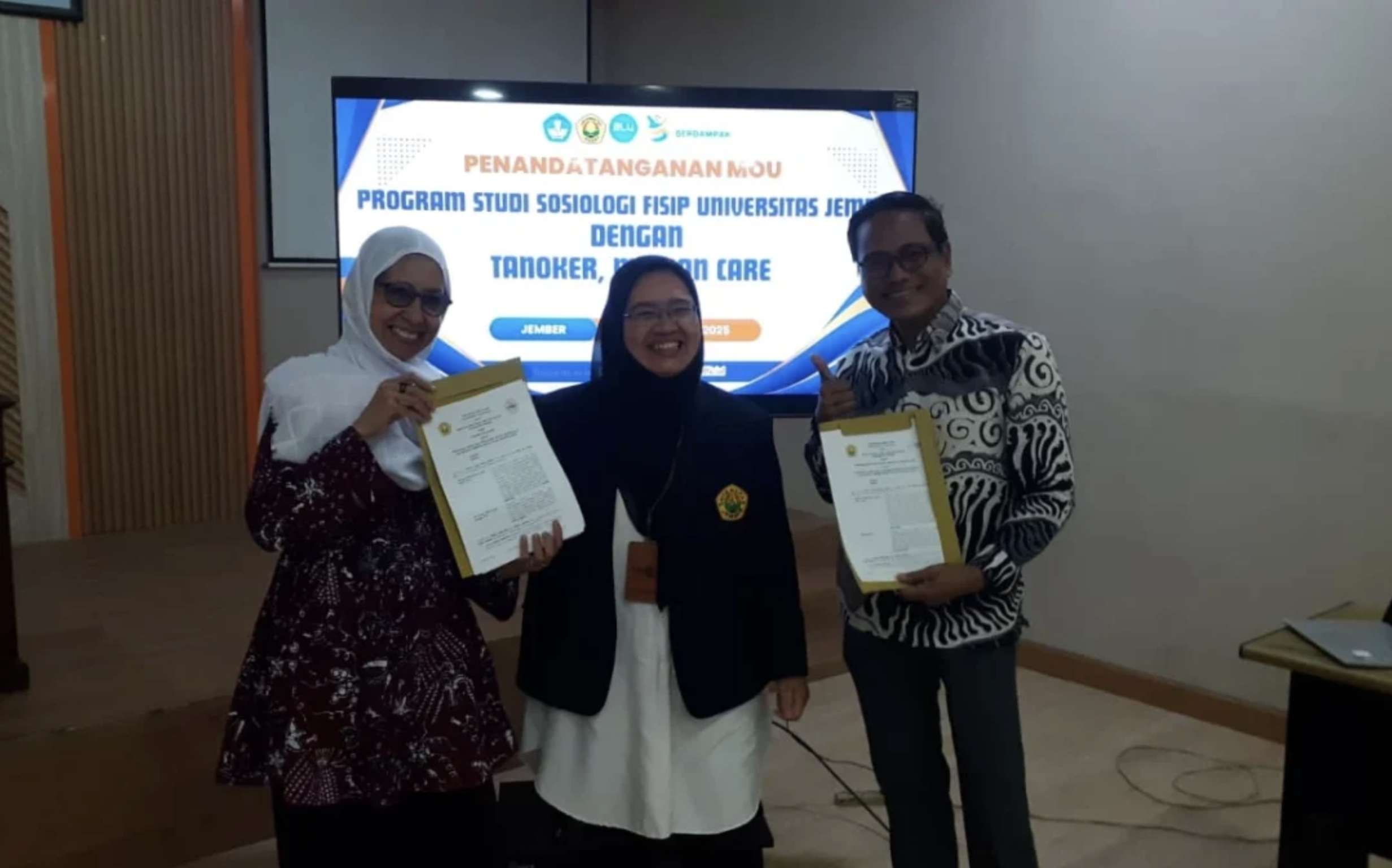
One example is the partnership established on 14 July 2025 between the Sociology Study Programme of the Faculty of Social and Political Sciences (FISIP) UNEJ, Tanoker Ledokombo, and Migrant CARE. This collaboration focuses on community studies and migrant worker protection through education, research, and community service. It provides opportunities for academic institutions and civil society organisations to exchange knowledge and work together on issues affecting local communities and migrant workers.
FISIP UNEJ also records partnerships with several other organisations, including Lembaga Pengembangan Teknologi Pedesaan (LPTP), Bank Sampah Sahabat Ibu, Yayasan Bengkel Jiwa, Yayasan Jember Fashion Carnaval, East Java Ecotourism Forum (EJEF), and Banyuwangi Youth Creative Network. These partnerships provide a foundation for collaboration in areas such as community empowerment, environmental awareness, social development, and local creative initiatives.
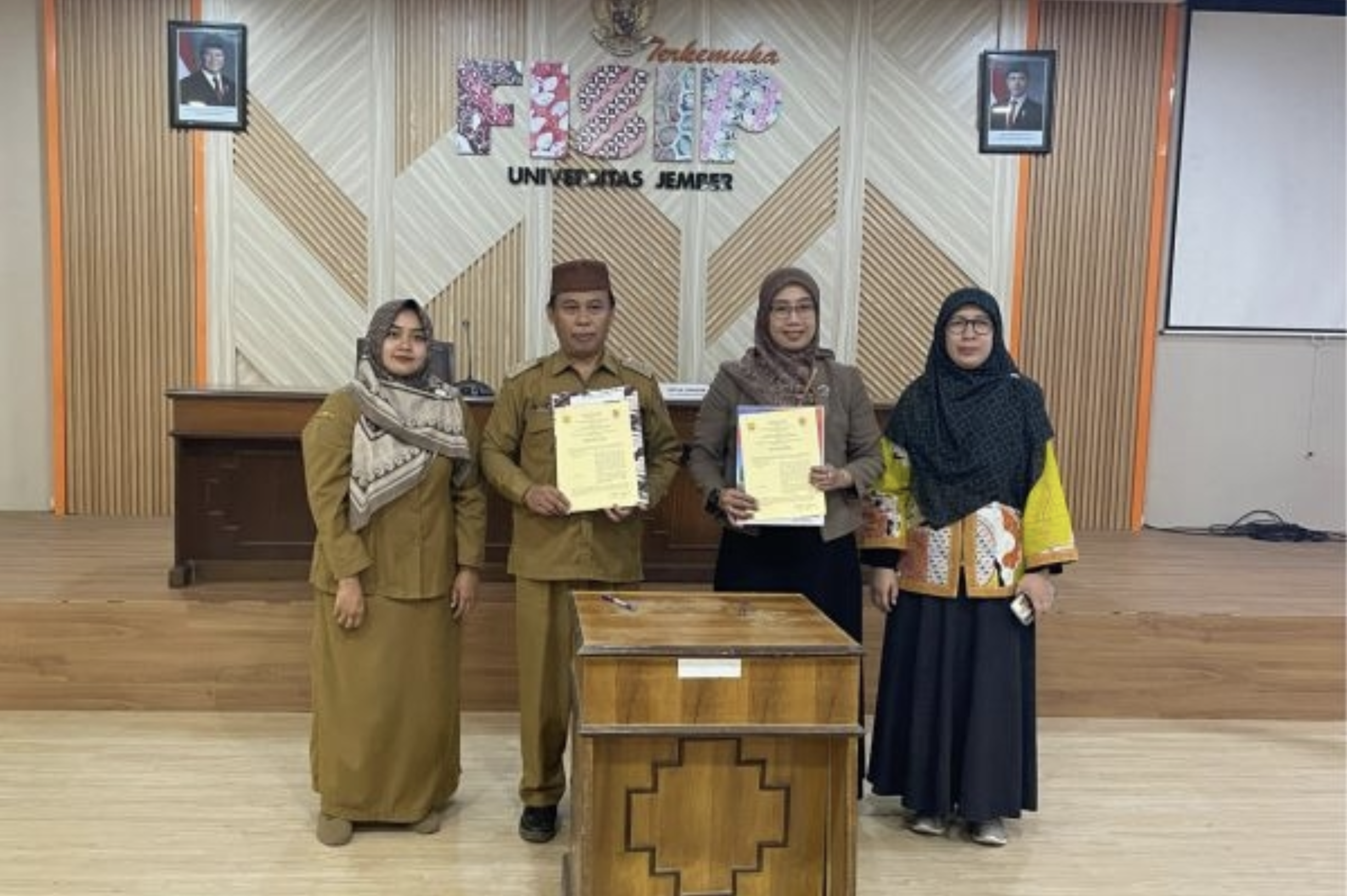
At the village level, UNEJ works directly with village administrations to support local governance and community development. On 8 July 2025, FISIP UNEJ established a cooperation agreement with the Klungkung Village Government in Sukorambi, Jember. The partnership focuses on implementing the Three Pillars of Higher Education in areas related to village governance, development, and community affairs.
FISIP UNEJ's cooperation records also include partnerships with the governments of Pakis Village in Panti, Sidomukti Village in Mayang, Awar-Awar Village in Asembagus, Klatakan Village in Kendit, and Sumberwringin Village in Bondowoso. These partnerships provide opportunities for academic collaboration and the application of university knowledge to address development needs at the village level.
Furthermore, UNEJ supports village development through the Village Development Programme coordinated by the Institute for Research and Community Service (LP2M). The programme is supported by Rector's Decree No. 4242/UN25/KL/2022 and covers villages in several regions, including Jember, Bondowoso, Situbondo, Probolinggo, Banyuwangi, Lumajang, Bangka Barat, and Pangkajene and Kepulauan. Through this programme, UNEJ contributes to community empowerment and the development of local potential.
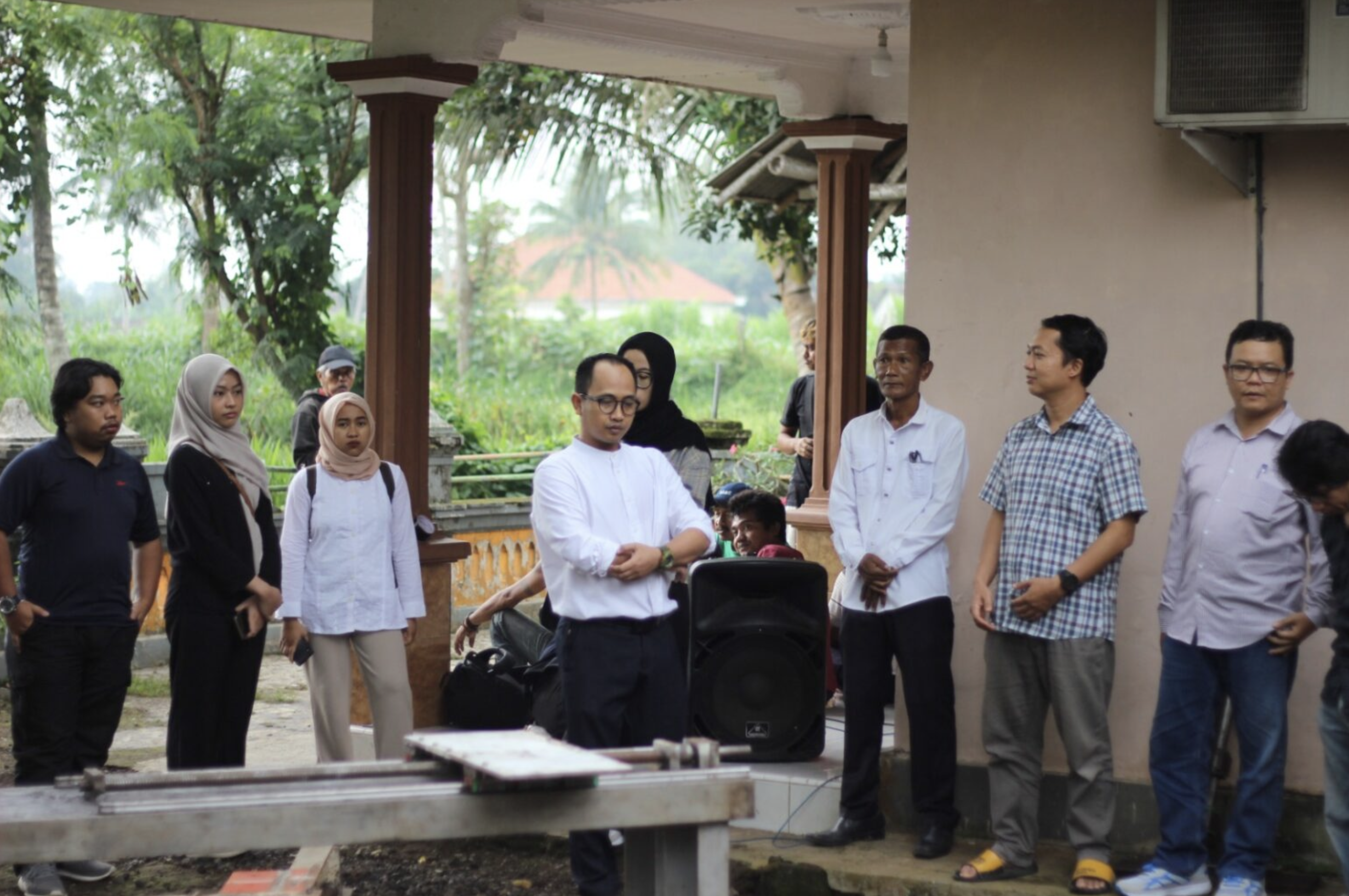
The collaboration between UNEJ, government institutions, and local communities is also reflected in practical village development initiatives.
One example is the Wujudkan Desa Berdaya programme in Mengok Village, Pujer District, Bondowoso Regency. Reported on 12 December 2025, the initiative involved the village government, the Ministry of Higher Education, Science, and Technology, and a UNEJ community service team through the 2025 Village Development Empowerment Grant. The programme focuses on developing bamboo-based products, including charcoal and export-oriented briquettes. It introduces anaerobic-condensation pyrolysis technology and CNC machinery to improve production processes and strengthen the village's economic potential. The initiative also considers broader community development objectives in education and health.
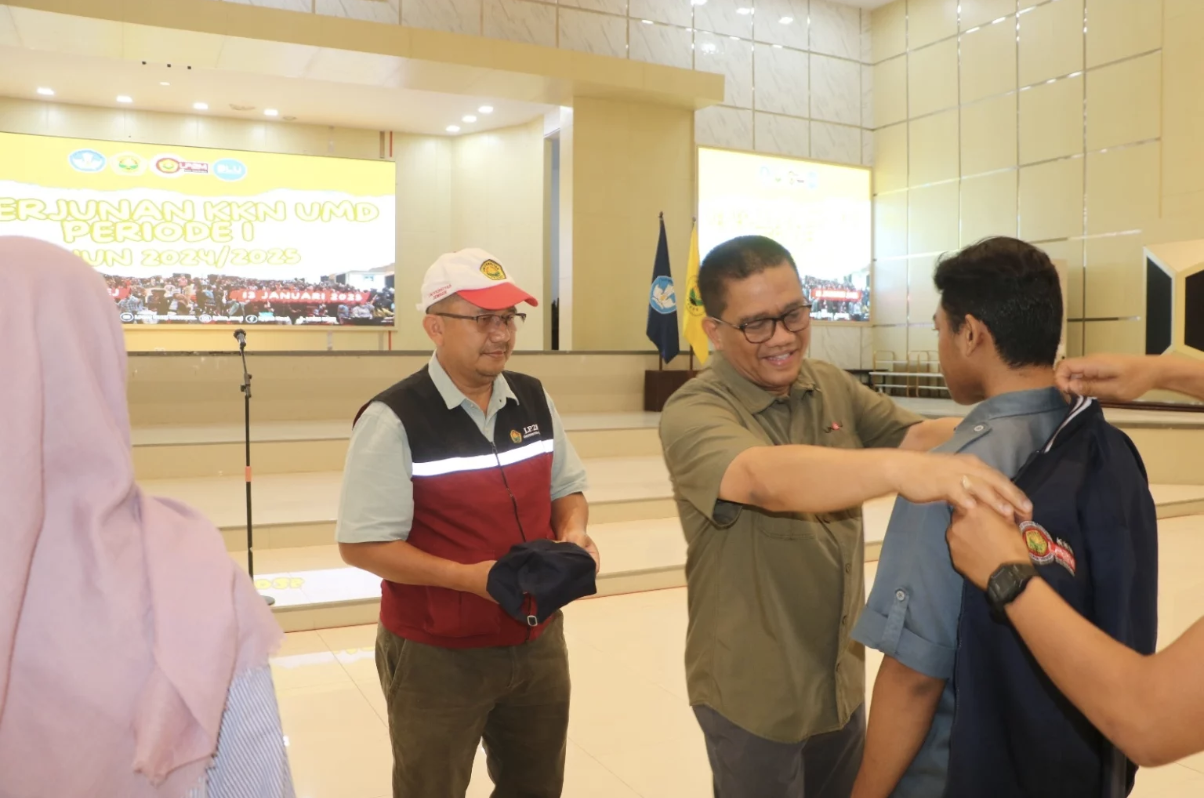
UNEJ's collaborative community service activities also include the UMD and Collaborative 3T programmes. On 13 January 2025, UNEJ released 233 students participating in the UMD programme and 30 students participating in the Collaborative 3T Mandalika programme. The placements covered several areas, including Jember, Bondowoso, Situbondo, Banyuwangi, Mataram, and East Lombok, enabling students to contribute directly to community development.
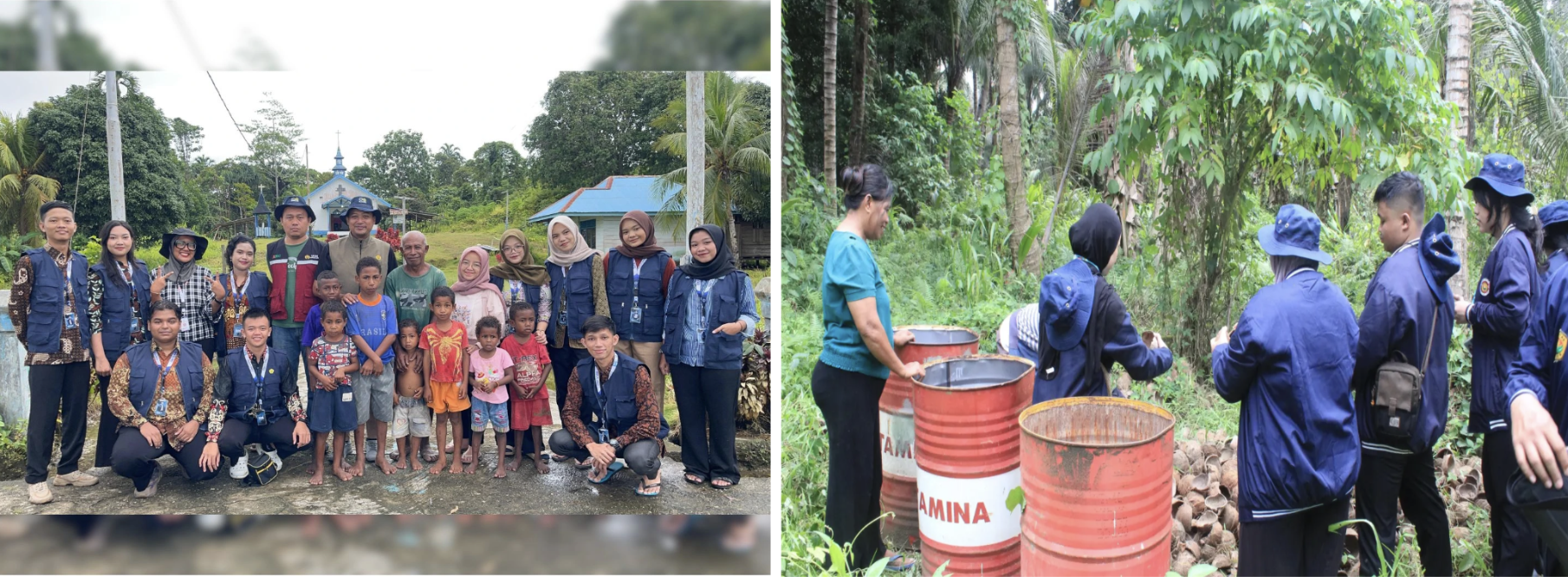
In Kampung Warimak, Tiplol Mayalibit District, Raja Ampat, a Collaborative 3T community service team developed a small-scale mangrove crab processing initiative. Reported on 4 August 2025, the programme introduced activities such as crab cultivation, processing, smoking, labelling, branding, and digital marketing. These activities aimed to strengthen local product value and support community-based economic opportunities.
Another initiative was implemented in Sayoang Village, South Halmahera, where ten UNEJ students worked with the Village Technology Innovation Centre, the Ministry of Villages, and LP2M UNEJ. The programme focused on producing coconut-shell briquettes by introducing processing machinery and developing a business model for the village-owned enterprise. It also included support for water supply as part of the village development activities.
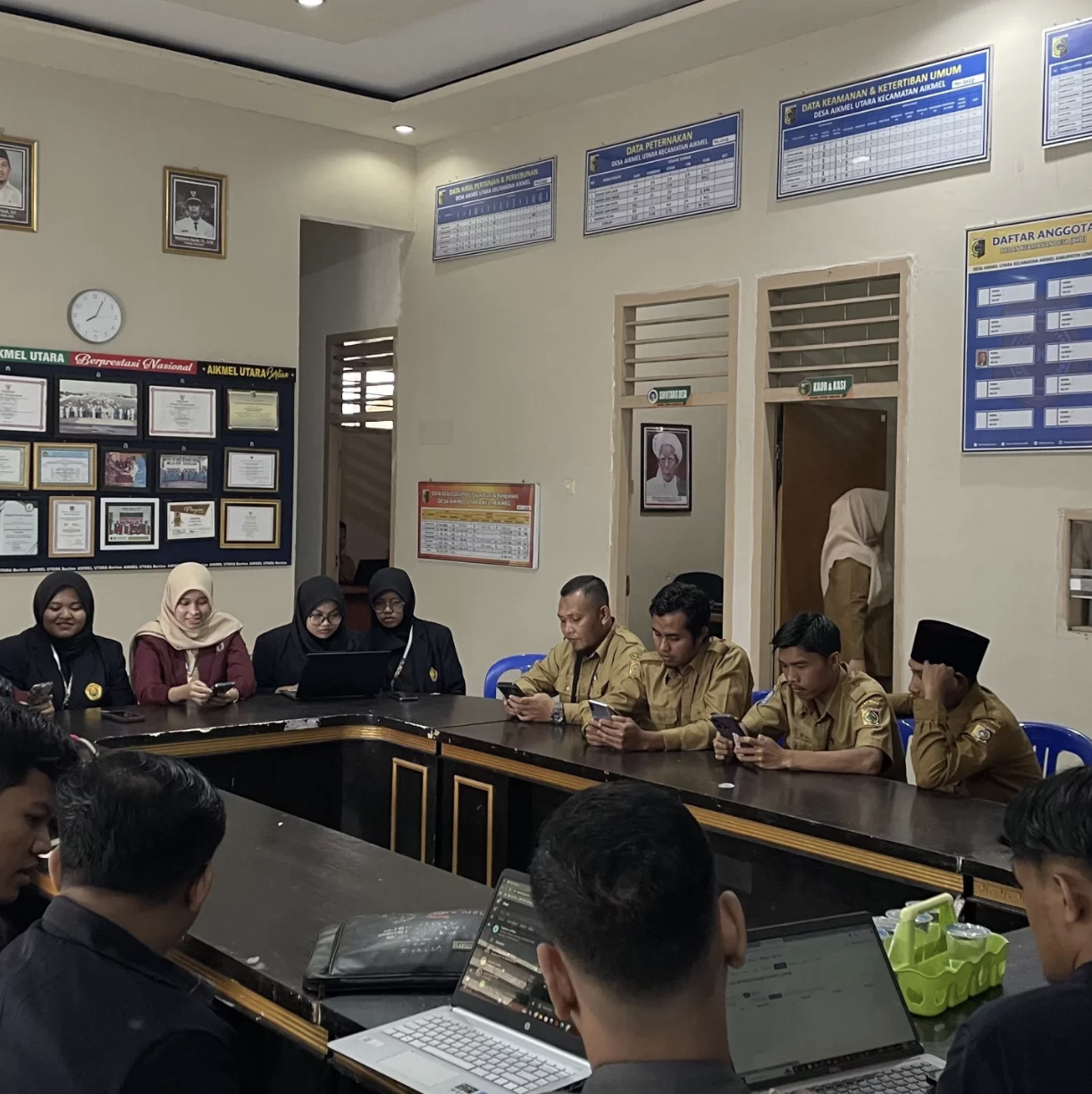
UNEJ further introduced SI-PEKA, a collaborative community service initiative designed to support village development through improved data management. The initiative reflects the university's contribution to strengthening village capacity through information and technology.
UNEJ also supports SDG-related knowledge exchange through academic discussions and collaboration with other higher education institutions.
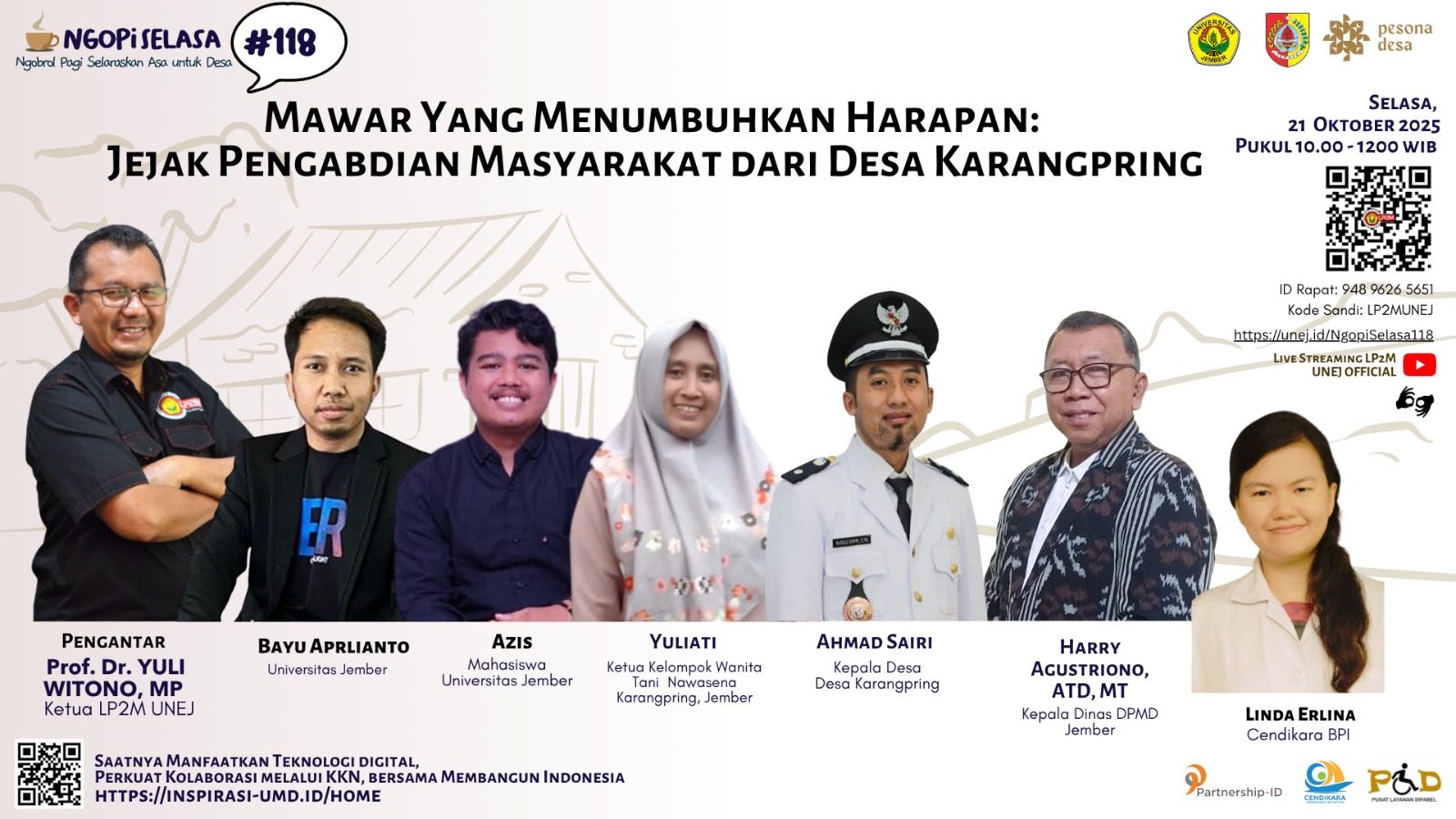
On 2 December 2025, LP2M UNEJ organised Ngopi Selasa Episode #121, an initiative whose name stands for “Ngobrol Pagi Selaraskan Asa Untuk Desa.” The session involved Pesona Desa and UIN Sunan Gunung Djati Bandung and discussed ARABICARA, an accessible digital literacy innovation for visually impaired users. The initiative presented an audio-based Arabic learning application and brought together university representatives, lecturers, students, and members of Pesantren Sam'an Cimenyan.
This activity demonstrates how inter-university knowledge sharing can support inclusive education and encourage the development of accessible digital learning solutions.
Through partnerships with national and regional governments, NGOs, village administrations, and community organisations, Universitas Jember contributes to the advancement of SDG-related policies and development initiatives. These collaborations connect academic expertise with practical regional challenges, while supporting poverty reduction, community empowerment, sustainable economic development, inclusive education, and stronger local institutions.
Sources :
Ministry of Finance and FEB UNEJ partnership: https://unej.ac.id/blog/2025/09/18/kementerian-keuangan-tunjuk-fakultas-ekonomi-dan-bisnis-universitas-jember-dampingi-150-bumdes-dan-kdmp-2025/
UNEJ–Jember Regency Government MoU: https://unej.ac.id/blog/2025/10/06/jember-darurat-kemiskinan-ekstrem-pemkab-jember-gandeng-unej-dalam-kerja-sama-strategis/
UNEJ–Situbondo Regency Government MoU: https://unej.ac.id/blog/2025/09/17/bupati-situbondo-pulang-ke-kampusnya-teken-nota-kesepahaman-dengan-universitas-jember/
UNEJ–Lamongan Regency Government collaboration: https://law.unej.ac.id/fh-unej-jalin-kerja-sama-dengan-pemkab-lamongan-serta-gelar-fgd-evaluasi-tridharma/
Faculty of Law UNEJ: https://law.unej.ac.id/
FISIP UNEJ partnership records: https://fisip.unej.ac.id/kerja-sama/
FISIP UNEJ partnership with Tanoker and Migrant CARE: https://fisip.unej.ac.id/perkuat-kajian-komunitas-dan-isu-migran-sosiologi-jalin-kemitraan-dengan-tanoker-dan-migran-care/
Klungkung Village Government and FISIP UNEJ partnership: https://ppid-desa.jemberkab.go.id/berita/pemerintah-desa-klungkung-dan-fisip-universitas-jember-jalin-kerja-sama-tridharma-perguruan-tinggi
UNEJ Village Development Programme: https://unej.ac.id/blog/2025/12/12/wujudkan-desa-berdaya-2025-desa-mengok-berkolaborasi-dengan-kemdiktisaintek-ri-dan-universitas-jember-angkat-produk-unggulan-arang-bambu-dan-briket-berorientasi-ekspor/
UMD and Collaborative 3T programme: https://unej.ac.id/blog/2025/01/13/rektor-unej-lepas-mahasiswa-ikuti-kkn-umd-dan-kolaboratif-3t-mandalika/
Mangrove crab processing in Raja Ampat: https://unej.ac.id/blog/2025/08/04/tim-kkn-kolaborasi-3t-unej-gagas-mini-hilirisasi-kepiting-bakau-di-raja-ampat/
Coconut-shell briquette initiative in Sayoang Village: https://unej.ac.id/blog/2025/08/07/briket-kelapa-kkn-unej-menyalakan-kemandirian-ekonomi-dan-lingkungan-desa-sayoang-halmahera-selatan/
SI-PEKA initiative: https://unej.ac.id/blog/2025/01/21/inovasi-kkn-kolaboratif-wujudkan-desa-mandiri-data-dengan-si-peka/
Ngopi Selasa Episode #121: http://pba.uinsgd.ac.id/ngopi-selasa-episode-121-hadirkan-arabicara-inovasi-literasi-digital-ramah-tunanetra-dari-prodi-pba/
17.2.2 International Collaboration on Data Gathering for the SDGs
Universitas Jember (UNEJ) continues to expand its international academic and research network through partnerships with overseas universities, international research institutions, lecturers, and students. These collaborations involve research activities, institutional agreements, international conferences, academic exchanges, and student mobility programmes. Through these initiatives, UNEJ provides opportunities for cross-border knowledge exchange and collaborative research that can contribute to addressing sustainable development challenges.
UNEJ develops international research collaboration with universities and research institutions across different countries. These partnerships provide opportunities for researchers to exchange expertise, conduct comparative studies, and develop collaborative research initiatives.
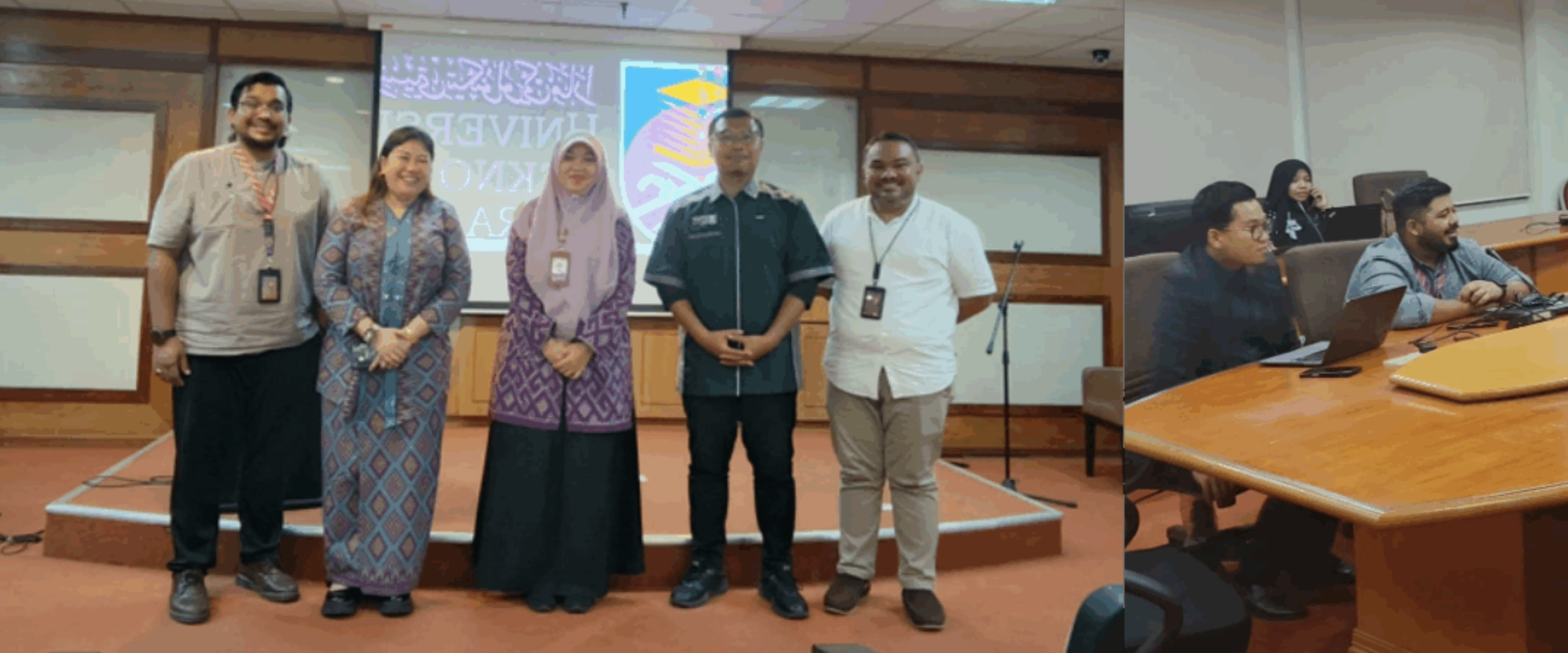
One example is the collaboration between the Faculty of Teacher Training and Education (FKIP) UNEJ and Universiti Teknologi MARA (UiTM), Malaysia. In 2025, researchers from both institutions conducted a collaborative study entitled "Exploring the Fusion of Local Wisdom and Digital Learning: A Comparative Study of Educational Video Strategies in Indonesia and Malaysia." The research examined the integration of local wisdom into digital learning strategies and compared educational video approaches in the two countries. The project was scheduled to run from March to December 2025, involving researchers from both universities in the development and validation of learning resources.
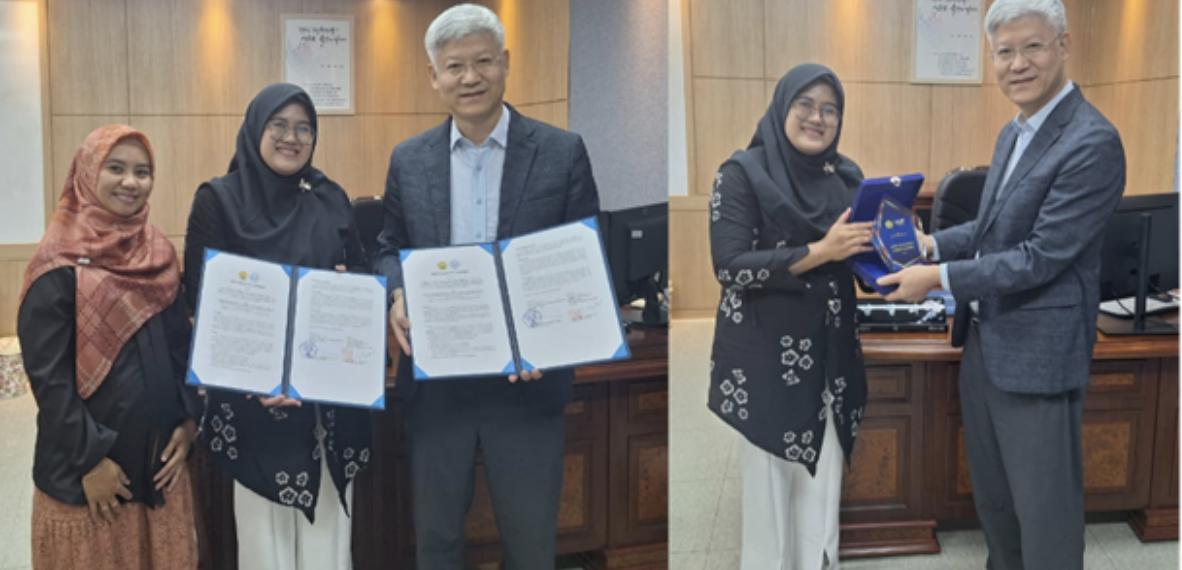
UNEJ also strengthened its research network through an international research agreement between the Biology Education Study Programme of FKIP UNEJ and Chungnam National University (CNU), South Korea. The agreement, signed in October 2025, covers joint research, scientific publications, academic exchanges, seminars, and other academic activities. This partnership provides a framework for developing collaborative research and strengthening scientific knowledge exchange between the two institutions.
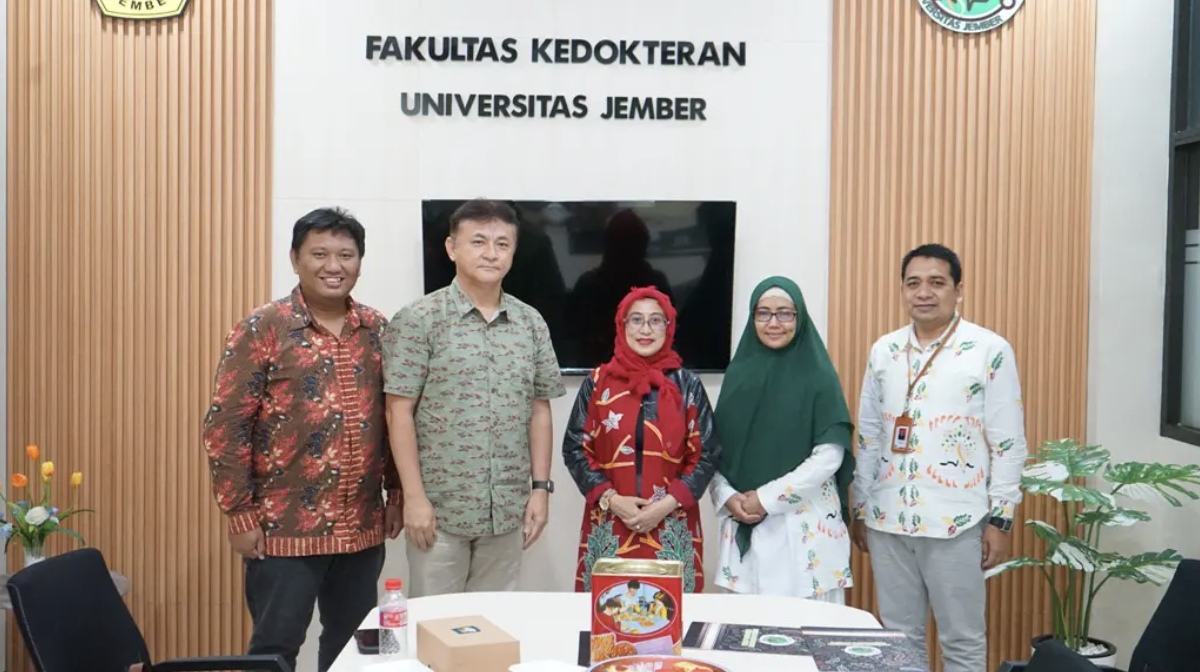
In the health research sector, the Faculty of Medicine UNEJ signed an Implementation Arrangement with Hirosaki University, Japan, and the National Research and Innovation Agency (BRIN) on 19 August 2025. The agreement involved international and national research partners and provided a basis for strengthening cooperation in agromedicine and related research fields.
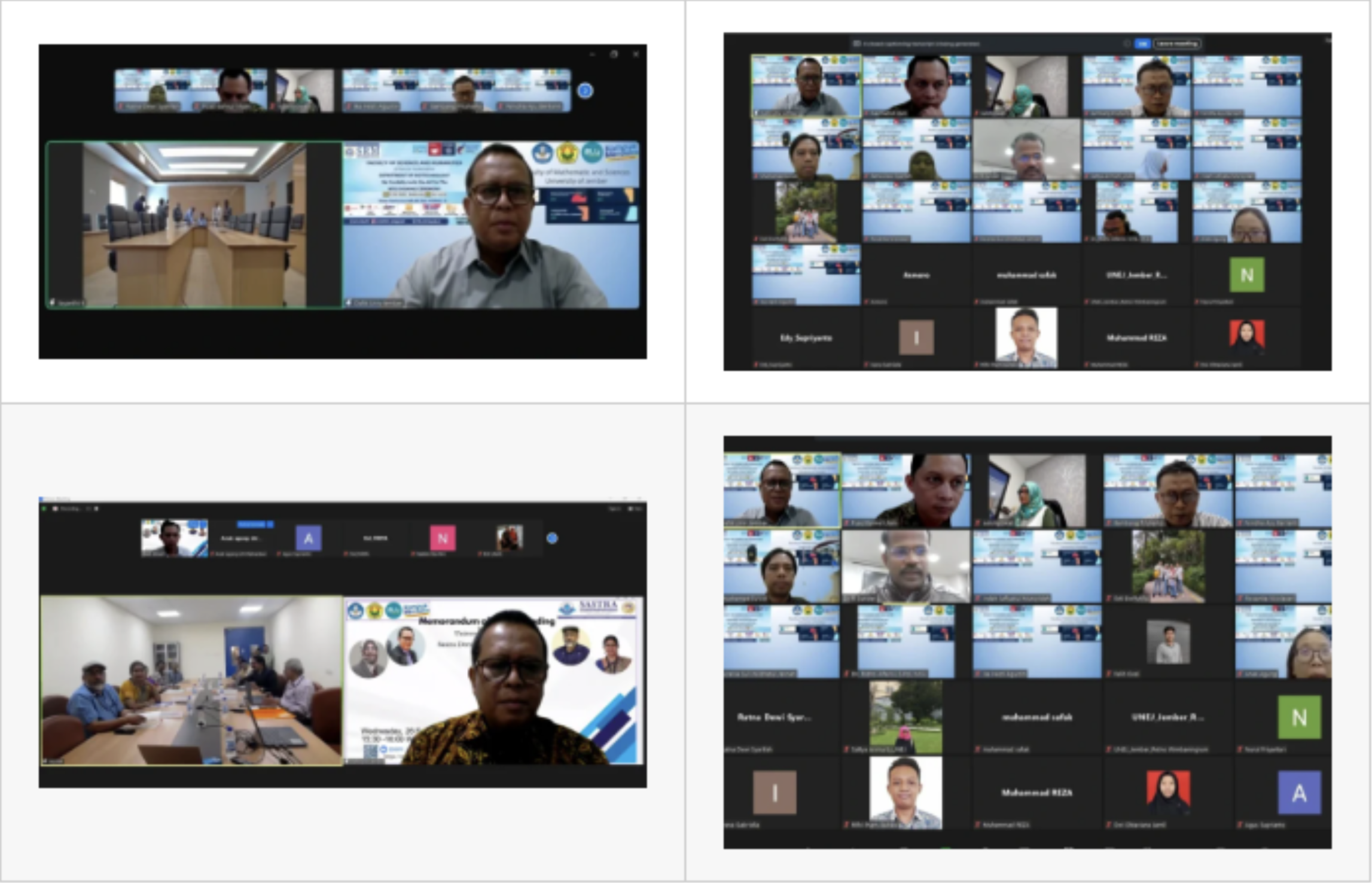
Furthermore, the Faculty of Mathematics and Natural Sciences (FMIPA) UNEJ established international academic cooperation with SRM Institute of Science and Technology and SASTRA Deemed-to-be University, India. Reported on 26 March 2025, the cooperation includes collaborative research, international scientific publications, student exchanges, guest lecturer programmes, and academic activities. These partnerships create opportunities for researchers and academics to develop international research networks and exchange scientific information.
UNEJ also expands its international research and academic network through formal agreements with overseas universities. These agreements provide institutional frameworks for future joint research, student and staff exchanges, academic activities, and scientific knowledge sharing.
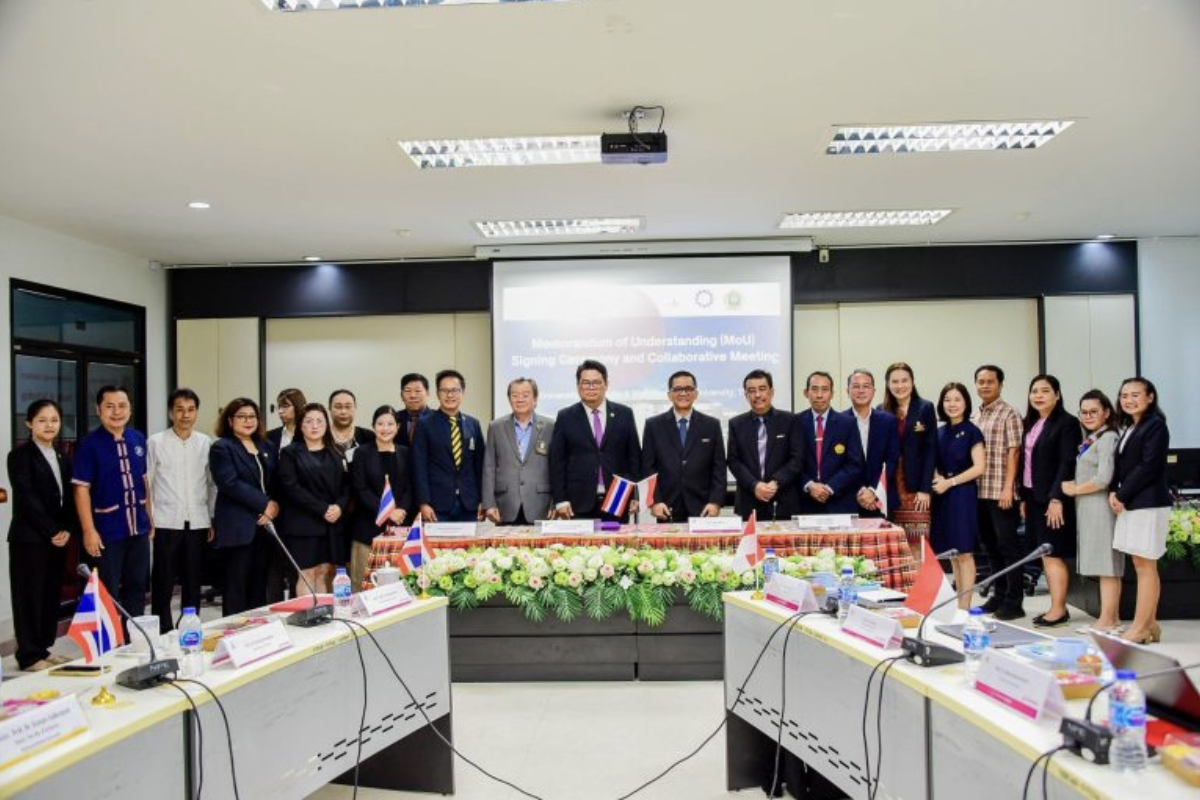
On 21 August 2025, UNEJ signed a Memorandum of Understanding (MoU) with Mahasarakham University (MSU), Thailand. The agreement covers joint research, student internships and exchanges, curriculum development, lecturer and researcher exchanges, and scientific seminars and conferences.

On 25 November 2025, UNEJ established a strategic partnership with Batangas State University (BSU), Philippines, through the signing of an MoU. The cooperation covers faculty joint research, student exchanges, collaborative student research, academic seminars, and joint conferences. The partnership provides opportunities for both universities to strengthen academic collaboration and exchange research knowledge.
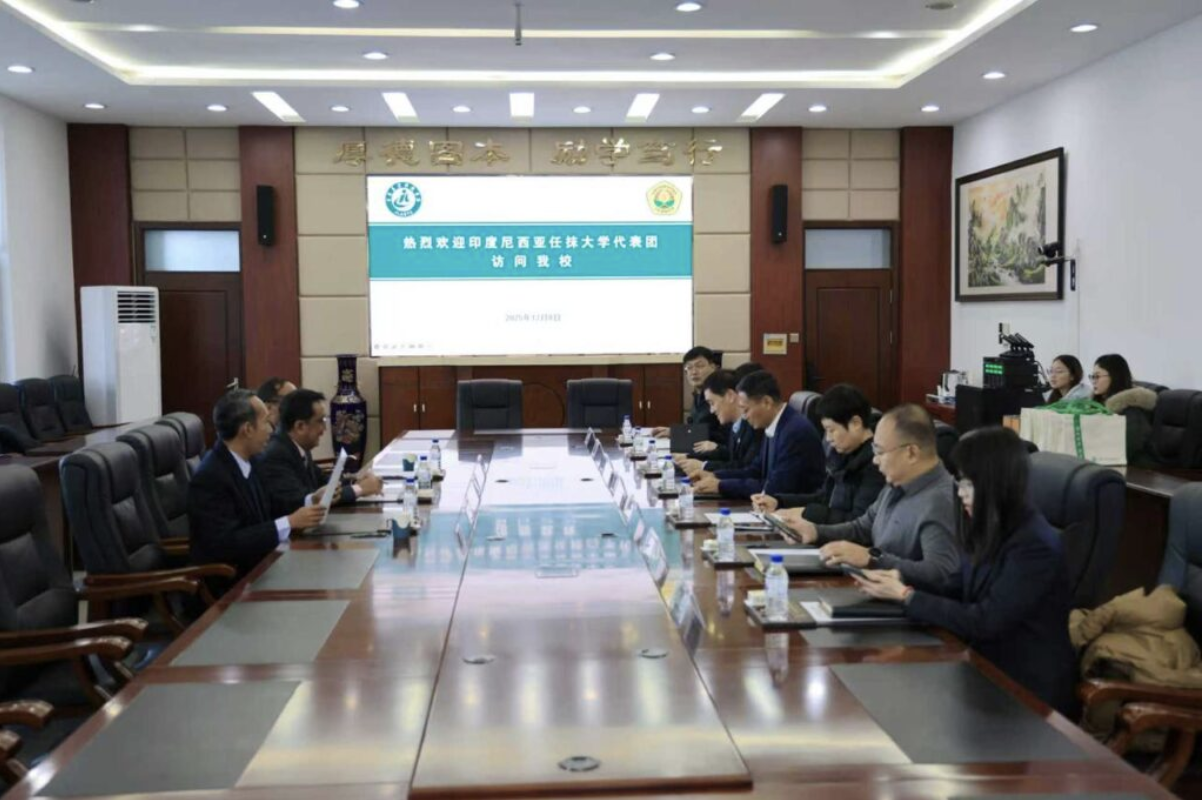
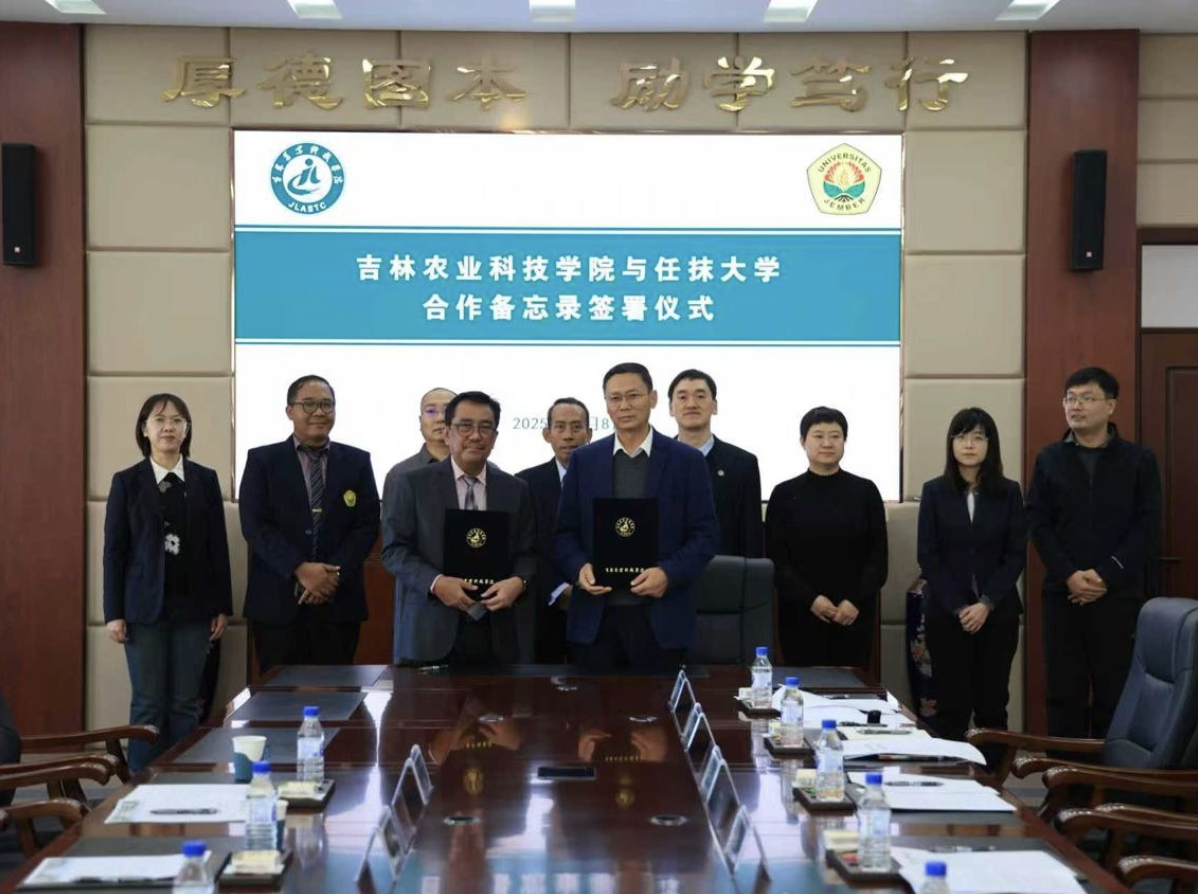
Furthermore, on 9 December 2025, UNEJ signed an MoU with Jilin Agricultural Science and Technology University (JLASTU), China. The agreement focuses on cooperation in agriculture, technology, and academic development. Both institutions discussed opportunities for student mobility, staff exchanges, and research collaboration, including areas related to rice, maize, horticultural crops, tropical crops, plantations, and livestock.
UNEJ strengthens international academic networks through conferences that involve universities and researchers from different countries.
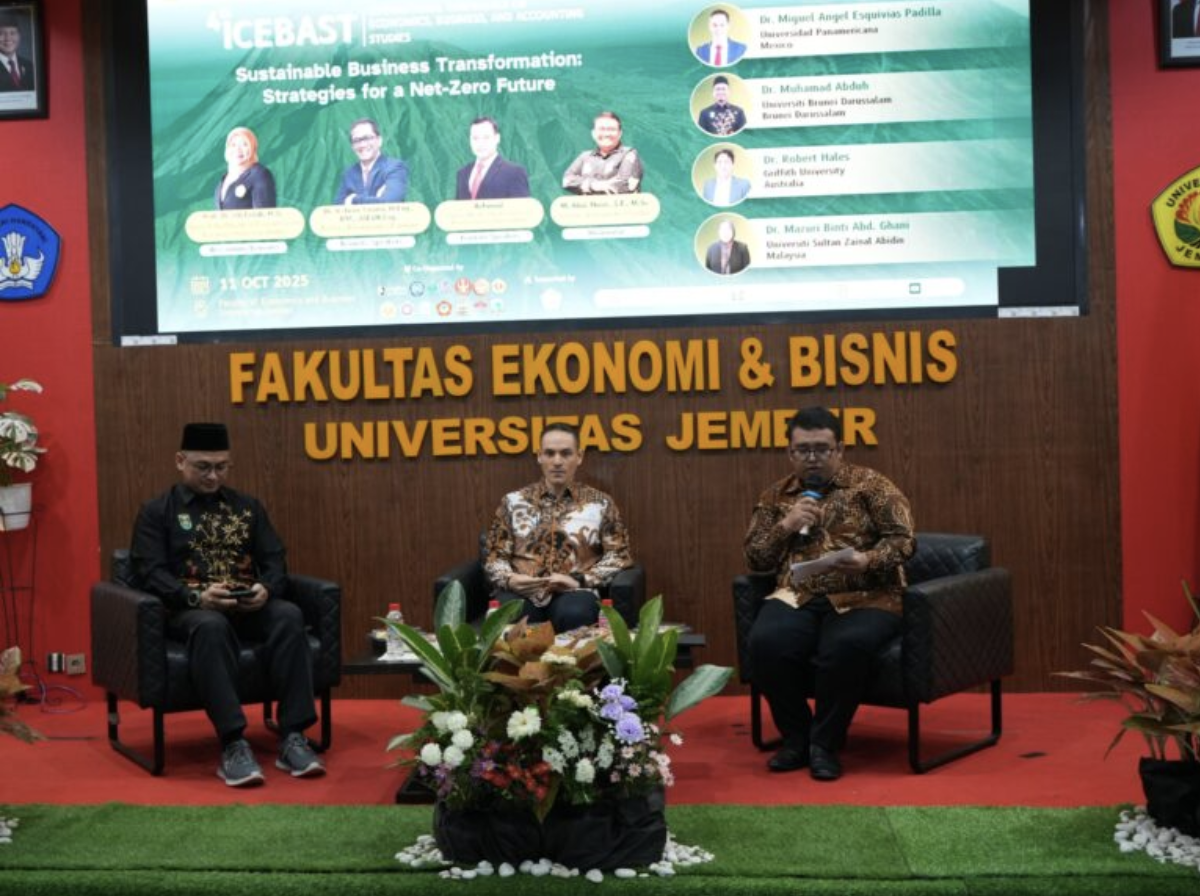
On 11 October 2025, the Faculty of Economics and Business (FEB) UNEJ organised the International Conference on Economics, Business, and Accounting Studies (ICEBAST) 2025, with the theme "Sustainable Business Transformation: Strategies for a Net-Zero Future."
The conference involved 14 universities from different regions of Indonesia as co-host institutions and featured international speakers from several countries. The event also served as a platform for implementing international cooperation between UNEJ and Universiti Sultan Zainal Abidin (UNiSZA), Malaysia. Through this conference, academics and researchers had opportunities to exchange perspectives on sustainable business transformation, economic development, and strategies supporting a net-zero future.
International academic exchange is also supported through guest lectures and the involvement of overseas academics in UNEJ's teaching and learning activities.
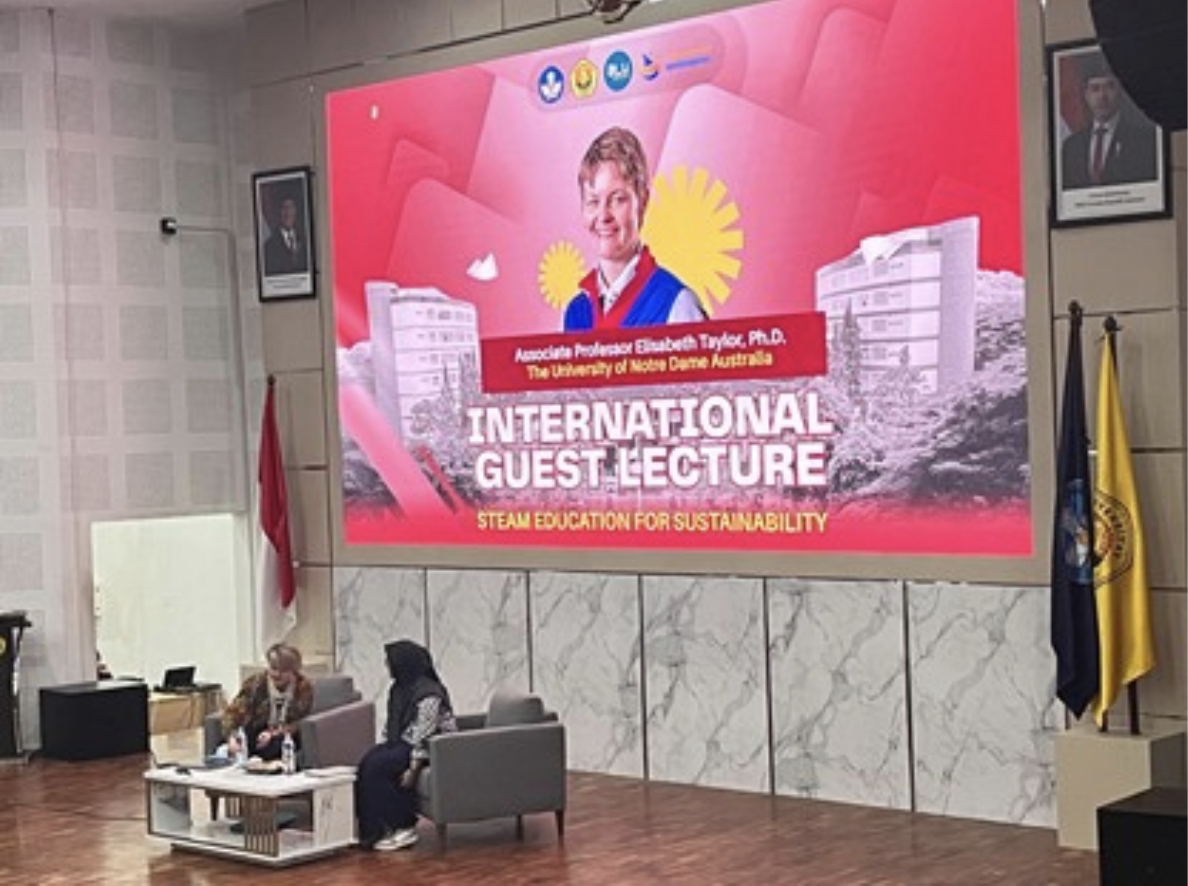
On 23 August 2025, FKIP UNEJ organised an International Guest Lecture featuring Associate Professor Dr. Elisabeth Taylor from the University of Notre Dame Australia. The event discussed "STEAM Education for Sustainability" and explored the application of Science, Technology, Engineering, Arts, and Mathematics in supporting sustainable education. The activity provided opportunities for lecturers and students to learn from international academic perspectives and discuss approaches to sustainability in education.
The Faculty of Dentistry UNEJ also organised an International Guest Lecture on 15 October 2025, featuring Prof. Dr. med. habil. Dr. h. c. Holger Jentsch from Universität Leipzig, Germany. The lecture, held on 14 October 2025, discussed periodontal therapy possibilities and limitations and provided students with opportunities to gain knowledge from an international expert in dental science.
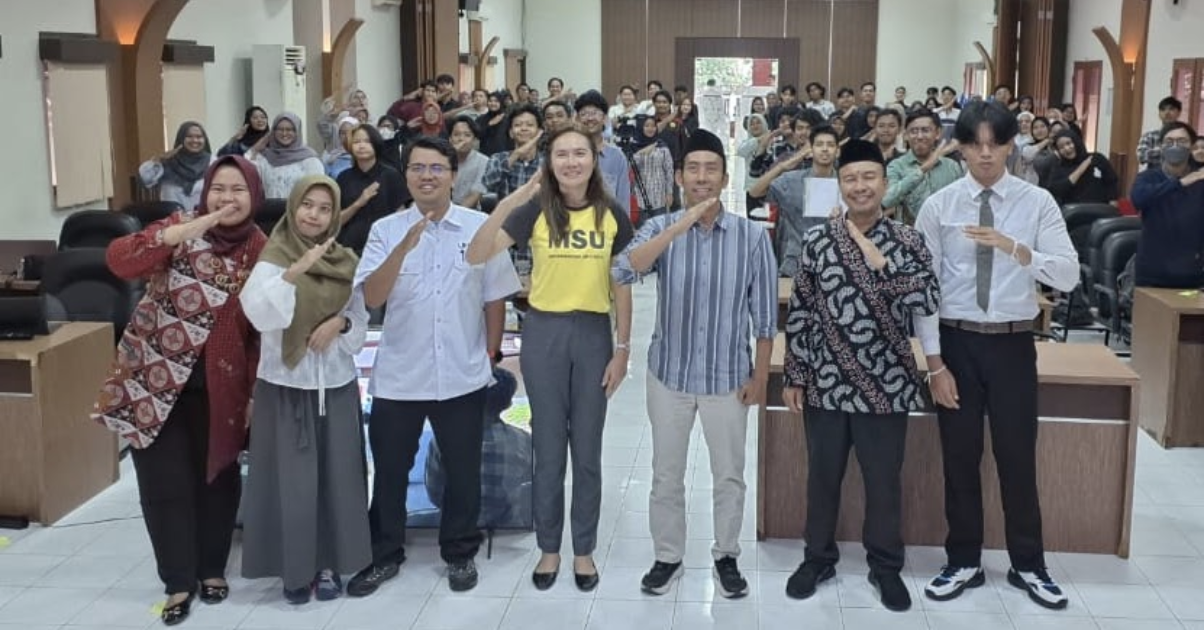
In addition, the Faculty of Agriculture UNEJ organised an International Guest Lecture on 10 April 2025, featuring Professor Orawan Srisompun from Mahasarakham University, Thailand. The lecture discussed agricultural development in Thailand and supported academic knowledge exchange between the two universities.
These activities demonstrate UNEJ's efforts to facilitate international academic exchange and provide opportunities for students and lecturers to engage with overseas experts.
UNEJ also supports international academic engagement through the participation of foreign students and student mobility programmes.
On 20 August 2025, the International Service and Partnership Centre (PLKI) under the Institute for Quality Assurance and Learning Development (LPMPP) organised an orientation and evaluation programme for international students preparing for the 2025/2026 academic year. The activity was attended by international students from Sudan, Thailand, Algeria, and Pakistan who were studying at UNEJ. The programme provided a platform for students to share their academic experiences, discuss challenges, and receive information about campus and social life in Jember.
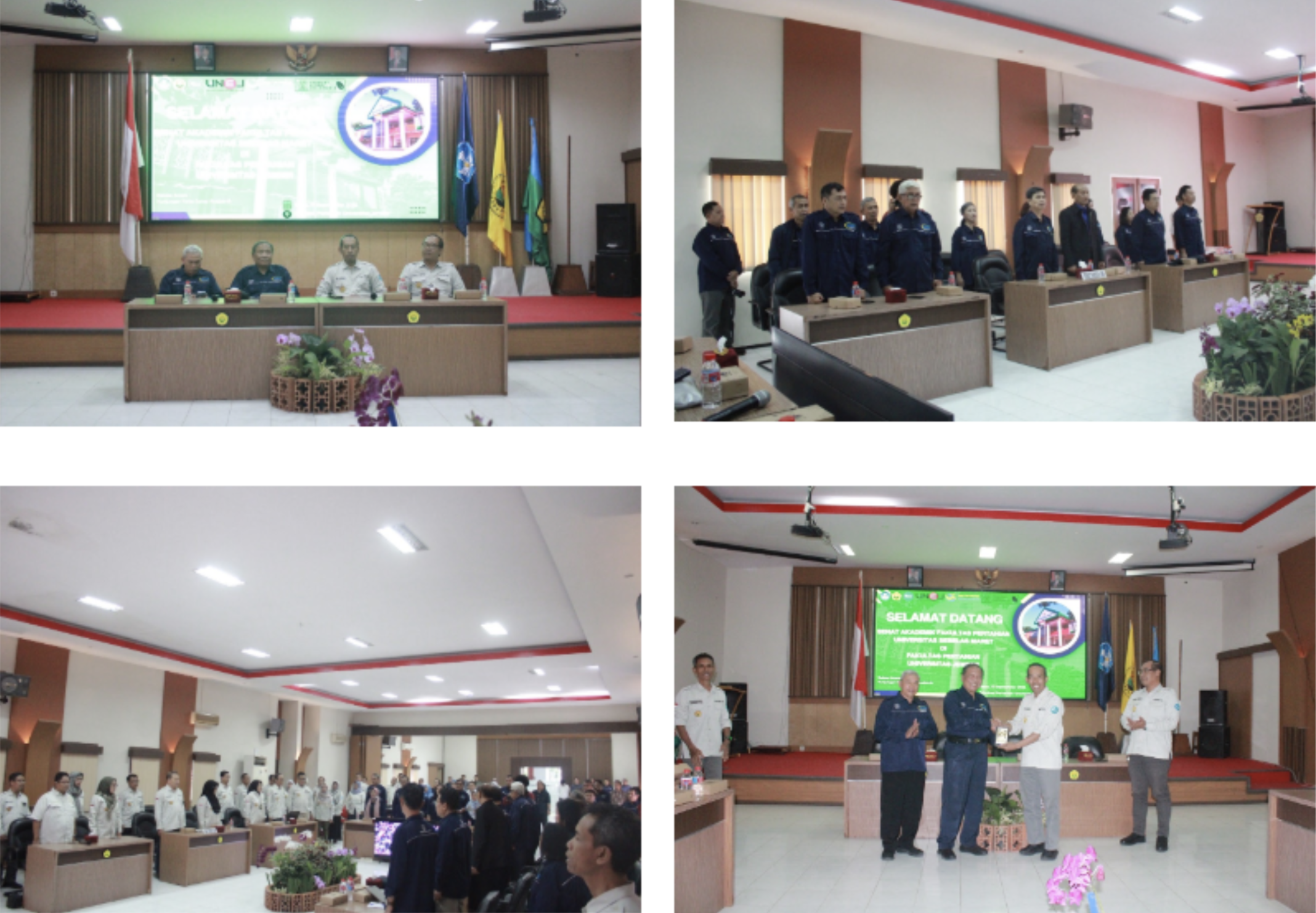
Furthermore, UNEJ implemented the International Mobility of Student and Staff for Agriculture (IMSSA) programme through its Faculty of Agriculture in collaboration with Mahasarakham University, Thailand. In 2025, seven students from Agronomy, Agribusiness, and Animal Husbandry participated in the programme from 10 July to 10 October. Their activities included laboratory practices related to their academic disciplines, visits to agricultural partner companies, and cultural exchanges with local students.
The IMSSA programme provided students with opportunities to gain international academic exposure and practical experience in an overseas university environment. The laboratory activities also supported the exchange of academic knowledge and research practices between students and their host institution.
Through international research collaboration, institutional partnerships, academic conferences, guest lectures, and student mobility programmes, Universitas Jember continues to strengthen its contribution to international academic cooperation. These activities provide opportunities to exchange scientific knowledge, develop comparative perspectives, and strengthen research capacity across institutions and countries.
The collaborations are relevant to several Sustainable Development Goals, including SDG 2 (Zero Hunger), SDG 3 (Good Health and Well-being), SDG 4 (Quality Education), SDG 9 (Industry, Innovation and Infrastructure), SDG 12 (Responsible Consumption and Production), and SDG 15 (Life on Land), depending on the research themes and outputs of each collaboration.
To demonstrate full alignment with Indicator 17.2.3, UNEJ should complement evidence of international partnerships and academic activities with documentation showing actual joint SDG-related data gathering, measurement, validation, or analysis. Relevant supporting documents may include jointly collected datasets, shared research instruments and protocols, comparative research reports, international publications containing cross-country data, and documentation showing how research findings contribute to SDG monitoring.
Sources
UNEJ and UiTM Collaborate on Local Wisdom-Based Learning Videos (30 September 2025): https://fkip.unej.ac.id/unej-dan-uitm-jalin-kolaborasi-internasional-kembangkan-video-pembelajaran-berbasis-kearifan-lokal/
Biology Education UNEJ Signs International Research MoA with Chungnam National University (October 2025): https://fkip.unej.ac.id/pendidikan-biologi-unej-teken-moa-riset-internasional-dengan-chungnam-national-university-korea-selatan-dan-sukses-berpartisipasi-di-international-conference-seoul-2025/
Faculty of Medicine UNEJ Signs Implementation Arrangement with Hirosaki University and BRIN (19 August 2025): https://fk.unej.ac.id/fakultas-kedokteran-unej-tandatangani-implementation-arrangement-dengan-hirosaki-university-jepang-dan-brin/
FMIPA UNEJ Establishes International Cooperation with Two Universities from India (26 March 2025): https://fmipa.unej.ac.id/fmipa-unej-jalin-kerja-sama-internasional-bidang-akademik-dan-publikasi-bersama-dengan-dua-universitas-dari-india/
UNEJ Signs Cooperation Agreement with Mahasarakham University, Thailand (22 August 2025): https://unej.ac.id/blog/2025/08/22/unej-jalin-kerja-sama-dengan-mahasarakham-university-thailand/
UNEJ and Batangas State University Establish Strategic Partnership (25 November 2025): https://unej.ac.id/blog/2025/11/25/perkuat-mutu-global-batangas-state-university-ajak-universitas-jember-jalin-kemitraan-strategis-lintas-bidang/
UNEJ Strengthens International Network with Jilin Agricultural Science and Technology University, China (12 December 2025): https://unej.ac.id/blog/2025/12/12/perkuat-jejaring-internasional-unej-jalin-kerja-sama-dengan-jilin-agricultural-science-technology-university-china/
Bunkyo Gakuin University Japan Establishes Cooperation with UNEJ (30 April 2025): https://unej.ac.id/blog/2025/04/30/bunkyo-gakuin-university-jepang-jalin-kerja-sama-dengan-unej/
FEB UNEJ Organises ICEBAST 2025 (11 October 2025): https://unej.ac.id/blog/2025/10/11/feb-universitas-jember-gelar-icebast-2025-dorong-transformasi-bisnis-berkelanjutan-menuju-masa-depan-net-zero/
FKIP UNEJ International Guest Lecture on STEAM Education for Sustainability (23 August 2025): https://fkip.unej.ac.id/menjawab-tantangan-pendidikan-berkelanjutan-pgsd-unej-bahas-steam-education-dalam-kegiatan-international-guest-lecture/
FKG UNEJ International Guest Lecture with Universität Leipzig (15 October 2025): https://fkg.unej.ac.id/fkg-unej-gelar-international-guest-lecture/
Faculty of Agriculture UNEJ Guest Lecture with Mahasarakham University (10 April 2025): https://faperta.unej.ac.id/english/news-and-events/data-en-2025/data-3-bulan-lalu/en-guest-lecture-14-april-2025
International Student Orientation at UNEJ (20 August 2025): https://unej.ac.id/blog/2025/08/20/pusat-layanan-dan-kemitraan-internasional-lpmpp-memberikan-pengenalan-dan-orientasi-bagi-mahasiswa-asing-menyambut-semester-baru/
IMSSA International Mobility Programme (22 September 2025): https://faperta.unej.ac.id/berita-pengumuman/data-2025/mengusung-sinergi-unej-alumni-dan-mitra-strategis-faperta-unej-menggela
17.2.3 International Collaboration on Data Gathering for the SDGs
Universitas Jember (UNEJ) continues to expand its international academic and research network to strengthen scientific collaboration and contribute to sustainable development. Through international research meetings, comparative academic studies, institutional partnerships, and collaborative community engagement, UNEJ creates opportunities for researchers to exchange knowledge, develop research initiatives, and address development challenges across different countries.
UNEJ strengthens international research collaboration by connecting its researchers with overseas academics and research institutions to explore shared research interests and address development challenges.
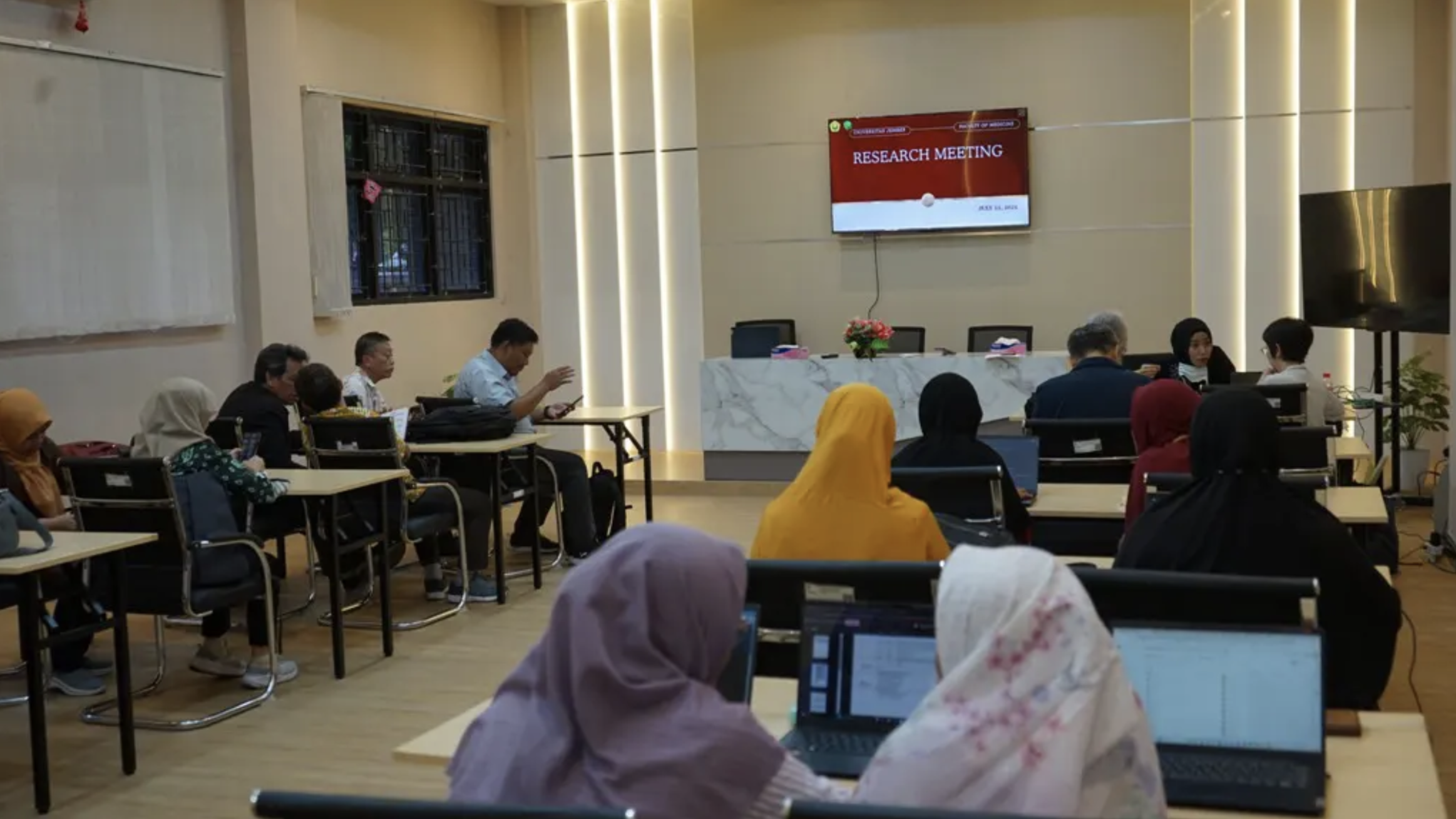
One example is the research meeting organised by the Faculty of Medicine UNEJ on 24 July 2025, involving three academics from Japan: Professor Mayumi Tsuji, Professor Ichiro Higashikubo, and Dr. Megumi Yamamoto. The meeting focused on the development of agromedicine research, particularly occupational health, environmental health, and industrial toxicology in rural areas.
During the discussion, the Japanese academics shared research perspectives on occupational health, workplace environmental measurement, and the health impacts of industrial exposure. UNEJ researchers also discussed potential collaborative research topics relevant to local conditions, including pesticide exposure among farmers, occupational health among plantation workers, and environmental quality monitoring in rural areas. The meeting concluded with plans to develop joint research proposals, providing a foundation for further international research collaboration.
UNEJ also strengthens its international research network through formal partnerships with overseas universities. These agreements provide a framework for developing joint research, academic exchanges, student mobility, and scientific knowledge sharing.
On 21 August 2025, UNEJ signed a Memorandum of Understanding (MoU) with Mahasarakham University (MSU), Thailand. The agreement covers academic and research collaboration, including joint research, lecturer and researcher exchanges, student mobility, and scientific seminars and conferences. The partnership also encourages the exchange of institutional information and the development of joint research and training activities.
In addition, UNEJ signed an MoU with Batangas State University (BSU), Philippines, on 25 November 2025. The partnership includes faculty joint research, student exchange, collaborative student research, academic seminars, and joint conferences. These activities are intended to strengthen international knowledge exchange and provide opportunities for researchers and students from both institutions to participate in collaborative academic projects.
Furthermore, on 9 December 2025, UNEJ signed an MoU with Jilin Agricultural Science and Technology University (JLASTU), China. The agreement focuses on strengthening collaboration in agriculture, technology, and academic development. Both universities discussed their respective agricultural research strengths, including rice, maize, horticultural crops, tropical crops, plantations, and livestock. The institutions also explored opportunities for international student mobility, staff exchange, and collaborative research as part of their long-term academic partnership.
International academic exchange provides opportunities for UNEJ researchers, lecturers, and students to gain insights into research practices and development approaches in other countries.
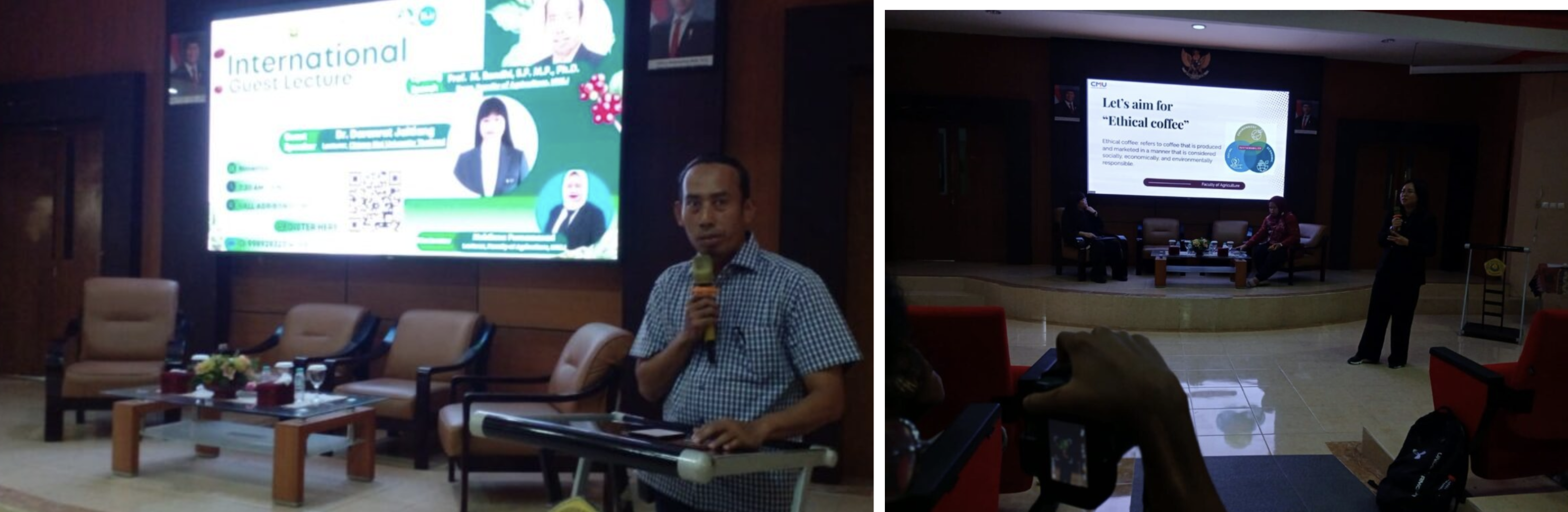
On 1 November 2025, the Faculty of Agriculture UNEJ organised an International Guest Lecture entitled "Cross-Border Agribusiness Insights: Comparative Perspectives on the Coffee Industry in Indonesia and Thailand." The event featured Dr. Daranrat Jaitiang and Dr. Toungporn Uttarotai from Chiang Mai University, Thailand.
The lecture presented comparative perspectives on coffee production, agribusiness development, community-based approaches, and ethical coffee practices in Thailand and Indonesia. The discussion enabled participants to examine differences in agricultural systems, local value chains, and sustainability practices across the two countries. It also provided an opportunity for UNEJ academics and students to exchange knowledge with international experts in agricultural and agribusiness development.
UNEJ also implements international mobility programmes to strengthen academic exposure and practical knowledge exchange between partner universities.

One example is the International Mobility of Student and Staff for Agriculture (IMSSA) programme, implemented by the Faculty of Agriculture UNEJ in collaboration with Mahasarakham University, Thailand. In 2025, seven students from Agronomy, Agribusiness, and Animal Husbandry participated in the programme from 10 July to 10 October.
Their activities included laboratory practices related to their academic disciplines, visits to agricultural partner companies, and cultural exchanges with local students. Through these activities, students gained international academic exposure and practical experience in an overseas university environment. The programme also facilitated the exchange of academic knowledge and laboratory learning practices between UNEJ and its international partner.
International research and academic cooperation are also connected to community-based activities that apply knowledge to local development challenges.
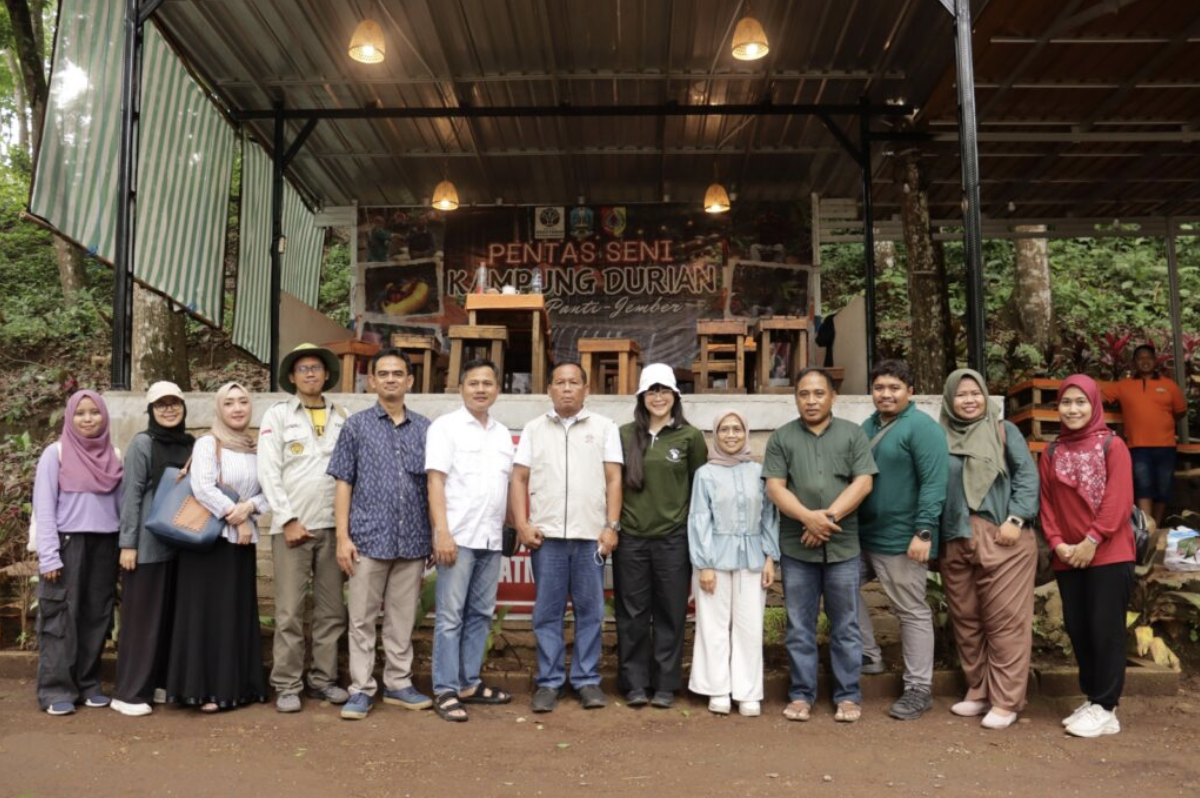
Following the International Guest Lecture with Chiang Mai University, the Faculty of Agriculture UNEJ conducted an International Community Service Programme on 2 November 2025 at the Rengganis Forest Farmers Group (KTH Rengganis) in Pakis Village, Panti District, Jember.
The programme involved Chiang Mai University, the Faculty of Agriculture UNEJ, Universitas Brawijaya PSDKU Kediri, the Agribusiness Study Programme, the Agrotechnology and Plant Protection Study Programmes, the Agricultural Economics and Development Laboratory (Lab-EPP), and the Centre of Research on Entrepreneurship and Agribusiness Management (KeRisDiMas CREAM).
The activity facilitated practical knowledge exchange between international academics and local coffee agribusiness stakeholders. Discussions focused on agricultural innovation, product diversification, and strategies for strengthening the competitiveness of local coffee businesses. The participants also examined sustainable agroforestry practices implemented by KTH Rengganis, including the use of shade trees such as durian, mangosteen, avocado, petai, and banana to support soil fertility, maintain environmental conditions, and provide additional economic value for farmers.
Through this collaboration, international academic perspectives from Thailand were connected with local agricultural practices and community development needs in Jember. The activity also highlighted the potential of sustainable coffee production and ethical agribusiness practices to strengthen local livelihoods while supporting environmental sustainability.
These initiatives demonstrate UNEJ's efforts to expand international research collaboration and create opportunities for scientific knowledge exchange across countries. Through research meetings, comparative academic discussions, institutional partnerships, laboratory activities, and field-based community engagement, UNEJ connects international academic expertise with local development challenges, particularly in agriculture, environmental health, occupational health, and sustainable rural development.
International collaboration in these areas is relevant to several Sustainable Development Goals, including SDG 2 (Zero Hunger), SDG 3 (Good Health and Well-being), SDG 12 (Responsible Consumption and Production), and SDG 15 (Life on Land), depending on the research themes and outputs of each collaboration.
To demonstrate full alignment with Indicator 17.2.3, UNEJ should provide additional evidence showing that these international partnerships have resulted in actual SDG-related data gathering, measurement, validation, or joint analysis. Relevant supporting documents may include collaborative research datasets, joint research reports, comparative studies, shared research protocols, and international publications presenting measurable SDG-related findings.
Sources
FK UNEJ Organizes Research Meeting with Japanese Professors for International Collaboration – 24 July 2025: https://fk.unej.ac.id/fk-unej-gelar-research-meeting-bersama-profesor-jepang-dalam-rangka-kolaborasi-internasional/
FAPERTA UNEJ Organizes International Guest Lecture on the Coffee Industry in Indonesia and Thailand – 1 November 2025: https://unej.ac.id/blog/2025/11/01/faperta-unej-gelar-international-guest-lecture-cross-border-agribusiness-insights-comparative-perspectives-on-the-coffee-industry-in-indonesia-and-thailand/
FAPERTA UNEJ and Chiang Mai University Conduct International Community Service in Jember – 3 November 2025: https://unej.ac.id/blog/2025/11/03/faperta-unej-gandeng-chiang-mai-university-gelar-international-community-service-di-kth-rengganis-desa-pakis-kecamatan-panti-kabupaten-jember/
UNEJ Signs Cooperation Agreement with Mahasarakham University, Thailand – 22 August 2025: https://unej.ac.id/blog/2025/08/22/unej-jalin-kerja-sama-dengan-mahasarakham-university-thailand/
UNEJ and Batangas State University Establish Strategic International Partnership – 25 November 2025: https://unej.ac.id/blog/2025/11/25/perkuat-mutu-global-batangas-state-university-ajak-universitas-jember-jalin-kemitraan-strategis-lintas-bidang/
FAPERTA UNEJ Launches International Mobility of Student and Staff for Agriculture (IMSSA) – 22 September 2025: https://faperta.unej.ac.id/berita-pengumuman/data-2025/mengusung-sinergi-unej-alumni-dan-mitra-strategis-faperta-unej-menggela
UNEJ Strengthens International Networks through Cooperation with Jilin Agricultural Science and Technology University, China – 12 December 2025: https://unej.ac.id/blog/2025/12/12/perkuat-jejaring-internasional-unej-jalin-kerja-sama-dengan-jilin-agricultural-science-technology-university-china/
17.2.4 Collaboration for SDG Best Practice
Universitas Jember (UNEJ) promotes international learning and knowledge exchange through student mobility, international volunteering, academic courses, webinars, and collaborative community programmes. These initiatives provide opportunities for students, academics, and local communities to learn from international experiences, understand different approaches to global challenges, and explore sustainable development practices that can be adapted to local contexts.
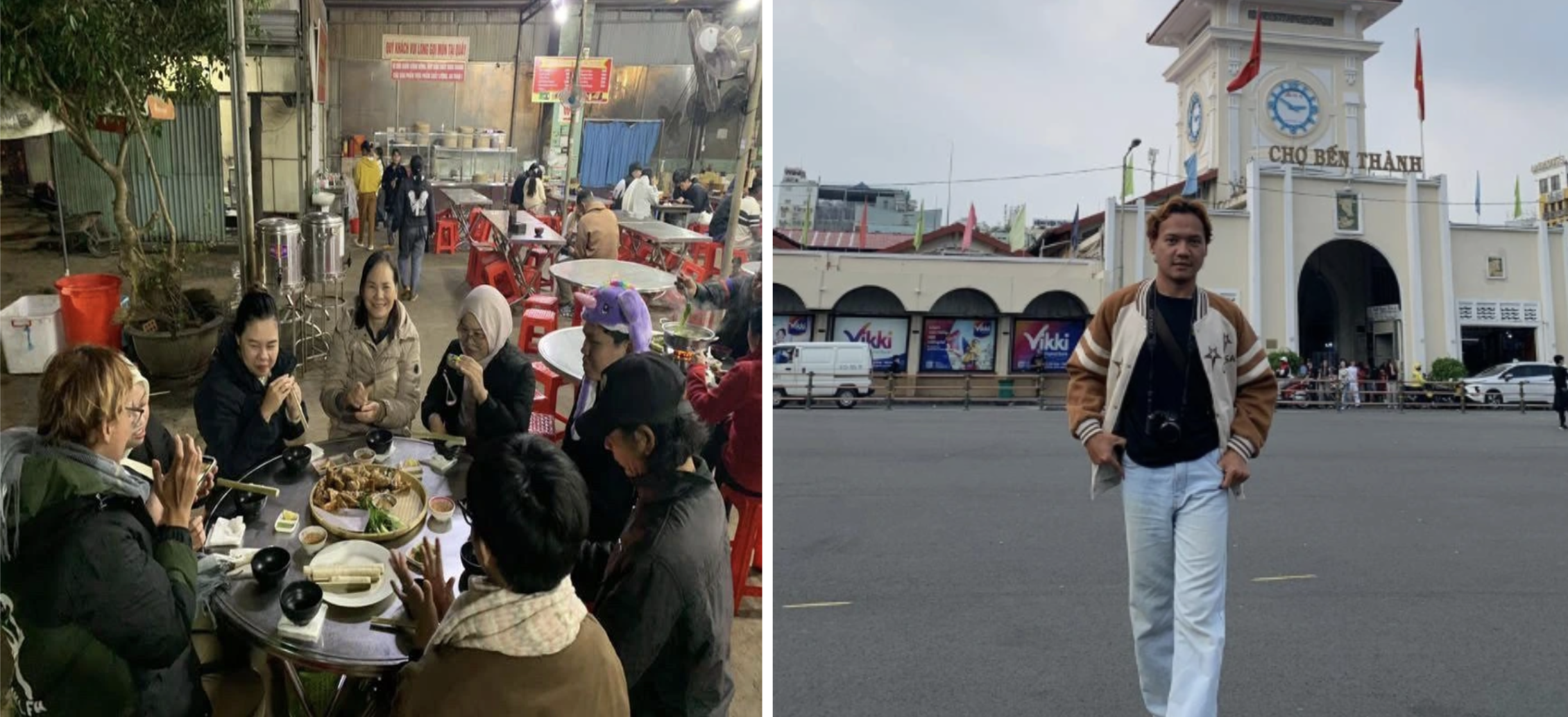
UNEJ encourages students to gain international experience through exchange and volunteer programmes. One example is the participation of Umar Adi Kusuma, an International Relations student at the Faculty of Social and Political Sciences (FISIP) UNEJ, in AIESEC's Global Volunteer programme in Vietnam. Reported on 29 April 2025, his experience provided opportunities to develop cross-cultural understanding, leadership, discipline, and awareness of cultural and religious differences.
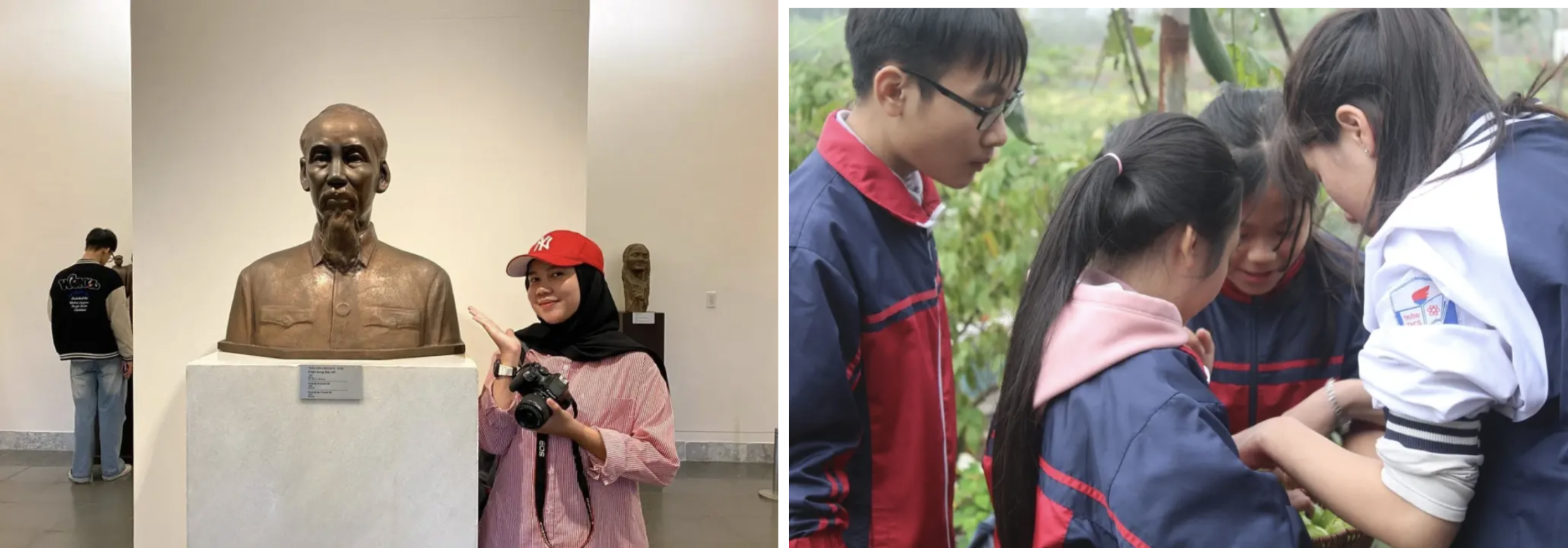
Another example is Aviza Maharani, an International Relations student at FISIP UNEJ, who participated in a six-week AIESEC Global Volunteer programme in Vietnam from 12 February to 24 March 2025. Through this programme, she gained international exposure and participated in activities related to global development issues and the Sustainable Development Goals. These experiences demonstrate how international volunteering can strengthen students' understanding of global challenges and encourage the exchange of ideas across cultures.
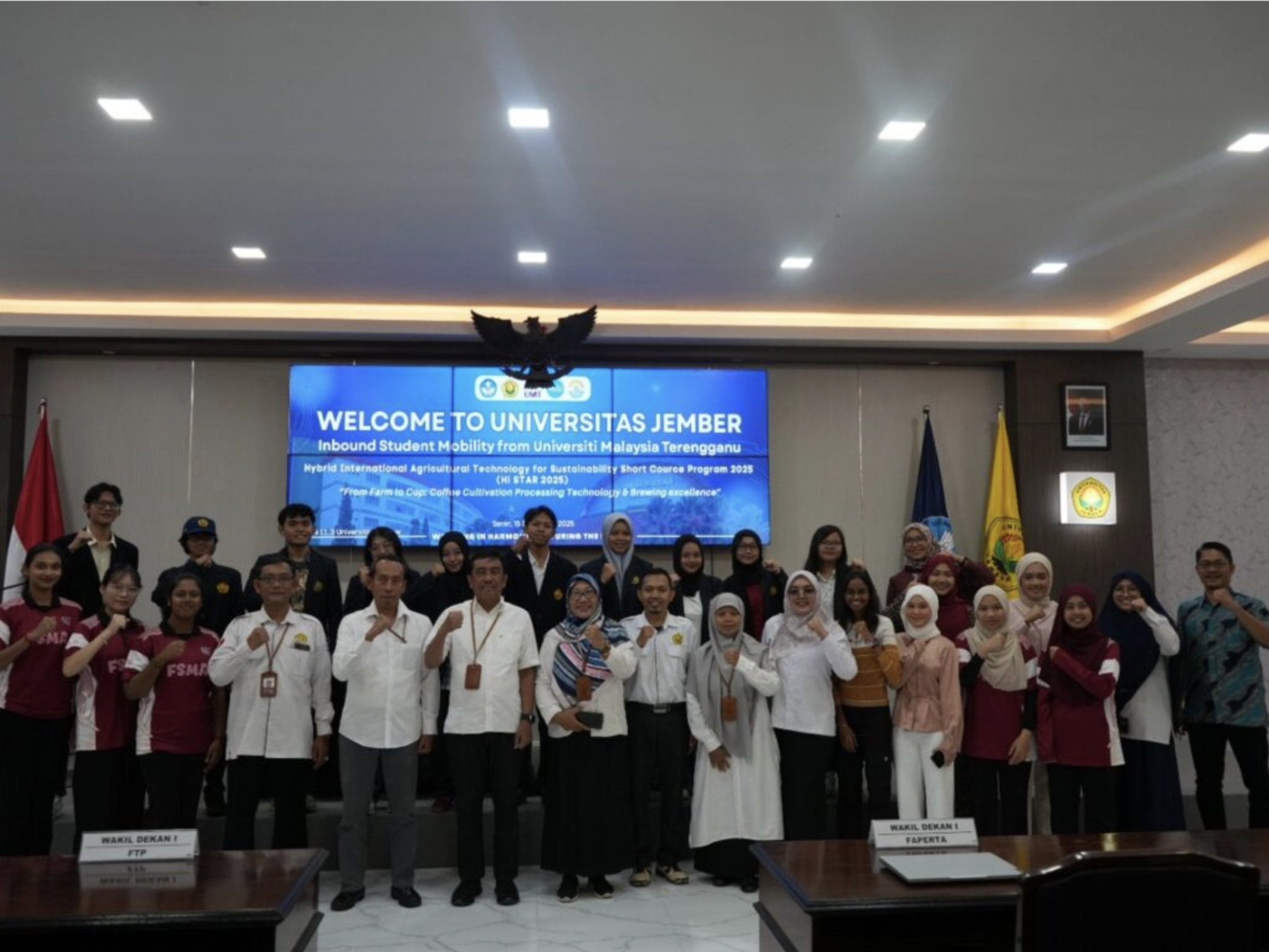
UNEJ also facilitated inbound student mobility through the Hybrid International Agricultural Technology for Sustainability Short Course Program (HiSTAR 2025). On 15 December 2025, UNEJ welcomed students from Universiti Malaysia Terengganu (UMT), Malaysia, as part of the programme organised by the Faculty of Agricultural Technology. The programme introduced international students to agricultural technology and sustainability practices through academic learning and knowledge exchange with UNEJ.
UNEJ provides international learning opportunities through academic programmes that bring together participants from different countries.
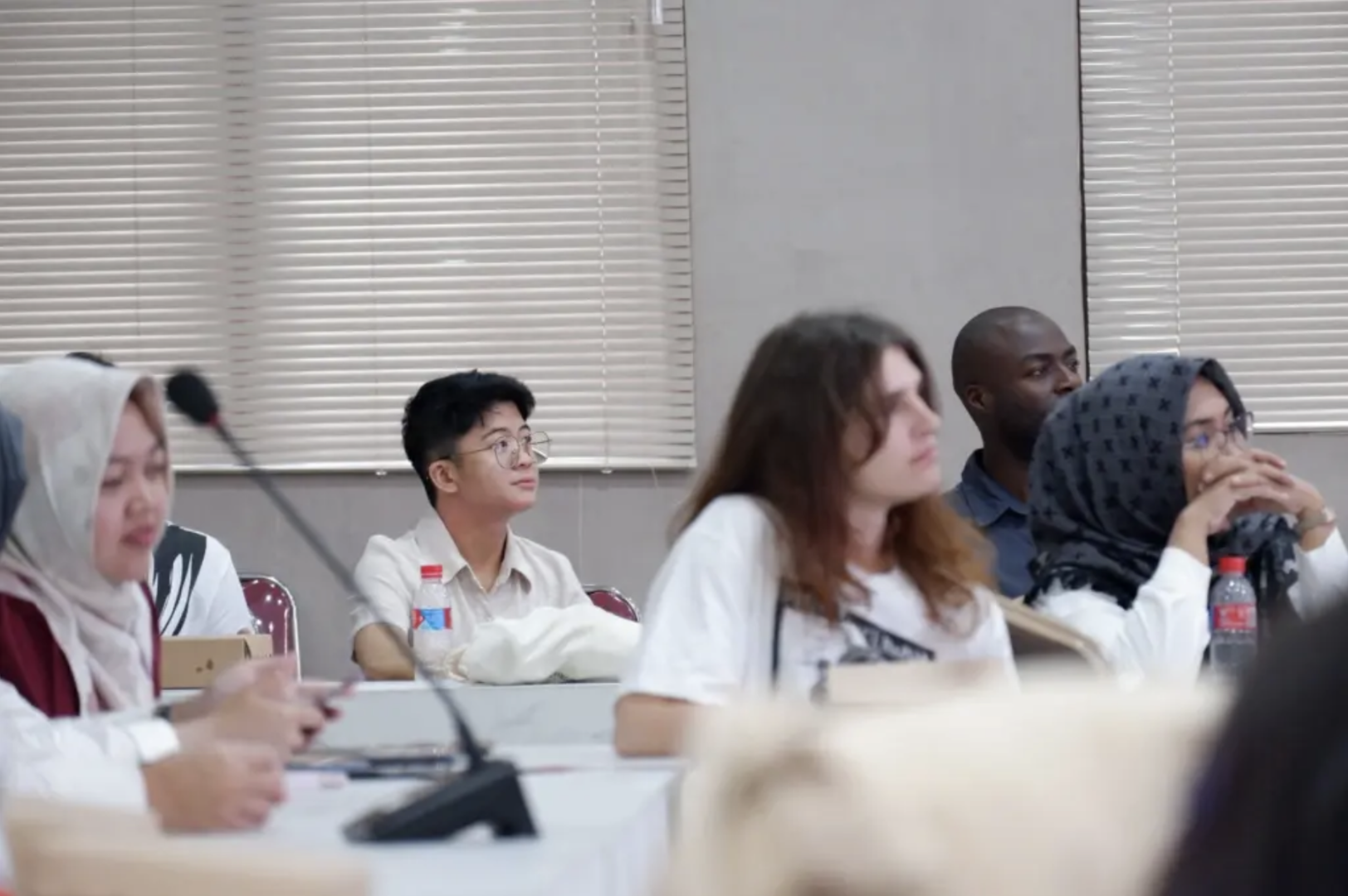
One example is the international course "Access to Justice in Southeast Asia and Beyond 2025", organised by the Faculty of Law UNEJ from 21 July to 14 August 2025. The programme involved 36 participants from 12 countries, including the United States, the United Kingdom, Japan, the Philippines, Malaysia, Vietnam, India, Sri Lanka, Macau, Australia, Singapore, and Indonesia. Through lectures and experiential learning activities, participants explored access to justice, international legal instruments, and the rights of indigenous communities. The programme connected international perspectives with social, environmental, cultural, and human rights issues.

UNEJ also organised PROMISE Internasional 2025 to strengthen students' readiness for international academic opportunities. The programme provided information and preparation related to international mobility, scholarships, portfolio and CV development, English-language skills, immigration requirements, and student life abroad. It supported students in preparing to participate in international learning and exchange programmes.
International webinars provide another platform for UNEJ academics and students to exchange knowledge with international partners.
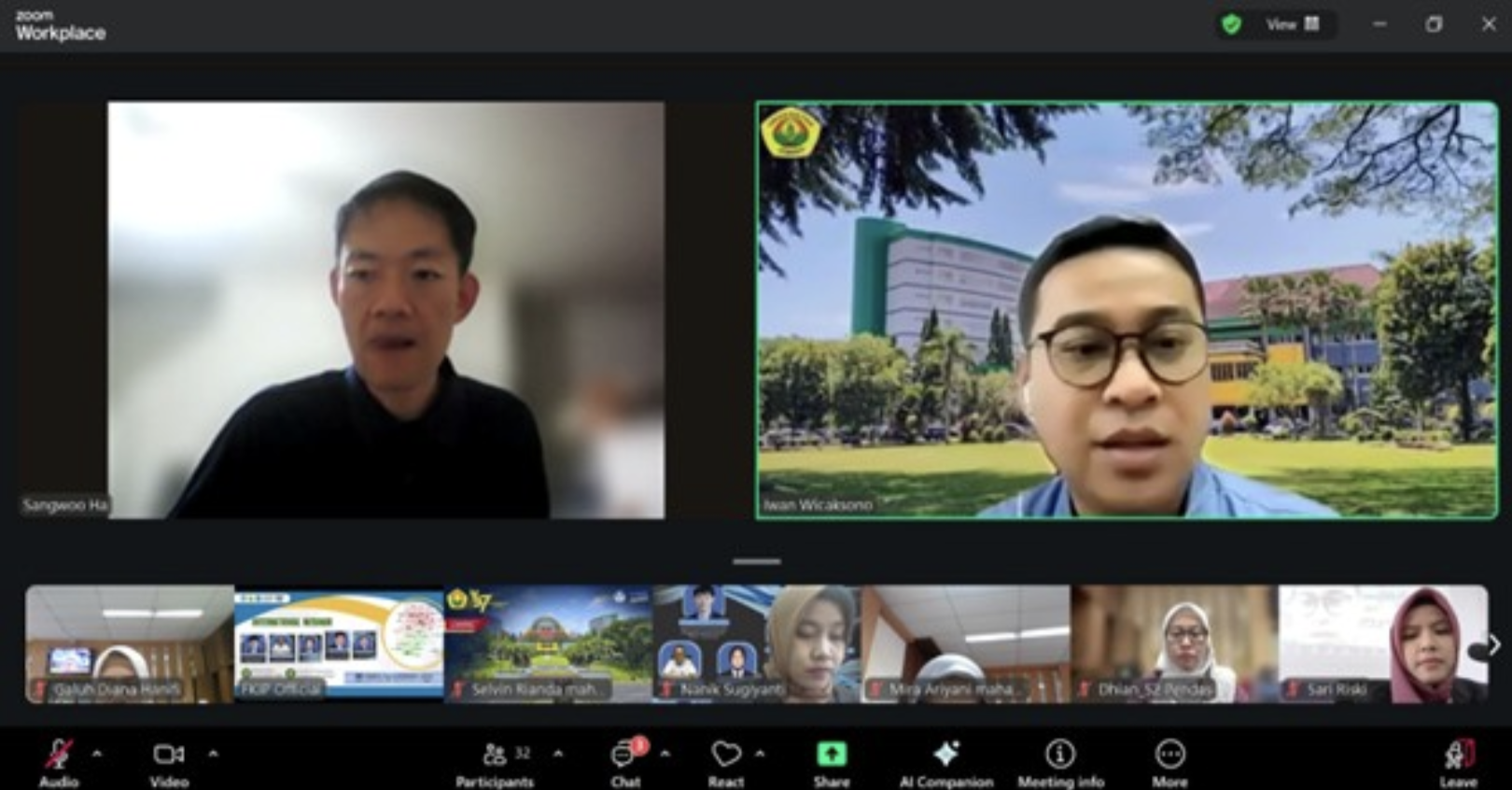
On 24 October 2025, the Master's Programme in Elementary Education at UNEJ organised an international webinar in collaboration with Kyungpook National University, South Korea. The event discussed global collaboration and technological innovation to improve the quality of elementary education. It involved lecturers, postgraduate students, undergraduate students, teachers, and education personnel, providing opportunities to exchange academic perspectives and discuss educational development across institutions.
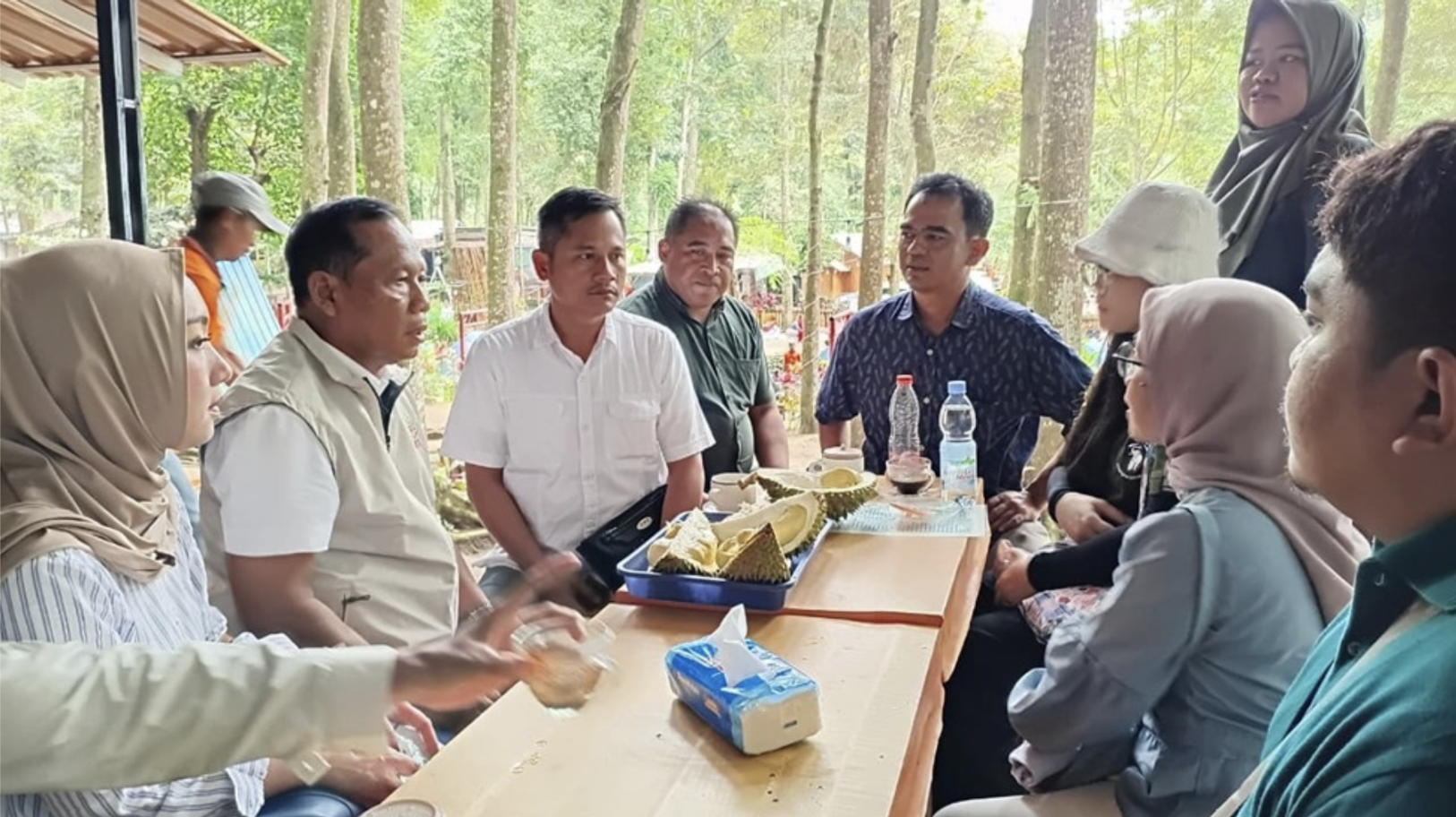
International knowledge exchange was further implemented through an International Community Service Programme on 2 November 2025 at the Rengganis Forest Farmers Group (KTH Rengganis), Pakis Village, Panti District, Jember. The programme involved Chiang Mai University, the Faculty of Agriculture UNEJ, Universitas Brawijaya PSDKU Kediri, and local coffee agribusiness stakeholders.
The activity connected international academic perspectives with local farming practices. Discussions focused on agricultural innovation, product diversification, sustainable coffee production, and strategies to strengthen the competitiveness of local coffee businesses. Participants also explored agroforestry practices, including the use of shade trees to support environmental conditions and provide additional economic value for farmers.
Through this programme, international knowledge about responsible coffee production and sustainable agribusiness was shared directly with local farming communities. It provided an opportunity to explore how international practices could be adapted to the conditions and development needs of rural communities in Jember.
Through international student mobility, AIESEC volunteering, international courses, webinars, and community-based collaboration, UNEJ provides opportunities for students and academics to learn from international experiences and exchange sustainable development practices.
These activities are particularly relevant to SDG 4 (Quality Education), SDG 10 (Reduced Inequalities), SDG 12 (Responsible Consumption and Production), and SDG 15 (Life on Land), depending on the focus and outcomes of each programme.
To strengthen the evidence for Indicator 17.2.4, UNEJ can complement activity reports with documentation showing how international practices are adopted or adapted locally. Examples include community implementation reports, student reflection reports, comparative learning outputs, joint recommendations, and evidence of sustainable practices introduced through international collaboration.
Sources
UNEJ Student Gains International Volunteer Experience in Vietnam – 29 April 2025: https://unej.ac.id/blog/2025/04/29/mahasiswa-unej-berdayakan-diri-lewat-volunteer-internasional-di-vietnam/
UNEJ Student Participates in Global Volunteer Programme in Vietnam – 16 April 2025: https://unej.ac.id/blog/2025/04/16/jelajahi-dunia-raih-pengalaman-mahasiswi-hi-unej-sukses-jadi-volunteer-di-vietnam/
UNEJ Hosts International Course on Access to Justice – July 2025: https://unej.ac.id/blog/2025/07/21/fakultas-hukum-unej-gelar-kursus-internasional-kampanyekan-peningkatan-akses-keadilan/
UNEJ Welcomes Universiti Malaysia Terengganu Students through HiSTAR 2025 – 15 December 2025: https://unej.ac.id/blog/2025/12/15/perkuat-kolaborasi-internasional-unej-sambut-delegasi-universiti-malaysia-terengganu-pelajari-teknologi-kopi-dalam-histar-2025/
PROMISE Internasional 2025: Strengthening UNEJ Students' Capacity for Global Opportunities: https://lpmpp.unej.ac.id/promise-internasional-2025-perkuat-kapasitas-mahasiswa-unej-menuju-pentas-global/
International Webinar on Global Collaboration and Technological Innovation in Elementary Education – 24 October 2025: https://fkip.unej.ac.id/webinar-internasional-s2-pendidikan-dasar-universitas-jember-sinergi-global-dan-inovasi-teknologi-untuk-peningkatan-kualitas-pendidikan-dasar/
FAPERTA UNEJ Organises International Guest Lecture on the Coffee Industry in Indonesia and Thailand – 1 November 2025: https://unej.ac.id/blog/2025/11/01/faperta-unej-gelar-international-guest-lecture-cross-border-agribusiness-insights-comparative-perspectives-on-the-coffee-industry-in-indonesia-and-thailand/
FAPERTA UNEJ and Chiang Mai University Conduct International Community Service in Jember – 3 November 2025: https://unej.ac.id/blog/2025/11/03/faperta-unej-gandeng-chiang-mai-university-gelar-international-community-service-di-kth-rengganis-desa-pakis-kecamatan-panti-kabupaten-jember/
17.2.5 Collaboration with NGOs for SDGs
Universitas Jember (UNEJ) continues to strengthen its contribution to sustainable development by building partnerships with non-governmental organisations (NGOs), civil society organisations, and community-based institutions. These collaborations connect academic knowledge, research, and community engagement with real social, economic, and environmental challenges. Through institutional partnerships, joint programmes, public campaigns, and international volunteering initiatives, UNEJ promotes collective action to support the achievement of the Sustainable Development Goals (SDGs).
UNEJ's collaboration network involves organisations operating at international, national, and regional levels. These partnerships provide opportunities for knowledge exchange, community empowerment, environmental awareness, social advocacy, and the development of practical solutions to local and global challenges.
One example of UNEJ's international engagement is its partnership with AIESEC Indonesia, an international youth-led organisation that promotes leadership development and cross-cultural exchange. The FISIP UNEJ cooperation register records an institutional agreement with AIESEC Indonesia beginning on 1 March 2025 and extending until 2030.
The partnership provides opportunities for students to participate in international learning and volunteering programmes. One example is the participation of Umar Adi Kusuma, an International Relations student at FISIP UNEJ, in AIESEC's Global Volunteer programme in Vietnam. His experience was reported by UNEJ on 29 April 2025. Through the programme, he gained experience working in an international community environment, developed cross-cultural communication skills, and strengthened his understanding of global development challenges.
A similar experience was demonstrated by Aviza Maharani, another International Relations student at FISIP UNEJ, who participated in a six-week volunteer programme in Vietnam from 12 February to 24 March 2025. Reported by UNEJ on 16 April 2025, her activities included teaching, promotional activities, and interaction with local communities.
These programmes demonstrate how collaboration with international youth organisations can create opportunities for students to engage in community-based activities beyond national borders. The initiatives contribute to SDG 4 (Quality Education), particularly Target 4.7 on education for sustainable development and global citizenship, as well as SDG 17 .
At the national level, UNEJ collaborates with organisations that focus on social empowerment, migrant worker protection, environmental awareness, and human rights. These partnerships connect the university's academic expertise with organisations that have experience addressing social and environmental issues.
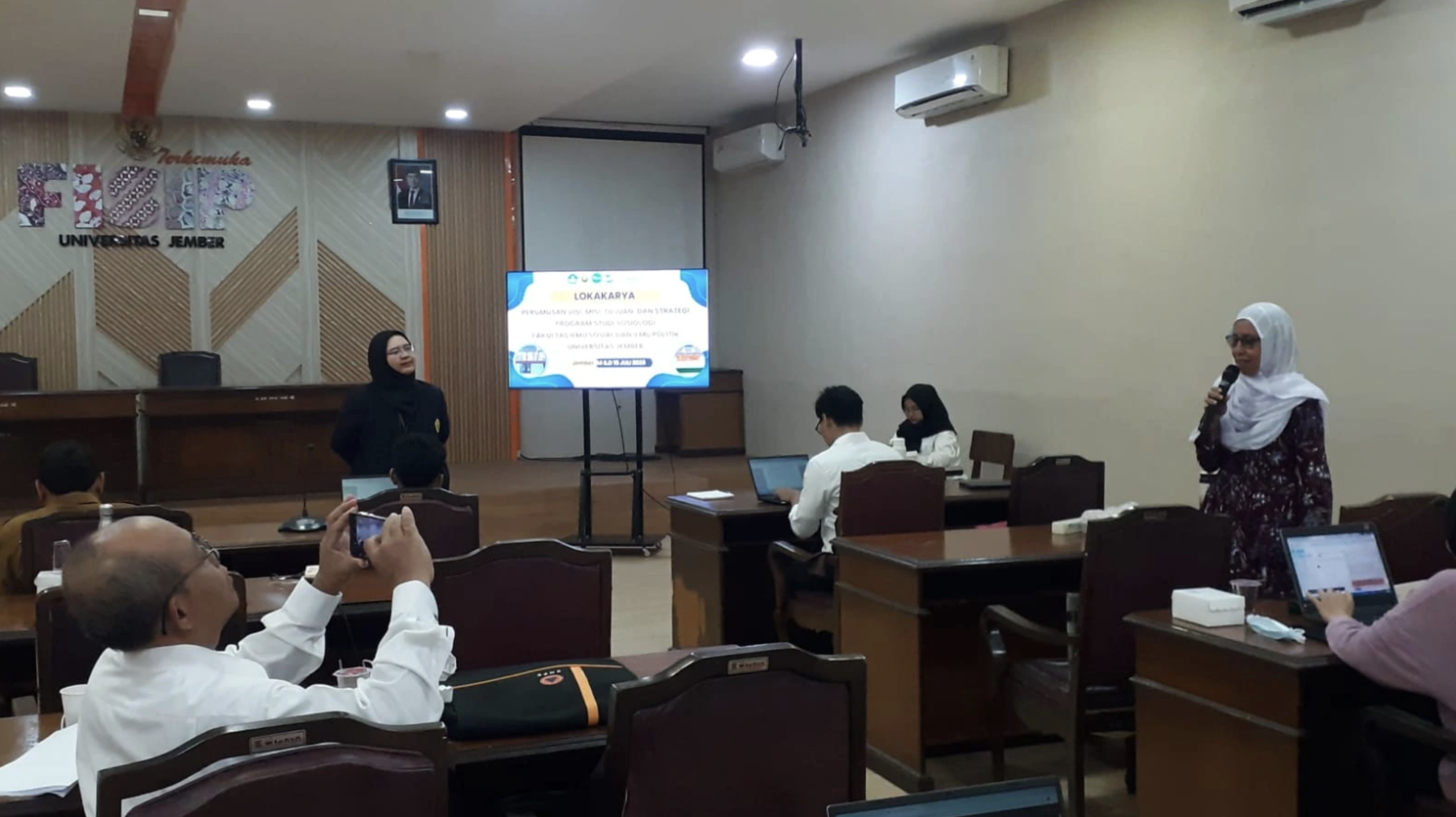
One example is the partnership between the Sociology Study Programme at FISIP UNEJ and two organisations, Tanoker Ledokombo and Migrant CARE, formalised through a Memorandum of Understanding (MoU) on 14 July 2025. The partnership focuses on strengthening education, research, and community service, particularly in community development and migrant worker protection. Tanoker Ledokombo is known for its community-based empowerment activities, while Migrant CARE focuses on the protection and advocacy of migrant workers.
Through this collaboration, UNEJ seeks to connect academic activities with the experiences and needs of communities, particularly groups that require stronger social and economic protection. The partnership supports SDG 8 (Decent Work and Economic Growth), especially Target 8.8 on protecting labour rights and promoting safe working environments. It also contributes to SDG 10 (Reduced Inequalities), SDG 16 (Peace, Justice and Strong Institutions), and SDG 17 (Partnerships for the Goals).
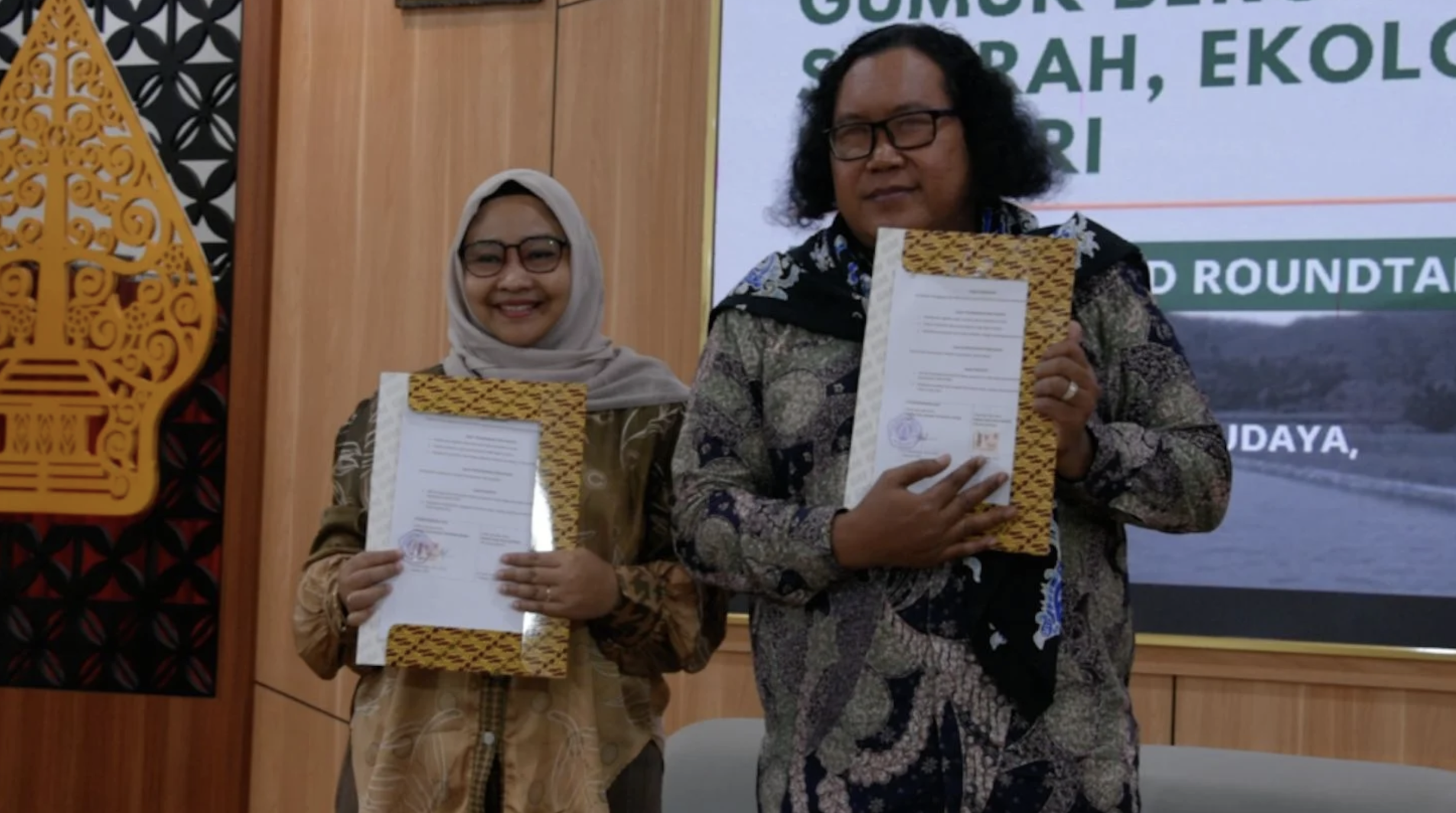
Another collaboration was established between the Faculty of Cultural Sciences (FIB UNEJ) and Asosiasi Sejarah Lintas Batas (SINTAS) on 7 October 2025. The partnership was developed to strengthen environmental history studies and raise public awareness of ecological issues in Indonesia. It was formalised through an agreement signed by representatives of both institutions at FIB UNEJ.
The collaboration was accompanied by a roundtable discussion and workshop entitled “Gumuk: Sejarah, Ekologi dan Memori”, held from 7 to 9 October 2025. The activities explored the relationship between environmental history, ecological conditions, and community experiences, particularly concerning the preservation of gumuk, a distinctive natural landscape in Jember. The initiative also provided space for local communities and environmental groups to share their experiences and efforts to protect these landscapes.
This partnership demonstrates how historical research and academic knowledge can contribute to environmental awareness and conservation advocacy. It is relevant to SDG 11 (Sustainable Cities and Communities), SDG 13 (Climate Action), SDG 15 (Life on Land), and SDG 17 (Partnerships for the Goals).
UNEJ also strengthens its engagement with independent institutions working on human rights and social justice. On 8 August 2025, UNEJ renewed its Memorandum of Understanding with the Indonesian National Commission on Human Rights (Komnas HAM RI) and signed cooperation agreements involving the Faculty of Law, FISIP, and the Faculty of Humanities. The collaboration aims to strengthen education, research, and community service in the field of human rights, including the integration of human rights perspectives into academic activities.
Although Komnas HAM is an independent national human rights institution rather than an NGO, its partnership with UNEJ demonstrates the university's broader commitment to working with external institutions to promote inclusive and just communities. This collaboration supports SDG 16 (Peace, Justice and Strong Institutions), particularly the promotion of the rule of law and equal access to justice, as well as SDG 10 (Reduced Inequalities) through the protection of human rights.
At the regional level, UNEJ works with organisations and community groups to address social challenges, promote environmental sustainability, and strengthen local development.
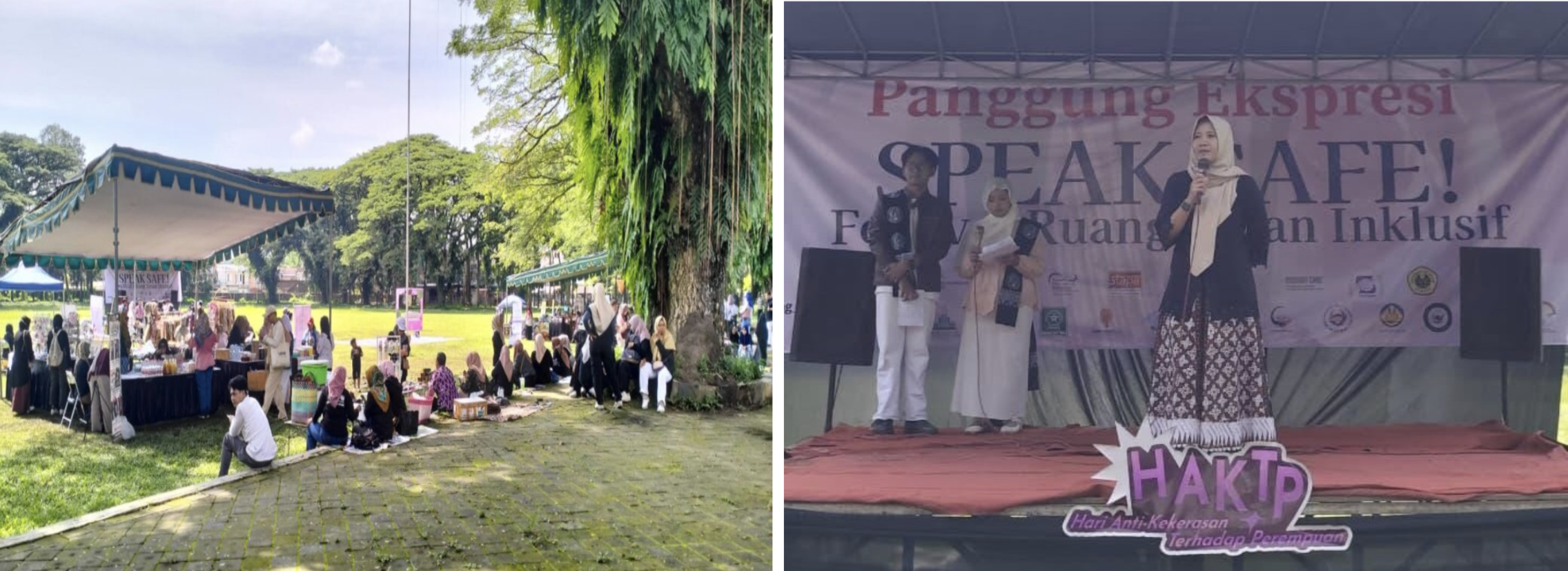
One significant initiative was the SPEAK SAFE! Festival, organised by the UNEJ Gender Studies Center (Pusat Studi Gender/PSG UNEJ) in collaboration with 23 non-governmental organisations across Jember Regency on 7 December 2025. The festival was part of the global 16 Days of Activism Against Gender-Based Violence campaign and provided a public platform for collective action against violence towards women.
The event brought together students, community groups, former women migrant workers, women-led businesses, activists, and members of the public through art performances, poetry, music, live murals, and public expressions of solidarity. The participation of former women migrant workers was particularly important, as they shared experiences of violence and exploitation and highlighted the need for stronger protection for women workers.
The 23 participating NGOs represented different areas of community advocacy, including victim assistance, labour rights, mental health, environmental protection, and education. This initiative contributes directly to SDG 5 (Gender Equality), particularly Target 5.2 on eliminating violence against women and girls. It also supports SDG 8 (Decent Work and Economic Growth), SDG 10 (Reduced Inequalities), SDG 16 (Peace, Justice and Strong Institutions), and SDG 17 (Partnerships for the Goals).
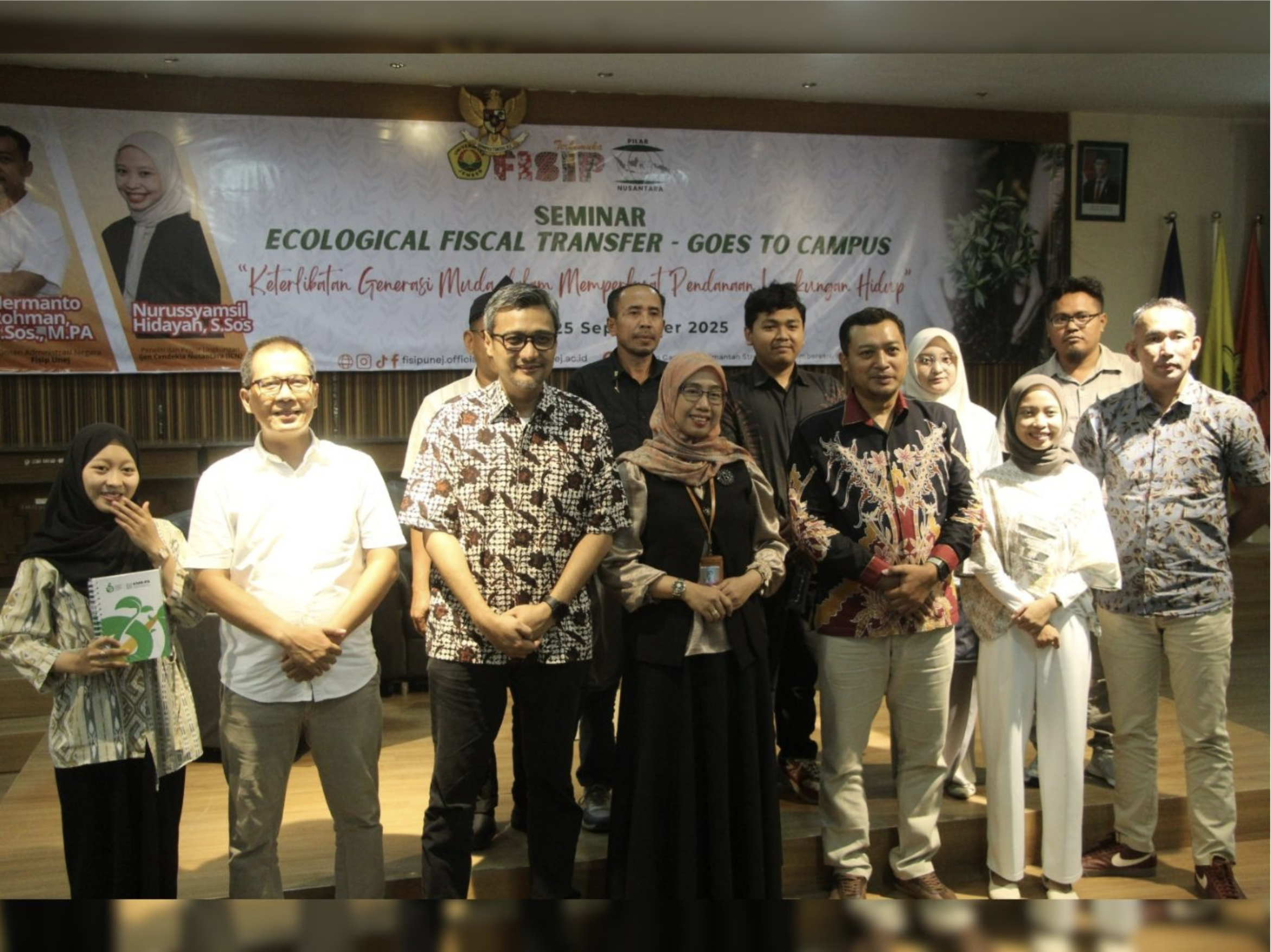
UNEJ also promotes environmental sustainability through its collaboration with Perkumpulan Pilar Nusantara (PINUS) and environmental activists. On 25 September 2025, FISIP UNEJ organised the Ecological Fiscal Transfer (EFT) – Goes to Campus seminar, entitled “Youth Involvement in Strengthening Environmental Financing.” The activity involved PINUS, UNEJ academics, and environmental activists from Ijen Cendekia Nusantara.
The seminar introduced Ecological Fiscal Transfer as a fiscal incentive mechanism that rewards local governments for their environmental protection and conservation performance. Participants discussed environmental financing, ecological protection, regional budget allocation, and the role of young people in supporting sustainable environmental policies. Through this activity, UNEJ connected academic knowledge with environmental organisations and public policy discussions.
The initiative is relevant to SDG 13 (Climate Action), SDG 15 (Life on Land), SDG 16 (Peace, Justice and Strong Institutions), and SDG 17 (Partnerships for the Goals), particularly through knowledge exchange and the promotion of more accountable environmental governance.
In addition, UNEJ's cooperation network includes the East Java Ecotourism Forum (EJEF), an organisation associated with community-based ecotourism and sustainable tourism development. The FISIP UNEJ cooperation register records an institutional partnership with EJEF beginning in February 2025. Related community assistance documentation describes activities in Wonokitri Tourism Village, Pasuruan, during 2024–2025, focusing on sustainable tourism packages and strengthening the role of local residents in managing tourism resources.
This collaboration illustrates how partnerships with community-oriented organisations can support local economic development while maintaining environmental and cultural values. It contributes to SDG 8 (Decent Work and Economic Growth), particularly Target 8.9 on sustainable tourism, SDG 11 (Sustainable Cities and Communities), and SDG 12 (Responsible Consumption and Production).
Through its partnerships with international youth organisations, national civil society organisations, independent institutions, and regional community groups, Universitas Jember demonstrates the importance of collaboration in addressing interconnected development challenges.
International volunteering programmes provide students with opportunities to develop global citizenship and engage in community activities. National-level partnerships strengthen social advocacy, migrant worker protection, environmental awareness, and human rights education. Meanwhile, regional collaborations encourage collective action on gender equality, environmental financing, sustainable tourism, and community empowerment.
These initiatives reflect UNEJ's commitment to implementing the SDGs through partnerships that connect higher education institutions with organisations and communities. By combining academic expertise with the practical experience of civil society organisations, UNEJ contributes to the development of inclusive, sustainable, and community-oriented solutions.
Continued documentation of joint activities, programme outcomes, community participation, and measurable impacts will further demonstrate how these partnerships contribute to progress towards the Sustainable Development Goals.
Sources
UNEJ – Student Gains International Volunteer Experience in Vietnam (29 April 2025): https://unej.ac.id/blog/2025/04/29/mahasiswa-unej-berdayakan-diri-lewat-volunteer-internasional-di-vietnam/
UNEJ – Student Participates in Global Volunteer Programme in Vietnam (16 April 2025): https://unej.ac.id/blog/2025/04/16/jelajahi-dunia-raih-pengalaman-mahasiswi-hi-unej-sukses-jadi-volunteer-di-vietnam/
FISIP UNEJ – Sociology Study Programme Establishes Partnerships with Tanoker and Migrant CARE: https://fisip.unej.ac.id/perkuat-kajian-komunitas-dan-isu-migran-sosiologi-jalin-kemitraan-dengan-tanoker-dan-migran-care/
FIB UNEJ – Strengthening Environmentally Oriented Historical Studies through Collaboration with SINTAS: https://fib.unej.ac.id/category/kerjasama/
MASSA.ID – FIB UNEJ and SINTAS Formalise Partnership to Raise Issues Concerning Jember's Gumuk: https://massa.id/fib-unej-dan-sintas-resmikan-kerja-sama-angkat-isu-gumuk-jember/
FISIP UNEJ – Official Cooperation Register: https://fisip.unej.ac.id/kerja-sama/
UNEJ – Human Rights Cooperation with Komnas HAM (8 August 2025).
UNEJ – SPEAK SAFE! Festival with 23 NGOs (7 December 2025).
FISIP UNEJ – Ecological Fiscal Transfer Goes to Campus (25 September 2025).
17.3.1–17.3.17 Publication of SDG Reports
Universitas Jember (UNEJ) demonstrates its commitment to communicating sustainable development initiatives through sustainability reporting, institutional publications, and SDG-related academic publications. These publications provide information about the university's sustainability performance, research contributions, and efforts to support the Sustainable Development Goals (SDGs).
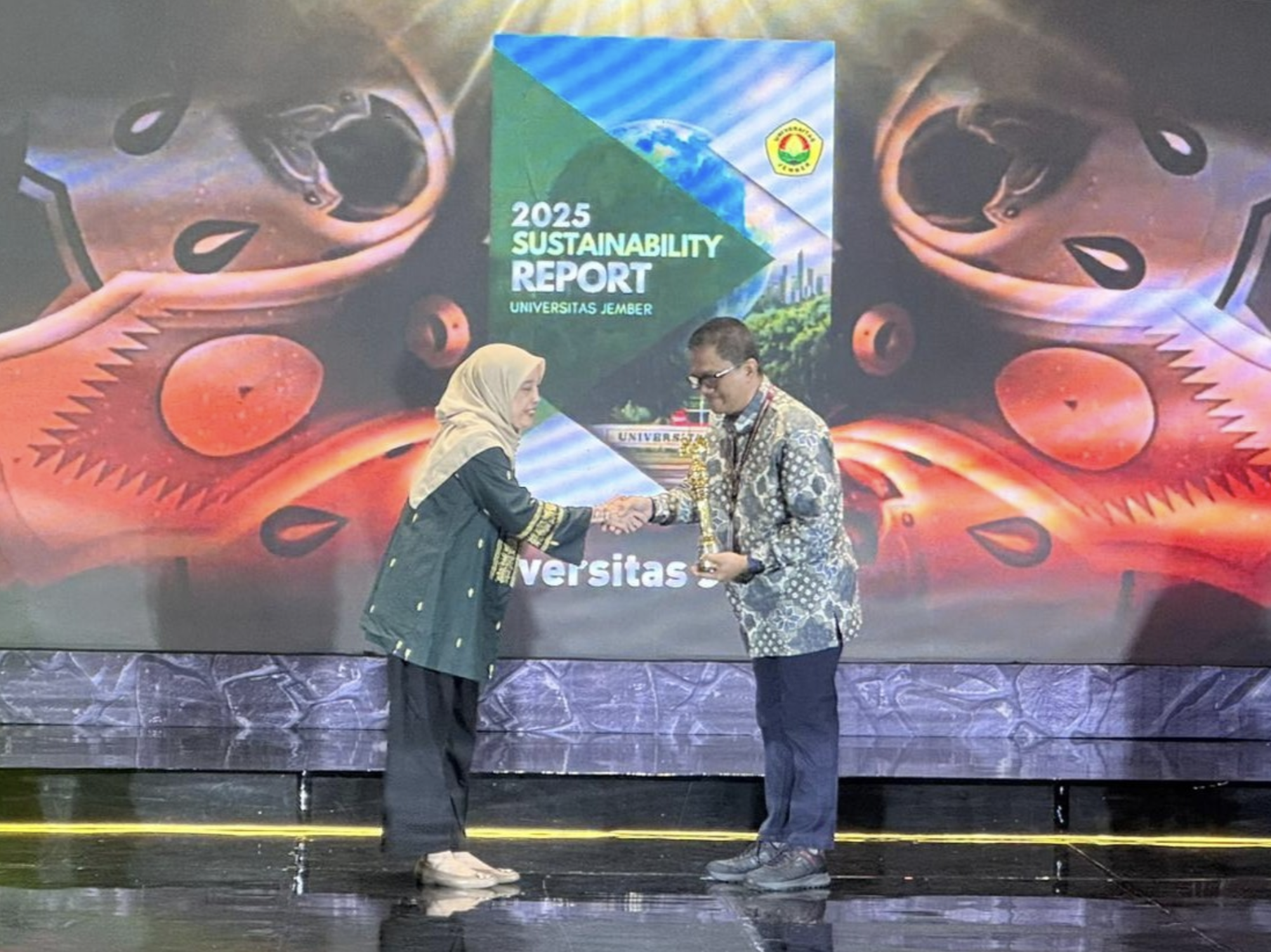
One significant achievement was UNEJ's recognition at the Asia Sustainability Reporting Rating (ASRRAT) 2025, where the university received a Gold Rating on 28 November 2025 in Denpasar, Bali. The award recognizes the quality of sustainability reporting, particularly its transparency, comprehensiveness, and alignment with international reporting standards. The assessment covers institutional performance in economic, social, and environmental aspects. UNEJ's achievement demonstrates its commitment to communicating sustainability performance and institutional contributions to sustainable development through formal reporting.
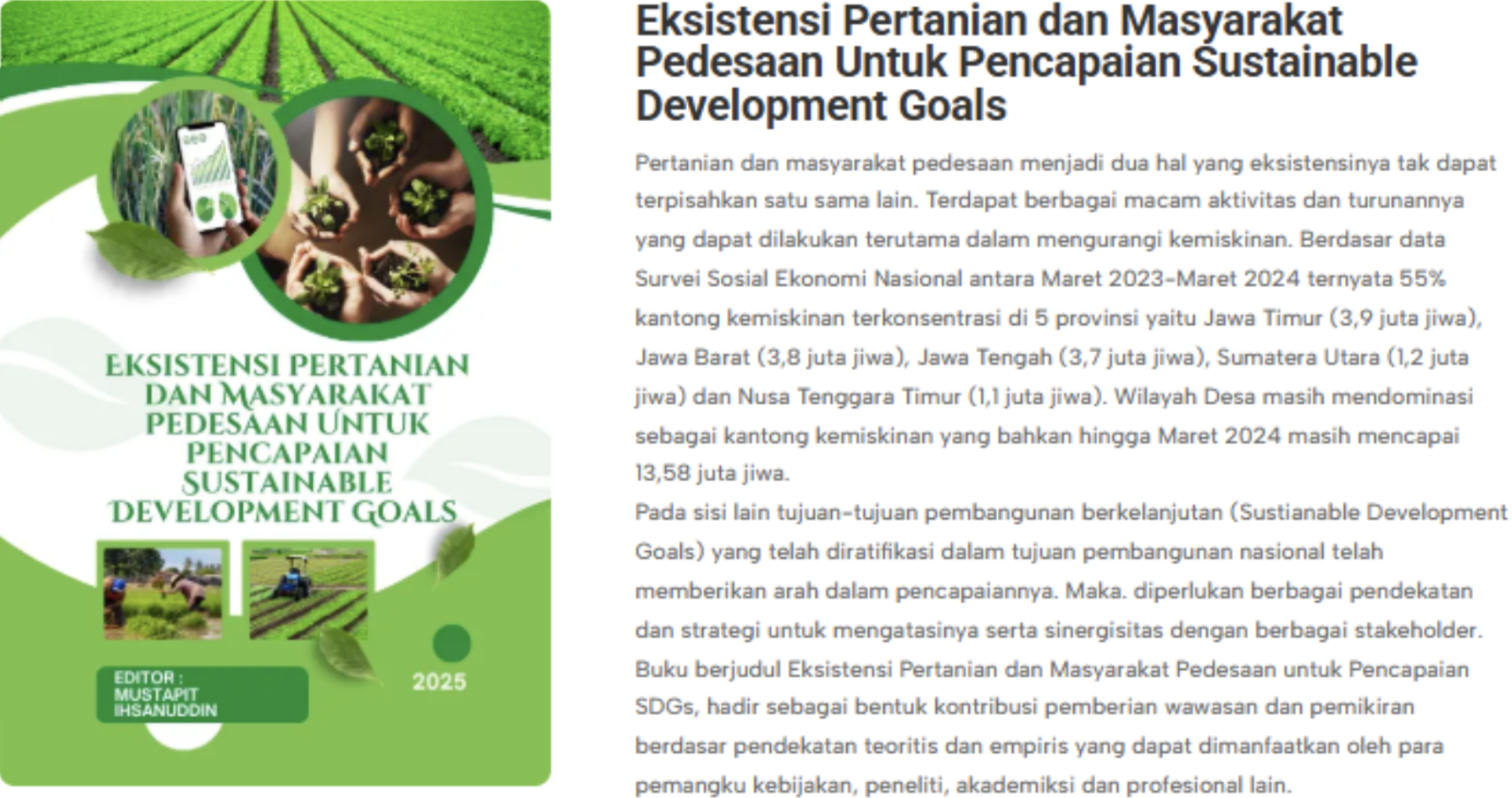
In 2025, UNEJ also published a book entitled Eksistensi Pertanian dan Masyarakat Pedesaan untuk Pencapaian Sustainable Development Goals (The Existence of Agriculture and Rural Communities for Achieving the Sustainable Development Goals). Published by UNEJ's University Press, the 268-page book discusses the relationship between agriculture, rural communities, poverty reduction, and sustainable development. It provides theoretical and empirical perspectives that can be used by policymakers, researchers, academics, and professionals to support SDG implementation, particularly in rural development.
Furthermore, UNEJ maintains an institutional SDGs Center publication platform that provides access to SDG-related publications, including Kiprah Universitas Jember Mendukung Tujuan Pembangunan Berkelanjutan Tahun 2018–2022. The platform serves as a public information resource for communicating the university's sustainability-related contributions and academic work.
Through sustainability reporting, academic publications, and its SDGs Center, UNEJ demonstrates efforts to document and communicate its contributions to sustainable development. These initiatives support transparency and provide stakeholders with access to information about the university's sustainability activities.
To strengthen evidence for indicators 17.3.1–17.3.17, UNEJ should ensure that its published reports provide information on each of the 17 SDGs individually. Reports should ideally include measurable indicators, reporting periods, achievements, challenges, and supporting data to demonstrate the university's contributions to every SDG.
Sources:
17.4.1 Education for SDGs: Commitment to Meaningful Education
Universitas Jember (UNEJ) promotes education for sustainable development by integrating Sustainable Development Goals (SDGs) into student orientation, teaching activities, academic discussions, and community-based learning. Through these initiatives, UNEJ encourages students and lecturers to understand sustainability issues and apply relevant knowledge in educational and community settings.
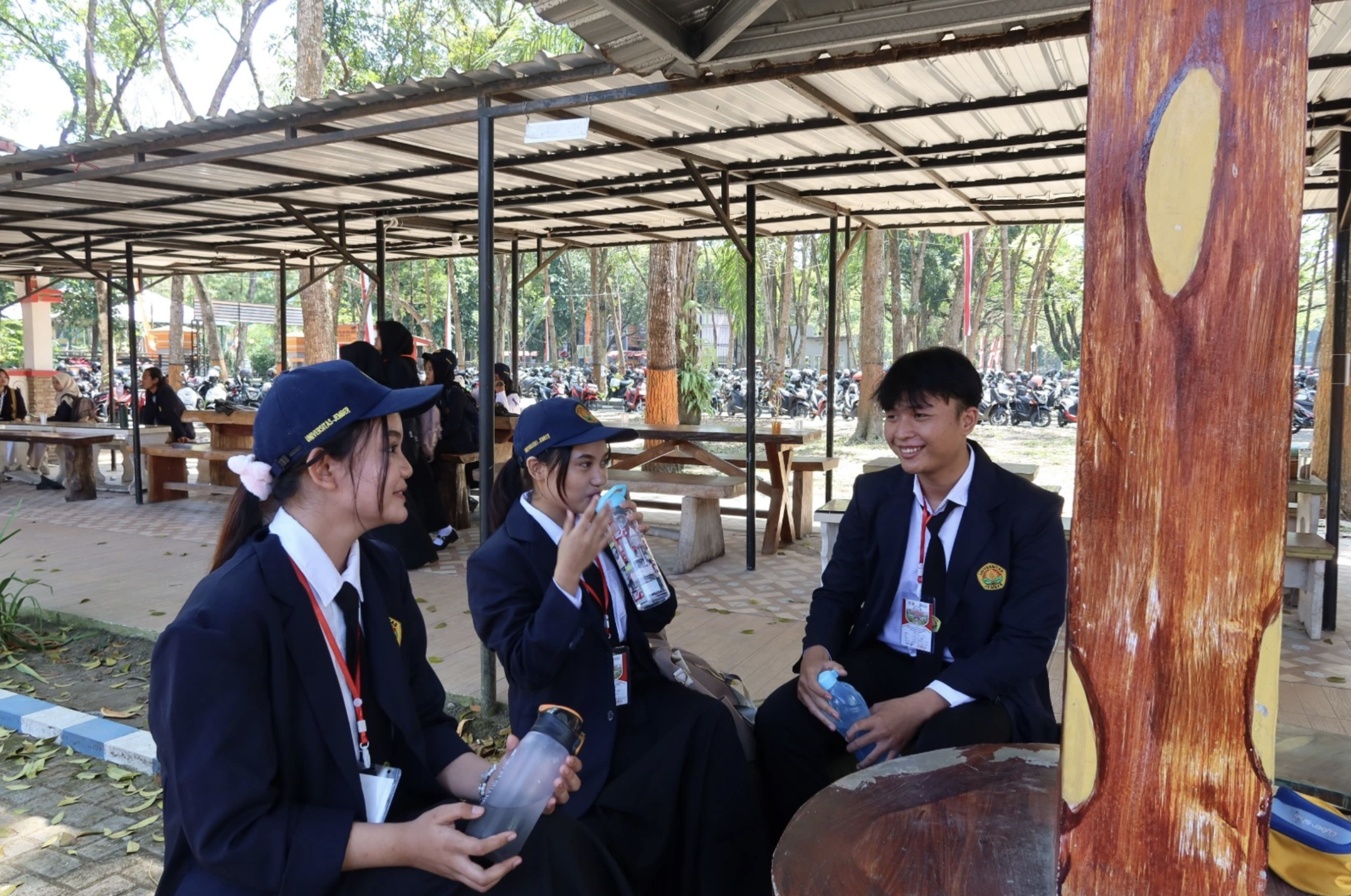
One example is the implementation of the UNEJ New Student Orientation Programme (PKKMB) 2025. According to the official PKKMB 2025 guidelines, one of the programme's specific objectives is to introduce the importance of the Sustainable Development Goals (SDGs) to new students. The programme also aims to develop students' awareness of environmental and social responsibilities, academic values, and their roles in contributing to society. This initiative provides an opportunity to introduce sustainability principles to students at the beginning of their university education.
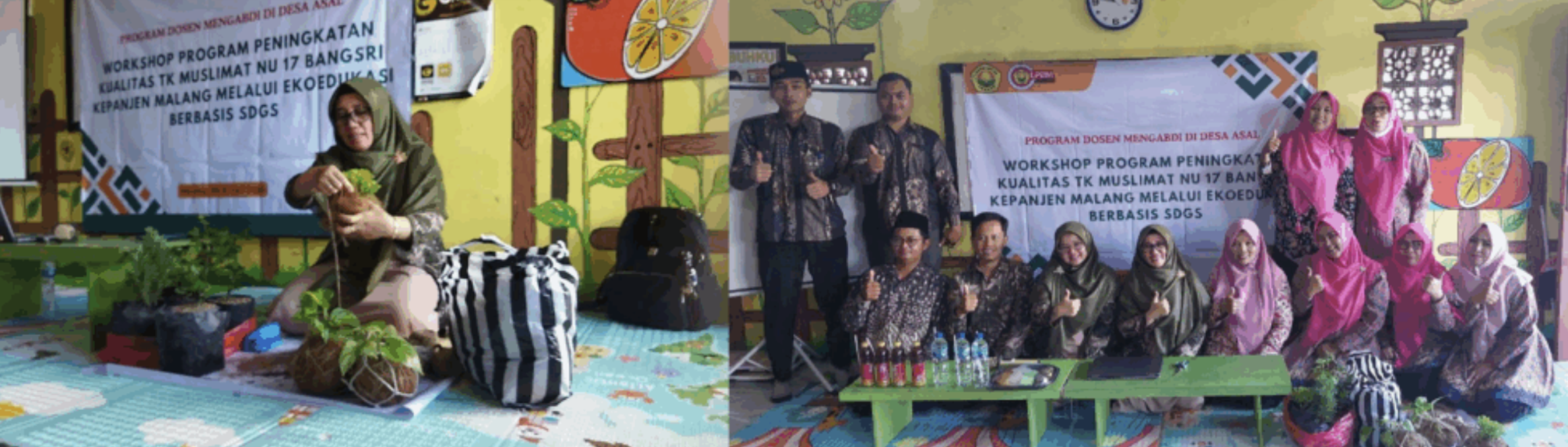
UNEJ also introduced sustainability-based learning through a community engagement programme conducted by lecturers from the Faculty of Teacher Training and Education (FKIP) in August 2025. The programme, entitled Ekoedukasi SDGs dan Fun English, was implemented at TK Muslimat NU 17 Bangsri, Kepanjen, Malang. Children participated in educational activities such as making kokedama (plant balls) and learning English through interactive activities. The programme introduced environmental awareness and sustainability concepts from an early age, demonstrating how SDG-related education can be incorporated into practical and engaging learning experiences.
Furthermore, the Primary School Teacher Education Programme (PGSD) at FKIP UNEJ organized an international webinar on 28 August 2025 entitled “Empowering Elementary Education: Synergizing Technology, Curriculum, and Learning for Global Competence”. The webinar involved lecturers, students, and education practitioners and featured speakers from Universiti Malaya, Malaysia, and Indonesian educational institutions. Discussions focused on integrating technology, curriculum development, and innovative learning approaches to strengthen students' competencies in the 21st century. This activity provided academic perspectives on improving educational quality and preparing learners to respond to global challenges.
UNEJ also strengthened the quality of its learning processes through an internal quality assurance activity organized by the Institute for Learning Development and Quality Assurance (LPMPP) on 24–25 September 2025. The activity reviewed statistics from the Student Evaluation of Lecturers (EDOM), which collects student feedback on teaching quality. The review aimed to ensure that student feedback was used not only as routine evaluation data but also as a basis for improving teaching methods and the overall learning experience.
These initiatives demonstrate UNEJ's efforts to promote meaningful education by introducing SDG awareness to new students, implementing sustainability-based educational activities, facilitating academic knowledge exchange, and improving the quality of teaching and learning. Through these activities, UNEJ connects educational experiences with environmental awareness, global competencies, and real-world sustainability challenges.
To demonstrate a university-wide commitment to Education for SDGs, UNEJ should continue documenting how sustainability principles are incorporated into curricula, course learning outcomes, teaching materials, and learning activities across different faculties and study programmes.
Sources:
17.4.2 – Education for SDGs: Specific Courses on Sustainability
Universitas Jember (UNEJ) supports Education for Sustainable Development by integrating environmental sustainability and sustainable development principles into academic curricula, specific courses, and learning resources. Through curriculum development and sustainability-oriented learning materials, UNEJ provides students with opportunities to understand environmental challenges, sustainable resource management, and practical approaches to achieving sustainable development across different academic disciplines.
One example is the integration of sustainability topics into agricultural education through the learning material “Pertanian Berkelanjutan” (Sustainable Agriculture). As illustrated in the university's course learning materials, sustainability is introduced as a specific subject of academic study, with sustainable agriculture presented as one of its main topics. This material introduces students to the importance of developing agricultural systems that balance productivity, environmental protection, and the responsible use of natural resources. It provides a foundation for understanding sustainable agricultural practices and the role of agriculture in supporting long-term food security and environmental conservation.
Universitas Jember has also taken an institutional initiative to strengthen sustainability education through the development of “Pertanian Industrial Berkelanjutan” (Sustainable Industrial Agriculture), designated as one of the university's distinctive courses. On 3 November 2025, the Institute for Learning Development and Quality Assurance (LPMPP) UNEJ, through its Center for Learning Development and Innovation (PPIP), held a coordination meeting involving the team responsible for developing the course. The meeting focused on curriculum alignment, learning strategies, and the preparation of the Semester Learning Plan (RPS). The initiative aimed to ensure that students would not only understand the theoretical foundations of sustainable industrial agriculture but also internalize its principles as part of the university's academic vision and graduate competencies.
The development process continued in December 2025 through the preparation of a teaching textbook for the Pertanian Industrial Berkelanjutan course. Held on 12–14 December 2025 in Jubung, Jember, the activity focused on finalizing the course's RPS, including its learning outcomes, core learning materials, teaching methods, and evaluation system. The textbook was intended to serve as a learning resource for vocational and undergraduate students. This process demonstrates UNEJ's efforts to establish sustainability education through structured curriculum development and dedicated teaching resources rather than relying solely on general environmental awareness activities.
Sustainability-related subjects are also reflected in the curriculum of the Agribusiness Study Programme at the Faculty of Agriculture (FAPERTA). The programme's Laboratory of Agricultural Development Economics lists “Pembangunan Pertanian Berkelanjutan” (Sustainable Agricultural Development) among the courses it supports. The subject provides an academic pathway for students to explore the relationship between agricultural development, economic considerations, environmental sustainability, and the responsible management of agricultural resources. Its inclusion in the programme's academic structure demonstrates how sustainability is addressed within a discipline directly related to agricultural production and development.
Furthermore, the Development Economics Study Programme at the Faculty of Economics and Business (FEB) incorporates sustainability into its academic direction through the Digital and Sustainable Agroindustrial Development Economics (DiSADE) approach. The programme's curriculum includes “Pertanian Industrial Berkelanjutan” as a three-credit course in Semester III, identified as a DiSADE course. It also includes other sustainability-oriented subjects, such as Sustainable Development Economics, Environmental and Natural Resource Economics, and Sustainable Rural Economics. This curriculum connects economic development education with digital transformation, sustainable agroindustry, environmental management, and the broader Sustainable Development Goals.
At the Faculty of Mathematics and Natural Sciences (FMIPA), sustainability is also addressed through curriculum development and learning resources that connect scientific disciplines with environmental challenges. The faculty's sustainability-oriented academic approach includes subjects and learning topics related to environmental mathematics, environmentally friendly materials, green chemistry, and conservation biotechnology. These areas provide opportunities for students to understand sustainability through environmental modelling, material innovation, environmentally responsible chemical processes, and biodiversity conservation. The integration of these topics demonstrates the potential for sustainability education to extend beyond agricultural disciplines into science and technology.
Through these initiatives, Universitas Jember integrates sustainability into academic learning at both institutional and programme levels. The development of Pertanian Industrial Berkelanjutan as a distinctive university course, the inclusion of Sustainable Agricultural Development in the Agribusiness programme, and the sustainability-oriented curriculum of the Development Economics programme demonstrate UNEJ's efforts to provide students with structured learning opportunities related to sustainable development. These initiatives contribute to the objectives of SDG 4 (Quality Education), particularly Target 4.7, by promoting the knowledge and competencies needed to support sustainable development. They also contribute to SDG 2 (Zero Hunger), SDG 12 (Responsible Consumption and Production), and SDG 15 (Life on Land) through the study of sustainable agriculture and responsible natural resource management.
Overall, Universitas Jember demonstrates its commitment to Education for Sustainable Development through specific sustainability-related courses, curriculum development, and dedicated learning resources. By incorporating sustainable agriculture, sustainable agroindustrial development, environmental management, and conservation topics into academic programmes, UNEJ provides students with opportunities to develop the knowledge and competencies required to address sustainability challenges.
To further strengthen the evidence for this indicator, UNEJ can provide official course syllabi, curriculum documents, Semester Learning Plans (RPS), teaching materials, and student enrolment records for sustainability-related courses. These documents would demonstrate not only the inclusion of sustainability in the curriculum but also the actual implementation and accessibility of these learning opportunities during the 2025 reporting period.
Sources
LPMPP UNEJ – Tim Mata Kuliah Penciri Universitas Jember, Bahas Sinkronisasi Kurikulum dan Strategi Pembelajaran Mata Kuliah Pertanian Industrial Berkelanjutan (3 November 2025).
https://lpmpp.unej.ac.id/tim-mata-kuliah-penciri-universitas-jember-bahas-sinkronisasi-kurikulum-dan-strategi-pembelajaran-mata-kuliah-pertanian-industrial-berkelanjutan/LPMPP UNEJ – LPMPP Universitas Jember Susun Buku Ajar Mata Kuliah Penciri “Pertanian Industrial Berkelanjutan” (12–14 December 2025).
https://lpmpp.unej.ac.id/lpmpp-universitas-jember-susun-buku-ajar-mata-kuliah-penciri-pertanian-industrial-berkelanjutan/Agribisnis FAPERTA UNEJ – Laboratorium Ekonomi Pembangunan Pertanian, daftar mata kuliah termasuk Pembangunan Pertanian Berkelanjutan.
https://agribisnis.faperta.unej.ac.id/akademik/laboratoriumFEB UNEJ – S1 Ekonomi Pembangunan, Kurikulum Digital and Sustainable Agroindustrial Development Economics (DiSADE).
https://feb.unej.ac.id/id/academic-programs/s1-ekonomi-pembangunanUniversitas Jember – Materi Perkuliahan “Keberlanjutan: Pertanian Berkelanjutan” (dokumentasi materi pembelajaran yang diberikan).
17.4.3 Education for SDGs in the Wider Community
Universitas Jember (UNEJ) promotes awareness of the Sustainable Development Goals (SDGs) through public engagement, educational activities, and partnerships with alumni and other stakeholders. Through initiatives coordinated by the UNEJ SDGs Center, the university seeks to connect sustainability knowledge with community participation and practical action.
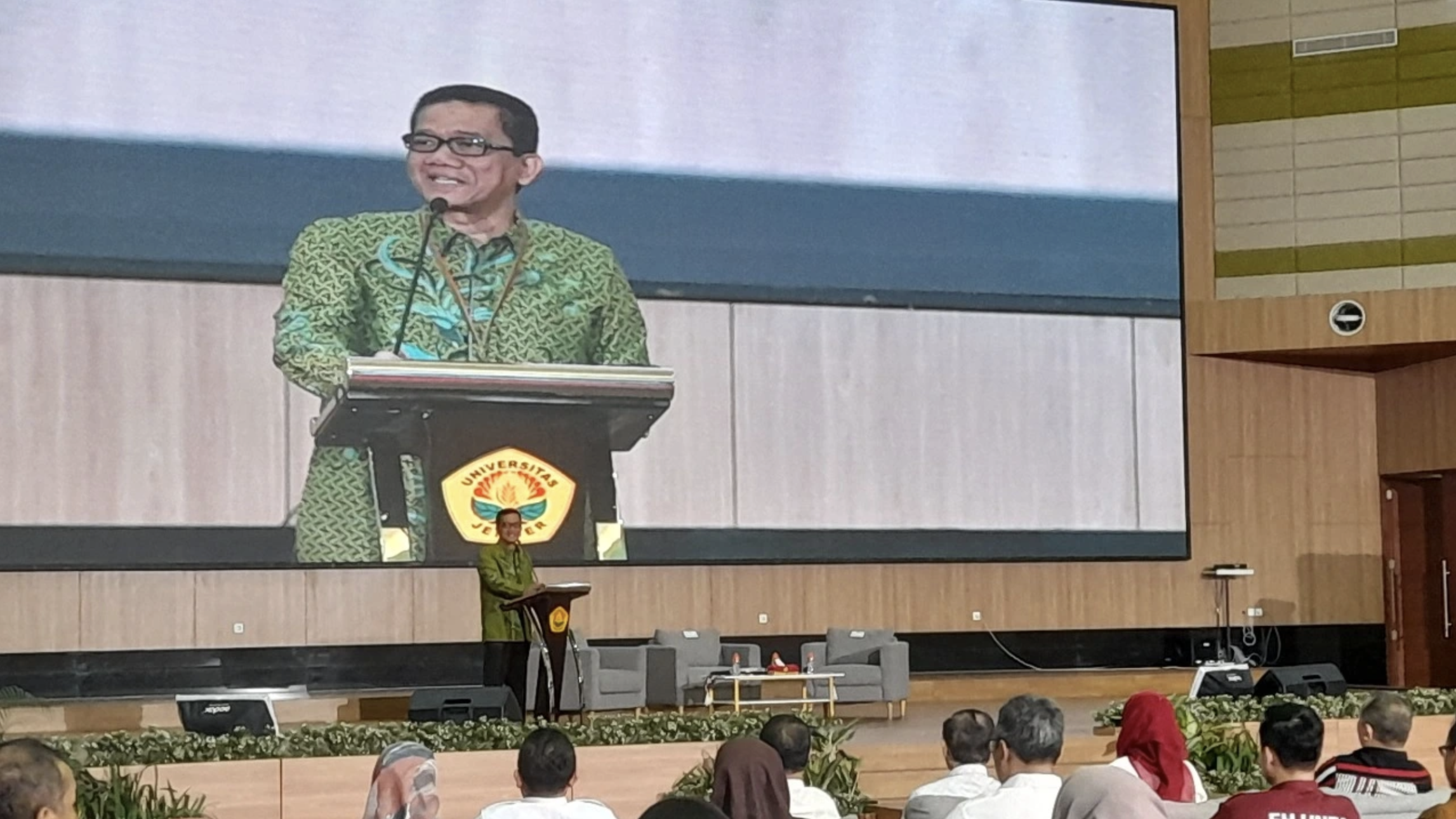
One example is the UNEJ SDGs Festival, organised by the UNEJ SDGs Center in collaboration with the Indonesian SDGs Village Development Center (PPKSI) and the Universitas Jember Alumni Family (KAUJE). The 2025 edition was held from 27 to 29 November as part of the university’s anniversary celebrations. The event brought together university leaders, academic institutions, SDGs centres from across Indonesia, and alumni representatives to discuss the role of higher education in advancing the 17 SDGs.
The festival included a presentation by Setyo Budiantoro, Manager of the Economic Development Pillar at Indonesia’s Ministry of National Development Planning (Bappenas), as well as a discussion of the book Fikih SDGs. These activities provided opportunities to communicate SDG-related knowledge and encourage discussion about sustainable development among participating stakeholders.

UNEJ also strengthens its connection with the wider community through alumni engagement. On 7 November 2025, the Primary School Teacher Education programme at the Faculty of Teacher Training and Education (FKIP UNEJ) signed an Implementation Agreement with the FKIP chapter of KAUJE.
The partnership provides opportunities for alumni to contribute to curriculum development, student mentoring, and social activities related to education. Through the involvement of alumni, professional experience and academic knowledge can be shared with current students and extended to educational communities beyond the university.
This collaboration demonstrates how alumni networks can support the continuity of education and strengthen relationships between higher education institutions and society.
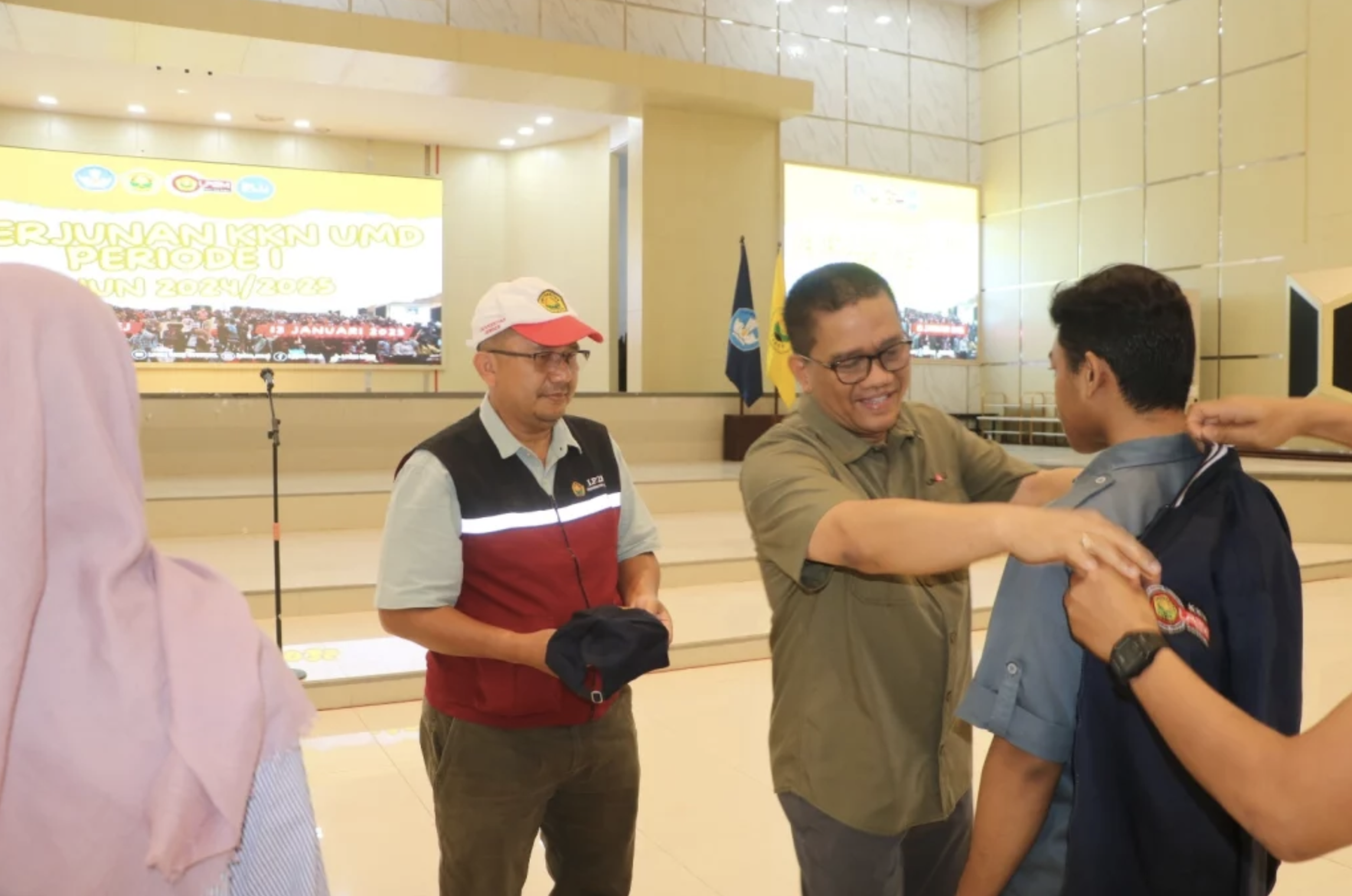
Beyond campus-based activities, UNEJ extends sustainability education directly to communities through its Kuliah Kerja Nyata (KKN) programme. Implemented through the UNEJ Membangun Desa (UMD) scheme, KKN provides opportunities for students to share knowledge, develop practical solutions, and assist communities in addressing local development challenges.
UNEJ's KKN programme covers various themes, including information and communication technology, sanitation and stunting prevention, entrepreneurship, tourism, disaster preparedness, migrant worker communities, and village literacy. Through these activities, students introduce practical knowledge and skills that communities can apply to improve local conditions and strengthen village development.
One example is the KKN UMD programme conducted in the 2024/2025 academic year. On 13 January 2025, UNEJ released 233 students participating in KKN UMD and 30 students participating in the Collaborative KKN for Underdeveloped, Frontier, and Outermost Areas (KKN 3T) Mandalika. The students were assigned to communities in Jember, Bondowoso, Situbondo, Banyuwangi, Mataram, and East Lombok. Their activities provided opportunities for students to share knowledge while learning directly from local communities.
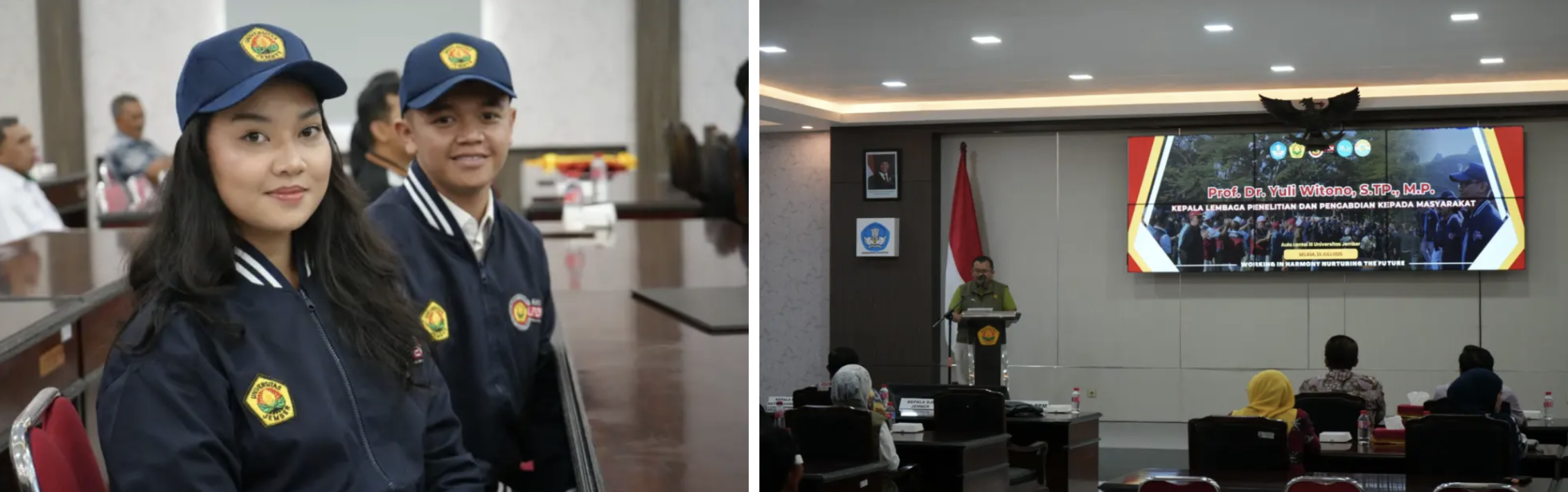
UNEJ's commitment to extending education to communities in geographically disadvantaged areas is also reflected in its KKN 3T programme. In July 2025, UNEJ deployed students to Raja Ampat, Southwest Papua, and South Halmahera through a collaboration with the Ministry of Villages and Development of Disadvantaged Regions under the Transformasi Ekonomi Kampung Terpadu (TEKAD) programme.
One notable example was the community empowerment initiative in Warimak Village, Raja Ampat, reported by UNEJ on 21 August 2025. During a one-month placement, students worked with residents to strengthen local economic institutions, improve digital capabilities, and increase the value of marine-based products.
The programme included financial literacy training, in which residents learned how to record daily cash flows, calculate production costs, and manage business profits. Students also introduced digital content creation, including basic photography, videography, and storytelling, to help residents promote local products and village potential through digital platforms.
In addition, the students supported the development of local marine products, including smoked crabs, smoked swimming crabs, virgin coconut oil, and sea cucumber chips. They also helped establish a digital product catalogue and an online landing page to support local marketing activities.
The initiative encouraged residents to become active participants in managing their local economic potential. Rather than relying solely on external assistance, the programme focused on transferring practical knowledge and skills that could be continued by the community after the students completed their placement. This approach reflects the objective of building a more independent and adaptive village.
The Warimak initiative contributes to several SDGs, including SDG 4 (Quality Education) through practical learning and skills development, SDG 8 (Decent Work and Economic Growth) through local entrepreneurship and economic empowerment, SDG 9 (Industry, Innovation and Infrastructure) through digital promotion, SDG 12 (Responsible Consumption and Production) through value-added local products, and SDG 17 (Partnerships for the Goals) through collaboration between UNEJ, the government, and local communities.
Through the UNEJ SDGs Festival, alumni partnerships, KKN UMD, and KKN 3T, Universitas Jember demonstrates how SDG education can be delivered through different channels and to different groups within society.
The SDGs Festival provides a platform for public discussion and environmental awareness, while alumni partnerships extend educational contributions through mentoring and knowledge sharing. Meanwhile, KKN programmes bring practical learning directly to communities by introducing skills in financial management, digital literacy, entrepreneurship, environmental awareness, and local resource management.
These initiatives reflect UNEJ's commitment to making sustainability education more accessible and applicable beyond the university. By connecting academic knowledge with community needs and local development priorities, UNEJ encourages communities to participate in building more inclusive, resilient, and sustainable livelihoods.
Continued documentation of community participation, training materials, learning outcomes, and the long-term adoption of knowledge and skills will further demonstrate the contribution of these programmes to education for sustainable development in the wider community.
Sources
UNEJ – UNEJ SDGs Festival, 27–29 November 2025.
PGSD FKIP UNEJ – PGSD and KAUJE Sign an Implementation Agreement, 7 November 2025.
UNEJ – Rector Releases Students for KKN UMD and Collaborative KKN 3T Mandalika, 13 January 2025: https://unej.ac.id/blog/2025/01/13/rektor-unej-lepas-mahasiswa-ikuti-kkn-umd-dan-kolaboratif-3t-mandalika/
UNEJ – UNEJ Releases KKN Students from Lamongan to Raja Ampat, 15 July 2025: https://unej.ac.id/blog/2025/07/15/unej-lepas-mahasiswa-kkn-dari-lamongan-hingga-raja-ampat-pengabdian-nyata-wujudkan-kampus-berdampak/
UNEJ – KKN Students and Warimak Residents Work Together to Build an Independent Village from the Sea, 21 August 2025: https://unej.ac.id/blog/2025/08/21/mahasiswa-kkn-universitas-jember-dan-warga-warimak-bersama-wujudkan-kampung-mandiri-dari-laut/
LPPM UNEJ – Kuliah Kerja Nyata: https://lppm.unej.ac.id/?page_id=6637
17.4.4 Sustainability Literacy
Universitas Jember (UNEJ) promotes sustainability literacy through educational programmes, academic discussions, community engagement, and student-led initiatives. These activities provide opportunities for students and communities to understand environmental challenges, develop practical skills, and apply sustainability principles in their daily lives.
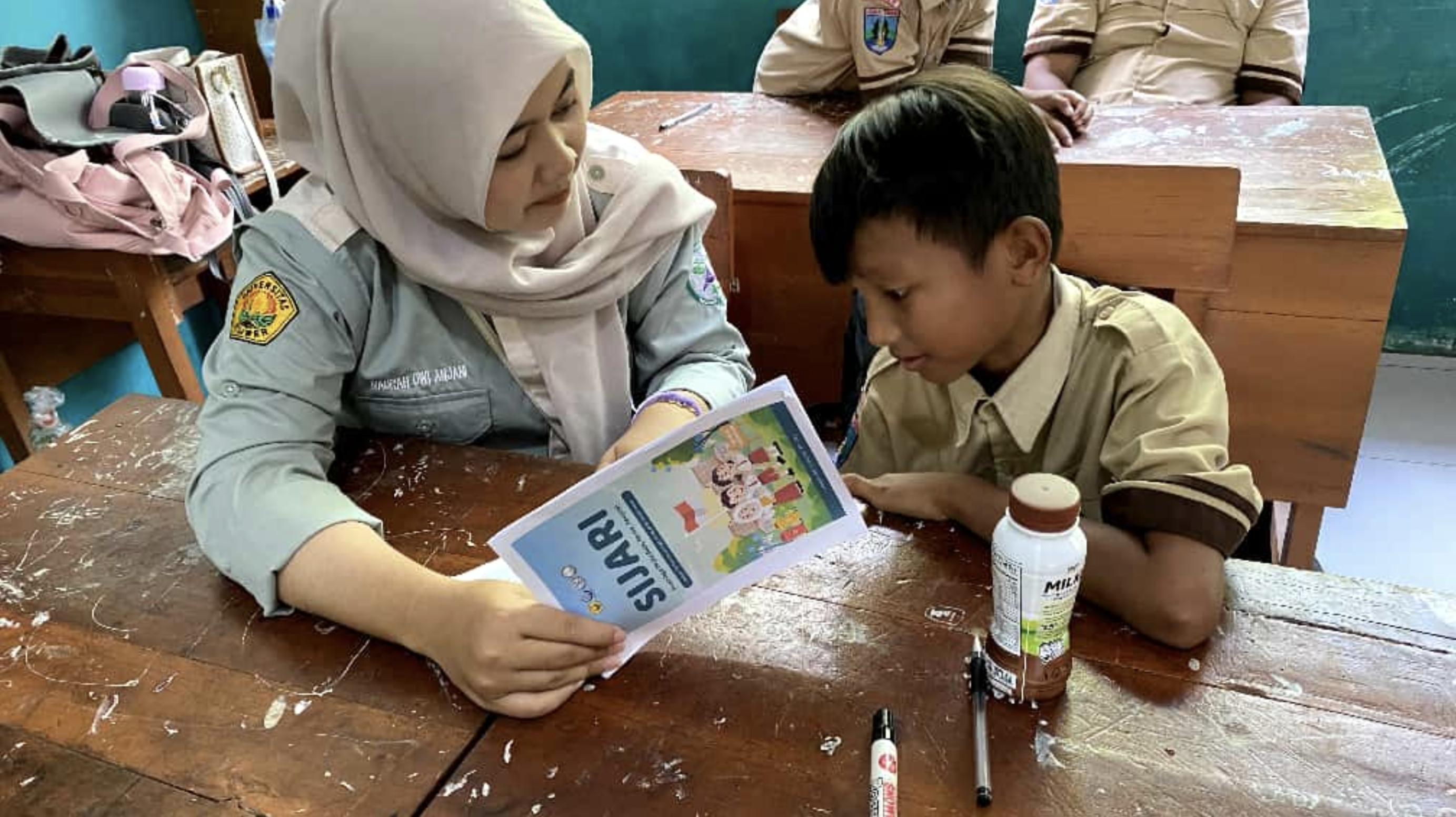
One example is the SIJARI (Siswa Jago 3R) community service programme organised by students of the E-Healthy Environmental Health Study Group, Faculty of Public Health (FKM UNEJ), at SDN 09 Sumberejo, Ambulu, on 11 October 2025. The programme involved 100 elementary school students from grades 4 and 5 and focused on improving their knowledge and skills in sustainable waste management through the 3R principles: Reduce, Reuse, and Recycle. Students participated in interactive learning sessions, learned to distinguish different types of waste, practised separating organic and inorganic waste, and created simple crafts from plastic waste. The programme also provided students with a specially prepared children's guidebook to support continued environmental learning.
UNEJ also promoted sustainability literacy through an academic seminar organised by the Faculty of Social and Political Sciences (FISIP UNEJ) on 25 September 2025, entitled “Ecological Fiscal Transfer – Goes to Campus: Youth Involvement in Strengthening Environmental Financing.” The seminar introduced students to Ecological Fiscal Transfer (EFT), a fiscal incentive mechanism that rewards local governments for maintaining environmental sustainability. Speakers from the Pilar Nusantara Association, UNEJ, and Ijen Cendekia Nusantara discussed environmental financing, ecological protection, and the role of young people in supporting sustainable environmental policies. Students were encouraged to contribute through research, community service, and participation in environmental initiatives.

In addition to academic discussions, UNEJ students organised environmental awareness activities through the Conservation from Geography to Indonesia (CGI) programme. Held from 28 to 30 June 2025 at the Base Camp of Mount Rante in Ijen Geopark, the programme was organised by the Geography Education Student Association (HMPSP Geografi Bima Sakti), Faculty of Teacher Training and Education (FKIP UNEJ). The activities combined environmental education with practical conservation actions. Students were encouraged to understand environmental challenges in ecotourism areas, participate in conservation efforts alongside local communities, and develop practical knowledge about preventing environmental degradation. This programme strengthened students' understanding of ecosystem conservation and their responsibility as agents of environmental change.
Another initiative was the “Geografi Peduli Lingkungan” programme organised by the Geography Student Association of FKIP UNEJ on 29 May 2025 at Kali Jompo, Jember. Under the theme “Clean River, Sustainable Life: Sinergi Alam untuk Keberlanjutan Juta Sumber Air dan Ekosistem Air,” the activity focused on raising student awareness of river cleanliness, sustainable water resources, and aquatic ecosystem conservation. Participants received educational insights from Dr. Fahrudi Ahwan Ikhsan, S.Pd., M.Pd., regarding the importance of protecting rivers and maintaining the sustainability of water ecosystems. The programme provided students with an opportunity to connect environmental knowledge with the importance of protecting natural resources.
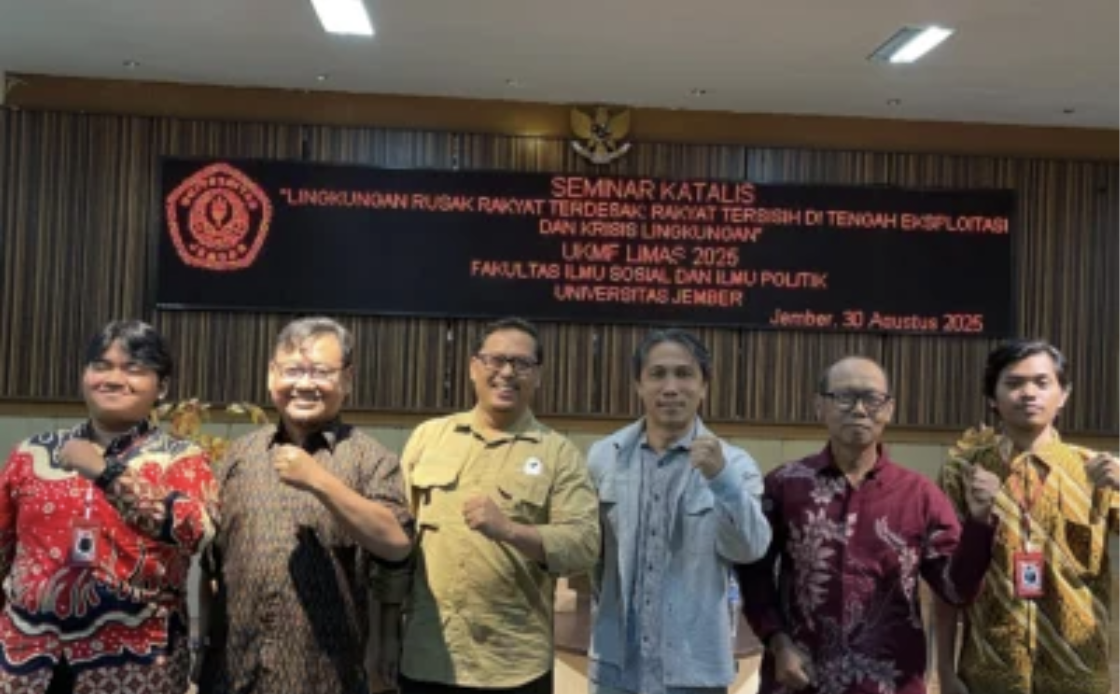
UNEJ also facilitated sustainability literacy through student-led academic discussions addressing the relationship between environmental degradation and social justice. On 30 August 2025, the Student Activity Unit Lentera Inspirasi Mahasiswa (LIMAS) of FISIP UNEJ organised the “Katalis” seminar, entitled “Damaged Environment, Pressured People: Marginalized Communities Amidst Exploitation and Environmental Crisis.” The seminar explored how natural resource exploitation affects ecosystems and disproportionately impacts vulnerable communities, including Indigenous peoples, farmers, and fishermen. Discussions highlighted issues such as livelihood losses, land conflicts, and displacement. By connecting environmental issues with social inequalities, the event encouraged students to develop a broader understanding of sustainability beyond ecological protection alone.
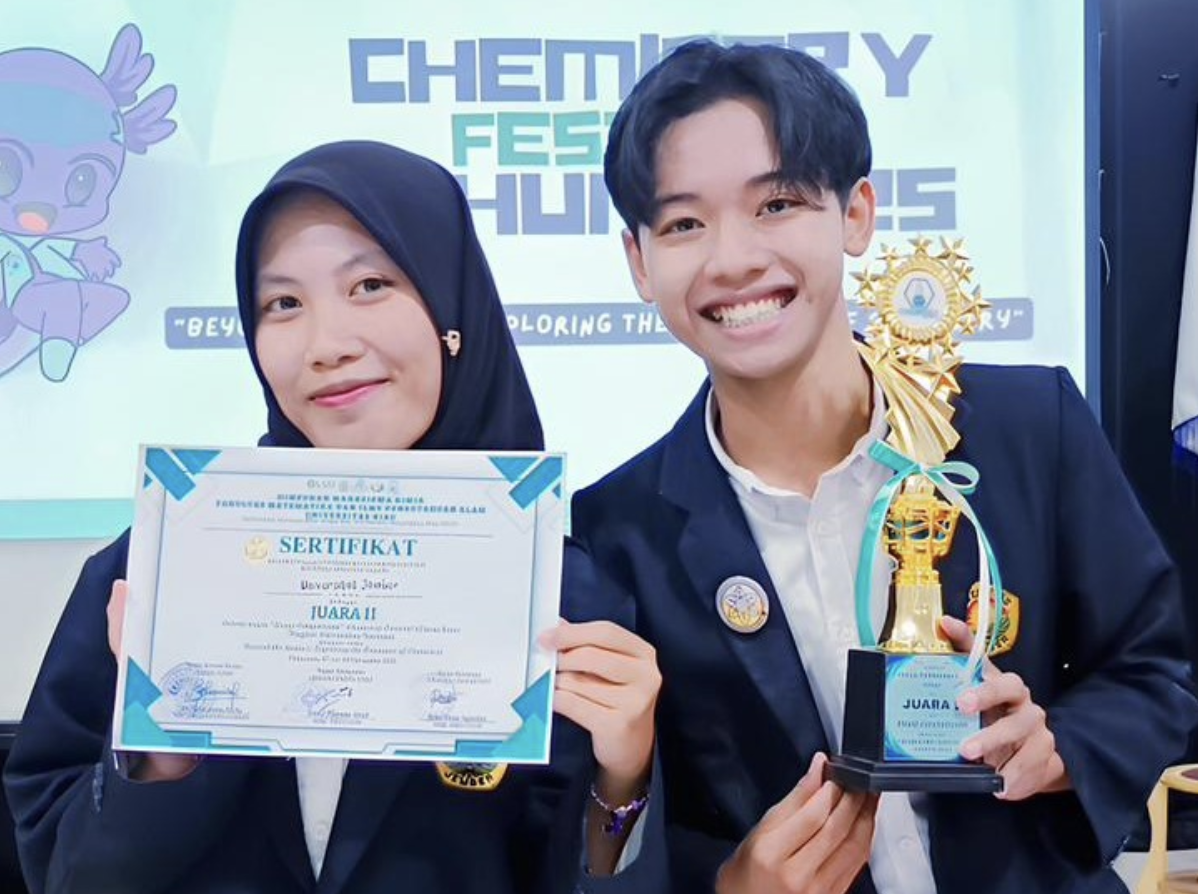
Furthermore, UNEJ students from the Science Education Study Programme developed an innovative digital waste management solution called SiLaras, which won second place at the Chemistry Festival (Chem-Fest) 2025 organised by the University of Riau. Reported on 12 December 2025, the innovation was developed by Aditya Satya Utama, Wilda Robiah Salsabila, and Ratih Eka Saputri. SiLaras is a community-based mobile application prototype that integrates artificial intelligence to support the Zero Waste movement. Its features include waste identification, waste-sorting guidance, waste bank services, a marketplace, and an intelligent virtual assistant. The development of this innovation demonstrates how students apply their understanding of environmental issues and digital technology to create solutions for sustainable waste management.
In addition, UNEJ introduced sustainability awareness to new students through the 2025 Student Orientation Programme (PKKMB). The official PKKMB guidelines included introducing the importance of the Sustainable Development Goals (SDGs) as one of the programme's specific objectives. The guidelines also emphasised environmental and social awareness as part of students' preparation for university life. This initiative provides an opportunity to introduce sustainability concepts to students from the beginning of their academic journey.
These initiatives demonstrate UNEJ's efforts to strengthen sustainability literacy through environmental education, academic knowledge sharing, practical conservation activities, student innovation, and institutional learning activities. By combining theoretical understanding with practical experiences, UNEJ encourages students and communities to develop awareness and skills related to environmental protection, biodiversity conservation, water resource management, waste reduction, and sustainable resource use.
To strengthen evidence for this indicator, UNEJ should also document how sustainability literacy is assessed and evaluated among students and community participants. Relevant evidence could include pre- and post-activity assessments, student surveys, learning evaluations, environmental knowledge tests, records of conservation participation, and follow-up assessments to measure improvements in sustainability understanding and the retention of environmental knowledge.
Sources:
UNEJ Students Introduce 3R Awareness to Elementary School Students through the SIJARI Programme – 13 October 2025: https://unej.ac.id/blog/2025/10/13/unej-turun-tangan-atasi-darurat-sampah-mahasiswa-e-healthy-fkm-tanamkan-kesadaran-3r-di-sekolah-dasar/
FISIP UNEJ Discusses Ecological Fiscal Transfer and Environmental Financing with Young People – 25 September 2025: https://unej.ac.id/blog/2025/09/25/fisip-unej-angkat-isu-pendanaan-lingkungan-mengenal-ecological-fiskal-transfer-bersama-generasi-muda/
Geography Students of UNEJ Conduct Conservation from Geography to Indonesia (CGI) at Ijen Geopark – 28 June 2025: https://fkip.unej.ac.id/mahasiswa-geografi-unej-gelar-cgi-tanamkan-kepedulian-lingkungan-di-ijen-geopark/
Geography Student Association Holds “Geografi Peduli Lingkungan” to Promote Aquatic Ecosystem Conservation – 22 July 2025: https://fkip.unej.ac.id/hmps-geografi-bima-sakti-fkip-gelar-geografi-peduli-lingkungan-ajak-mahasiswa-lestarikan-ekosistem-air/
Students at the University of Jember Hold “Katalis” Seminar to Address Environmental and Social Crises – 2 September 2025: https://en.fisip.unej.ac.id/?p=3448
UNEJ Students Develop an AI-Based Digital Zero Waste Solution through SiLaras – 12 December 2025: https://unej.ac.id/blog/2025/12/12/atasi-masalah-sampah-lewat-integrasi-ai-mahasiswa-unej-berikan-solusi-digital-zero-waste/
2025 Student Orientation Programme (PKKMB) Guidelines: https://teknik.unej.ac.id/wp-content/uploads/2025/08/Panduan-PKKMB-2025_filereduced.pdf
SUSTAINABILITY REPORT 2025 PUBLICATION
The University of Jember (UNEJ) Sustainability Report 2025 was prepared in accordance with the Global Reporting Initiative (GRI) Standards, reflecting the university’s commitment to transparent, accountable, and internationally recognized sustainability reporting. The report also incorporates UNEJ’s implementation and contributions to all 17 Sustainable Development Goals (SDGs), highlighting the university’s efforts to integrate sustainable development principles into its institutional governance, academic activities, research, and community engagement. Through these initiatives and reporting practices, UNEJ achieved a Gold rating in 2025, demonstrating its strong commitment to advancing sustainability and contributing to the global sustainable development agenda.
Sustainability Report UNEJ 2026 can be viewed at the following link