
SDG 11 Universitas Jember 2025
11.2.1 Public Access to Buildings
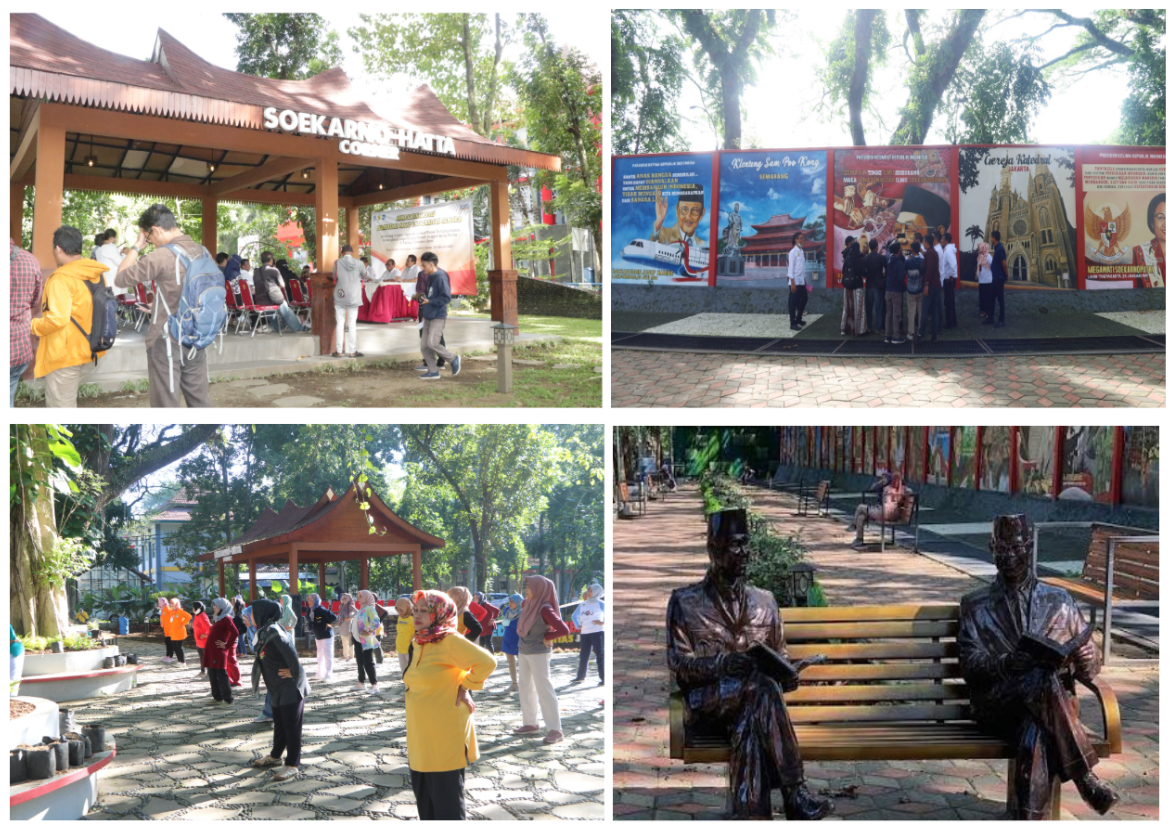
Universitas Jember (UNEJ) provides public spaces and facilities that can support educational, cultural, and community activities. One space associated with national identity is Taman Pancasila, known as the National Education Park within the university's Pancasila Campus. The park has been featured in the article “A Glimpse of the National Education Park at Pancasila Campus, Jember”. Taman Pancasila serves as a space for engaging with national values and the university environment.
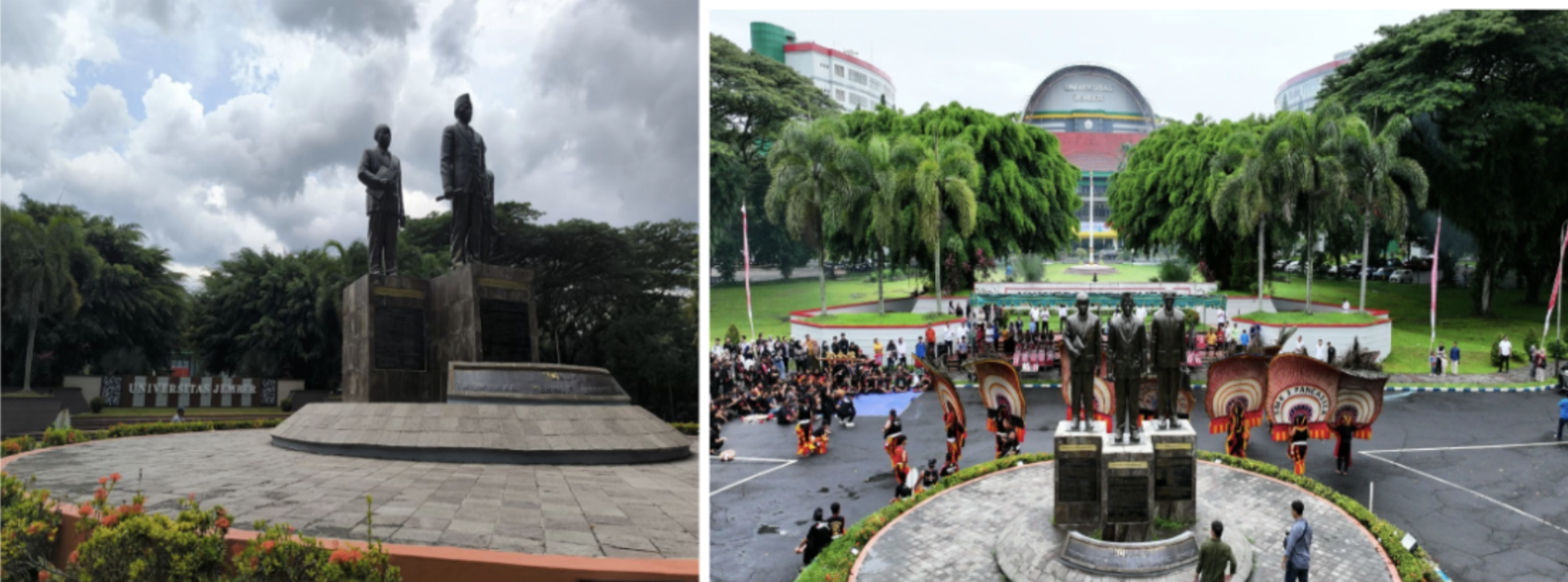
UNEJ also features the Triumvirate Statue, one of the university's landmarks. The monument serves as a location for university activities, including the opening of the 2025 Energy-Efficient Car Contest, held at the Triumvirate Statue Roundabout, as reported in the official publication UNEJ Hosts National Automotive Event as KMHE 2025 Officially Opens. The monument and surrounding open space contribute to the campus environment as a setting for academic and public activities.
Public access to university facilities is also available through the use of buildings for designated activities. The UNEJ Auditorium, for example, hosts academic events and programmes involving participants from outside the university. Information on auditorium facilities and their use is available through the BPU UNEJ Marketplace, which lists auditorium rental services and rates for UNEJ members and other users. Access to these facilities is therefore subject to the applicable usage conditions and fees.
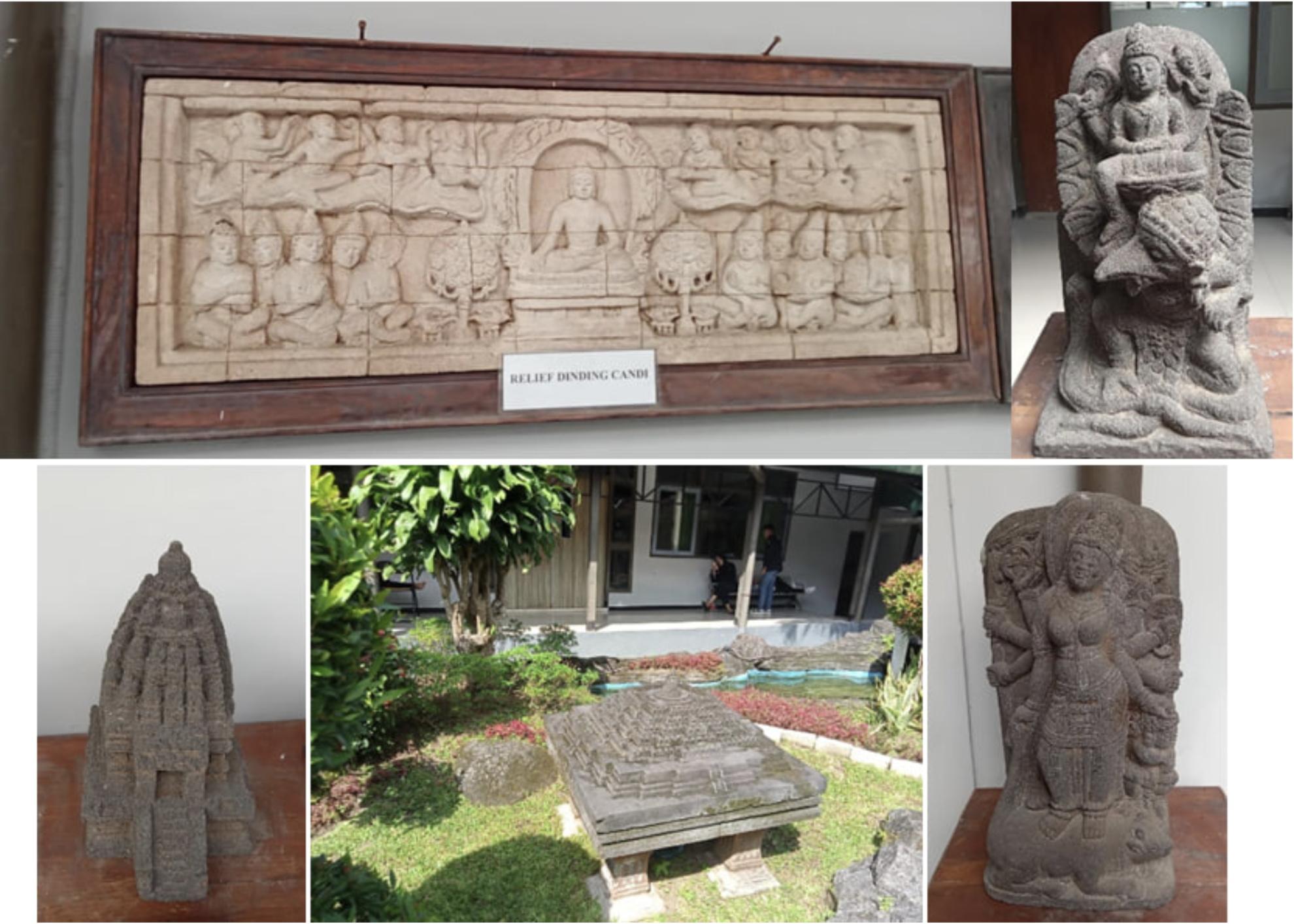
In the area of cultural heritage education, the Faculty of Teacher Training and Education (FKIP) UNEJ maintains collections of statue replicas, miniatures of Borobudur and Prambanan Temples, and temple relief replicas in its Social Studies Laboratory for History Education. These collections are documented in the official publication Historical Heritage Collections at the Social Studies Laboratory for History Education: Indonesia's Cultural Heritage. The laboratory also houses prehistoric objects, including hand axes, kenong stones, pottery vessels, and other artefacts, as described in its publication on Prehistoric Heritage Collections at the Social Studies Laboratory. These collections serve as educational resources for history learning and the appreciation of cultural heritage.
Overall, Taman Pancasila, the Triumvirate Statue, the university auditorium, and FKIP's historical collections demonstrate the presence of spaces and facilities that can support public engagement with national values and cultural heritage. To strengthen reporting under Public Access to Buildings (11.2.1), further official evidence is needed regarding public visitor access, visiting hours, facility-use conditions, and access to laboratory collections or museums. Any claimed collaboration between UNEJ and the Megalithic Site Museum in Bondowoso should also be verified through official cooperation documents or the relevant commemorative plaque.
11.2.2 Public Access to Libraries
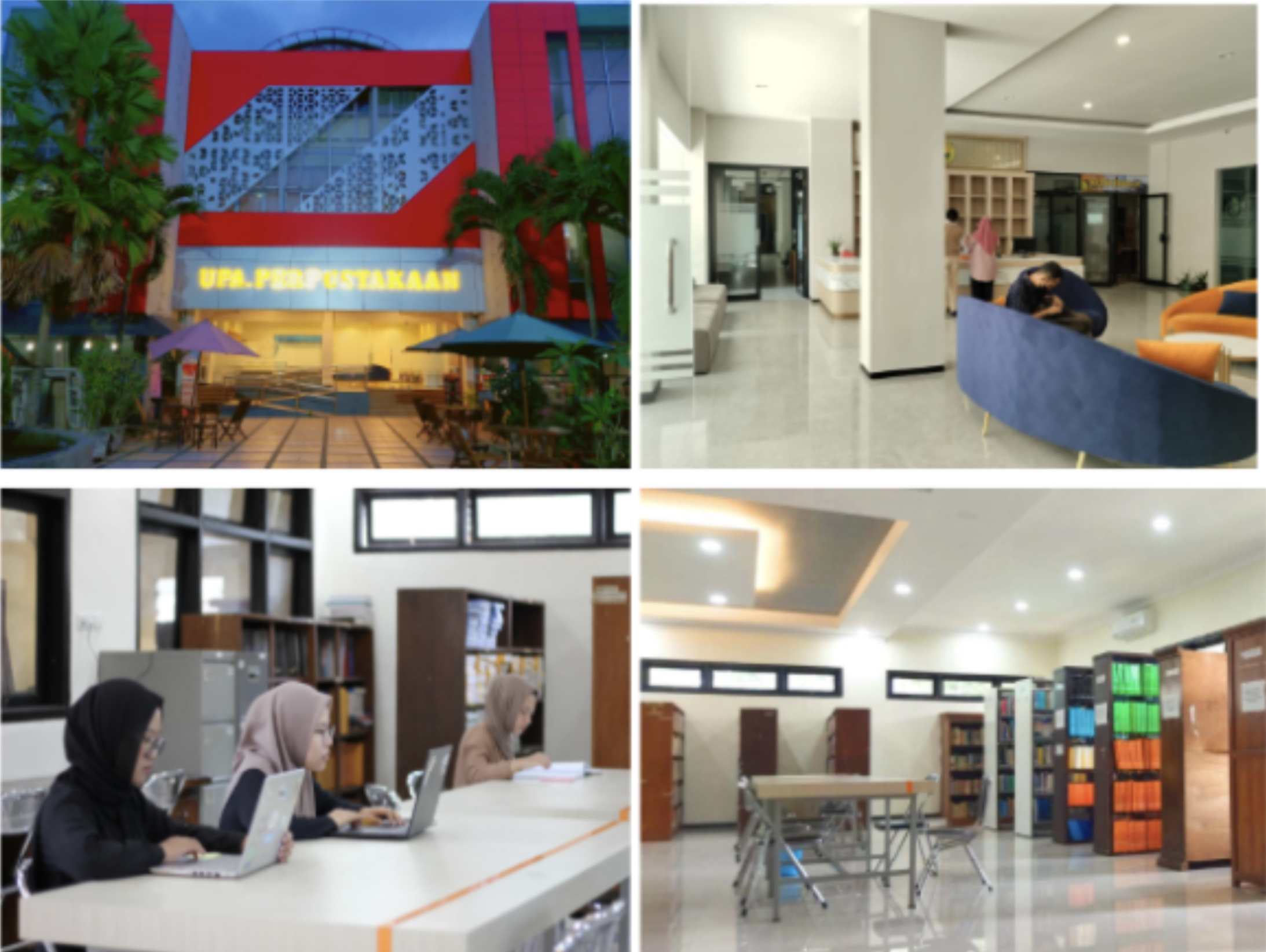
Universitas Jember (UNEJ) provides library services and information resources through the UPA Perpustakaan Universitas Jember, which supports learning, teaching, and research by providing access to books, academic publications, and other information resources. According to the official UPA Perpustakaan UNEJ website, the library serves the university’s academic community and the wider academic community, supporting access to educational resources and knowledge.
The library supports access to services such as circulation, reference services, and membership registration. Information about available services and user guidance is provided through the library’s official service information and user guidance page. These services facilitate the use of library collections and information resources for academic and educational purposes.
In addition to physical library services, UNEJ supports access to information through digital resources. The university provides access to online academic materials through its institutional repository, which contains scholarly works and research outputs. The library website also provides links to digital information resources, allowing users to discover academic materials beyond the physical library collection. The UPA Perpustakaan UNEJ website lists its regular service hours as Monday to Thursday, 08:00–16:00 WIB, and Friday, 08:00–16:30 WIB, with scheduled breaks. The library is closed on Saturdays and Sundays. Further information about services and operating hours is available through the official library website.
Overall, the physical library services and digital information resources provided by Universitas Jember demonstrate the university’s commitment to facilitating access to knowledge and academic information. To strengthen reporting under Public Access to Libraries (11.2.2), additional official evidence would be useful to clarify the eligibility of members of the general public, registration and library-card requirements, and any applicable access conditions or fees for non-UNEJ users.
11.2.3 Public Access to Museums
Universitas Jember (UNEJ) supports public engagement with historical and cultural heritage through educational collections, exhibition spaces, and digital initiatives. One of the relevant facilities is the Social Studies Laboratory for History Education at the Faculty of Teacher Training and Education (FKIP UNEJ), which houses historical and prehistoric artefacts, replicas of statues, miniature temples, and temple reliefs. These collections provide educational resources for understanding Indonesia’s cultural heritage and historical development. According to the official publication Historical Heritage Collections at the Social Studies Laboratory for History Education, the laboratory contains replicas of Hindu-Buddhist statues, including representations of Shiva, Vishnu, Brahma, Durga, and Ganesha, as well as miniatures of Borobudur and Prambanan Temples. The laboratory also preserves prehistoric artefacts, including hand axes, pottery vessels, stone tools, Lingga-Yoni objects, and kenong stones, as documented in Prehistoric Heritage Collections at the Social Studies Laboratory.
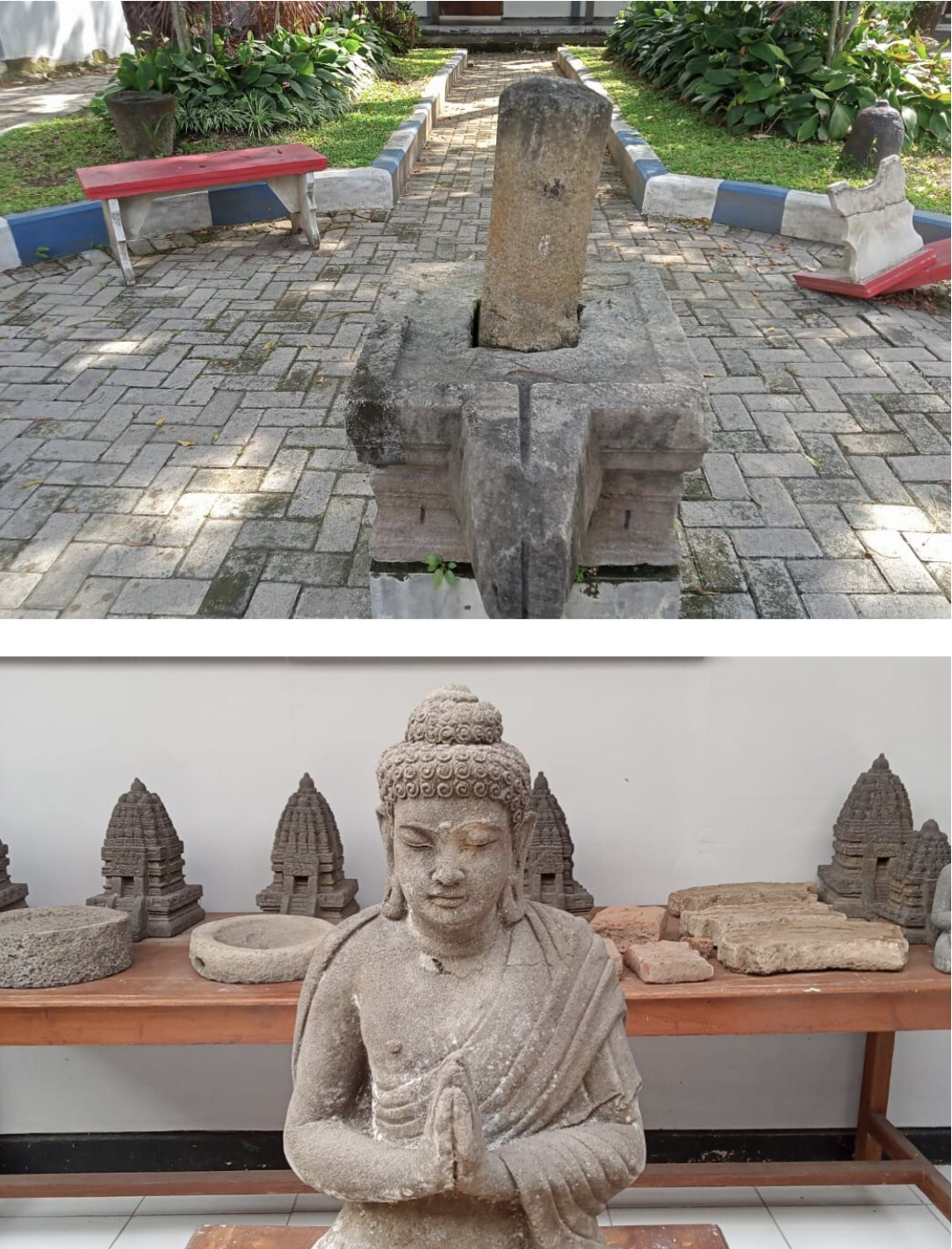
The laboratory also provides educational exhibition spaces through its historical replicas and outdoor educational garden. As described in the official publication Social Studies Laboratory for History Education: From Practical Facilities to Archival Exhibitions, the facility supports historical learning through artefact collections, archival exhibitions, and academic activities. These facilities allow students to engage directly with historical representations rather than relying solely on textbooks and classroom materials. To demonstrate access for the wider public, documentation of visitor arrangements, school visits, public exhibitions, or other activities involving non-UNEJ visitors can be provided alongside the collection information.
Overall, the historical and prehistoric collections at FKIP UNEJ, the Virtual Tour 360 initiative, and the Museum Terbuka Megalitik Bondowoso demonstrate relevant opportunities for public engagement with cultural heritage. These facilities and initiatives support educational access to artefacts, historical interpretation, and heritage preservation. To strengthen reporting under Public Access to Museums (11.2.3), UNEJ can provide photographs of the collections and exhibition spaces, links to the virtual tour, records of public or educational visits, visitor information, and documentation clarifying its relationship with the Bondowoso museum. Together, these materials can demonstrate the availability of cultural heritage resources and the extent to which members of the public can access them.
11.2.4 Public Access to Green Spaces
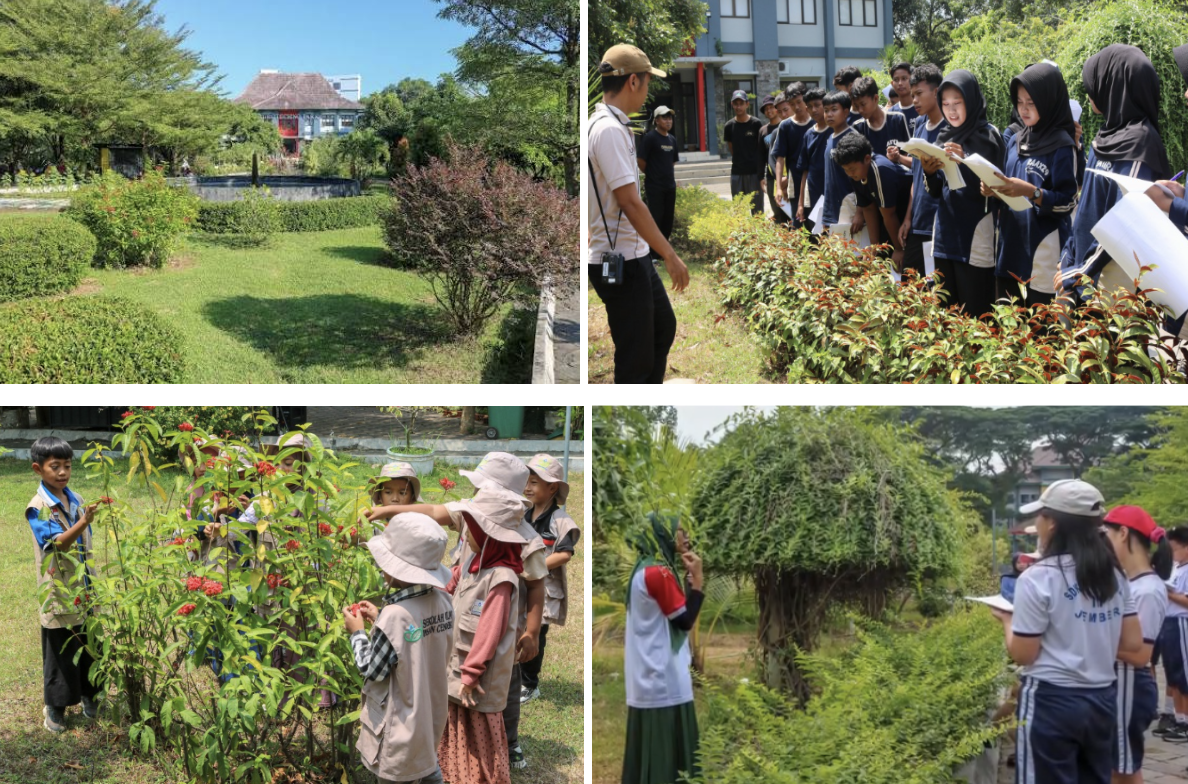
Universitas Jember (UNEJ) provides green spaces and outdoor areas that contribute to environmental sustainability, recreation, education, and social interaction. The university's green campus environment includes landscaped areas, tree-covered spaces, and facilities that can support outdoor learning and community activities. These areas contribute to the quality of the campus environment while creating opportunities for people to interact with nature.
One of UNEJ's relevant facilities is the UPA Taman Agroteknologi (Agrotechnopark), which combines plant collections, agricultural learning, and educational recreation. According to the official UPA Taman Agroteknologi website, the facility operates at Kampus Tegalboto and Kebun Jubung and provides educational visits, greenhouse activities, agricultural training, and institutional visits. These activities offer opportunities for school students, teachers, and members of the wider community to learn about plants, agriculture, and environmental management while experiencing green spaces.
Public access to Agrotechnopark has also been documented through university activities. In its publication Agrotechnopark Universitas Jember Receives Visits from Early Childhood Education to University Level, UNEJ reported an educational visit involving 60 elementary school students and five teachers. During the visit, the students explored the garden, learned about fruits and vegetables, and participated in planting activities in the greenhouse. The publication stated that educational visits at that time did not incur an administrative fee. This provides historical evidence of educational access for visitors from outside the university, although current fees and visiting arrangements should be confirmed with the facility.
More recently, on 17 November 2025, UNEJ conducted the Jubung Agroforestry programme at Kampus Vokasi Jubung, planting 535 trees comprising various productive and industrial plant species. According to the university's official publication, UNEJ Plants 535 Trees through Jubung Agroforestry to Strengthen a Green Educational Area, the initiative was intended to support environmental sustainability, improve the campus landscape, and provide long-term benefits for the surrounding community. The programme also promotes ecological education and the potential use of outdoor areas for learning and discussion. The development of Kampus Vokasi Jubung therefore represents another part of UNEJ's broader efforts to create a greener and more sustainable educational environment.
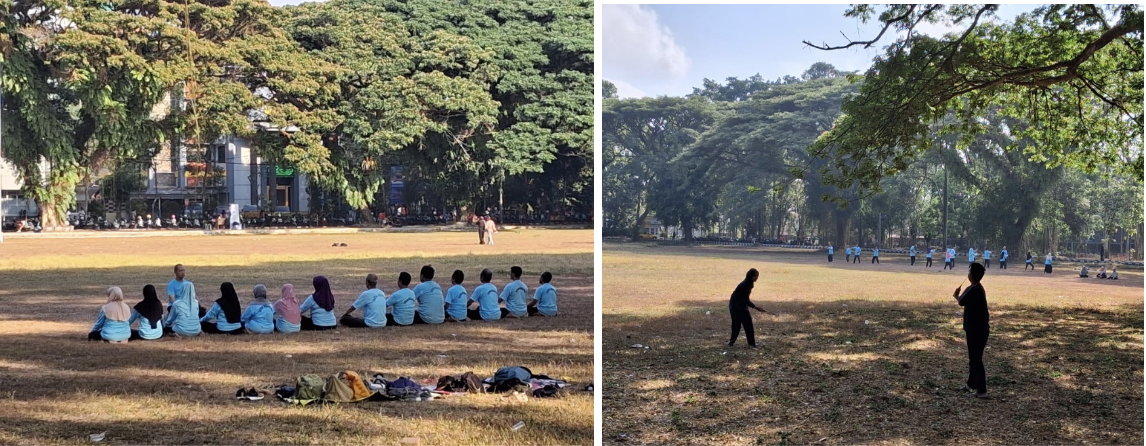
In addition to its landscaped gardens and tree-covered areas, Universitas Jember also provides the Multi Purpose Field as an outdoor space within its campus environment. The facility offers an open area that can accommodate various outdoor activities, recreation, and community interactions. Together with Agrotechnopark and other campus green spaces, the Multi Purpose Field contributes to the availability of outdoor environments that support social interaction and recreational activities within the university. Its presence further demonstrates UNEJ's efforts to provide diverse outdoor spaces that enhance the quality of the campus environment.
Overall, Agrotechnopark, Multi Purpose Field, the university's green open spaces, and the tree-covered areas at Kampus Tegalboto and Kampus Vokasi Jubung demonstrate UNEJ's efforts to provide and develop outdoor and green environments for education, recreation, and environmental sustainability. Agrotechnopark offers the clearest documented example of educational visits for external visitors, while Lapangan Shaun the Sheep demonstrates the use of an open campus area for public-facing activities. The university's green open space planning and tree-planting programmes further demonstrate environmental management and the development of campus vegetation.
11.2.5 – Arts and Heritage Contribution
Universitas Jember (UNEJ) contributes to the preservation, development, and promotion of local arts and cultural heritage through various artistic performances organized by its student communities, faculties, and university units. These activities provide opportunities for students and members of the university community to express their creativity while introducing traditional and contemporary Indonesian arts to wider audiences. Throughout 2025, UNEJ supported a range of artistic activities, including traditional Reog performances, choir competitions, theatre productions, dance performances, and collaborative arts events involving university-based and external arts communities.

One of the university's contributions to traditional cultural preservation was demonstrated through the performance of Paguyuban Seni Reog Mahasiswa (PSRM) Sardulo Anorogo. In May 2025, the student Reog group presented a performance titled “Gelar Reog Purnama” in front of the Soekarno Building at Universitas Jember. The performance attracted the attention of members of the surrounding community and passers-by, who stopped to watch the presentation. Through this activity, students participated in preserving Reog Ponorogo, a traditional Indonesian performing art that combines dance, music, costumes, and cultural narratives. The performance also demonstrated how a university-based arts community can contribute to keeping traditional heritage visible and appreciated by the public.
The university also provided opportunities for musical expression through its choral activities. In June 2025, Universitas Jember organized the “Lomba Paduan Suara Antar Unit Kerja Se-Universitas Jember” as part of its Semarak Bulan Pancasila programme. Held on 29 June 2025 at the Soedjarwo Building, the competition brought together representatives from different university work units, including lecturers, educational staff, and members of Dharma Wanita. Participants performed a compulsory song related to Pancasila, national identity, or patriotism, alongside an Indonesian folklore song arranged for at least four-part harmony. The activity served as a platform for artistic expression while encouraging appreciation of Indonesian cultural values through choral music.
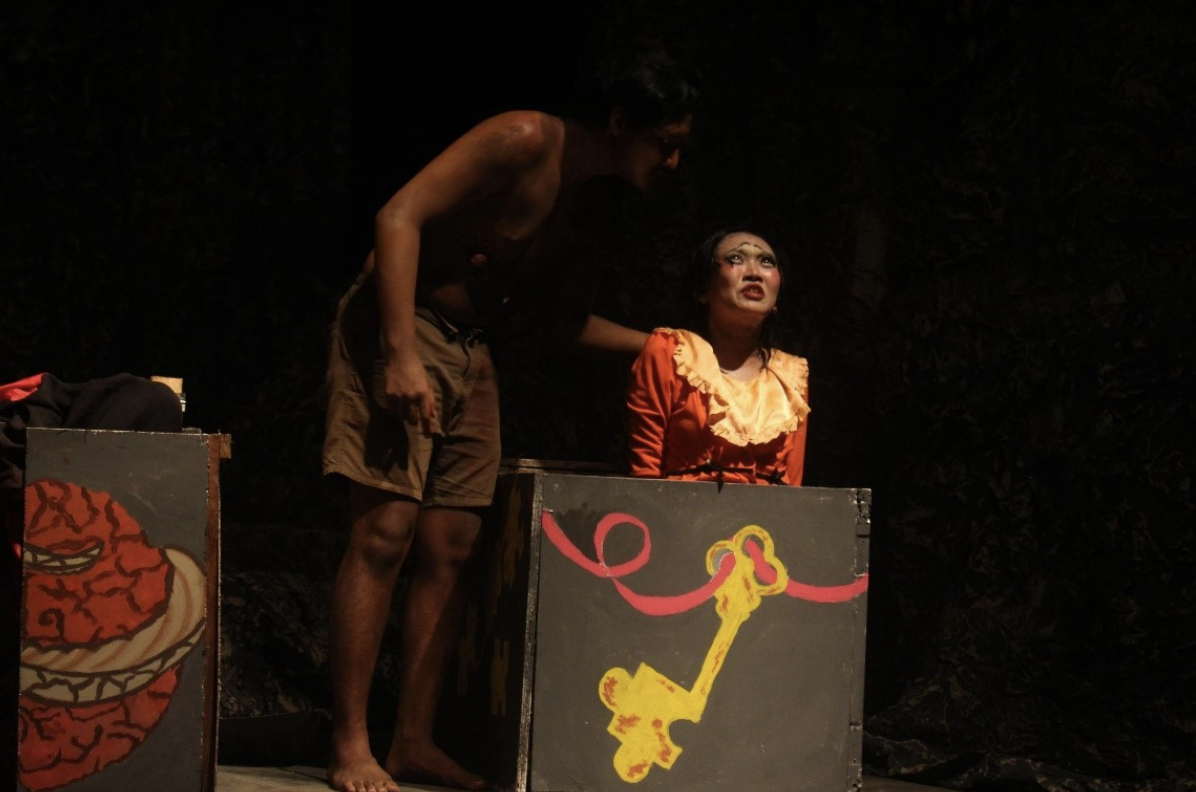
Student theatre groups also contributed to the university's performing arts activities. On 19 April 2025, UKM Teater Tiang of the Faculty of Teacher Training and Education (FKIP) presented a theatre production at the Universitas Jember Alumni Building. The performance explored the struggles of activists against oppression and social injustice, using theatre as a medium for artistic expression and social reflection. The event was attended by students, members of arts communities, and the general public. Importantly, the performance was open to audiences without special admission requirements or entrance fees, allowing people beyond the university community to experience the students' theatrical work. The production was also part of the group's annual programme following the recruitment and training of new members.
Another theatrical contribution was presented through “Dhemit”, a production by students of the Indonesian Literature programme at the Faculty of Cultural Sciences. Staged on 21 June 2025 at the Universitas Jember Alumni Building, the performance combined fantasy and horror elements with themes associated with local cultural beliefs. Through its storyline and theatrical presentation, the production introduced audiences to cultural narratives surrounding the relationship between humans and supernatural beings. This performance illustrates how student theatre can serve not only as entertainment but also as a medium for exploring and reinterpreting cultural stories through contemporary artistic approaches.
UNEJ's artistic activities also included collaborative performances involving different art forms. On 20 September 2025, UKSM ESSENSI of the Faculty of Pharmacy organized “Konser Amal 2025” at the Double Way Gate of Universitas Jember. Carrying the theme “From Heart to Art, Gather in Harmony”, the event featured performances from its dance, music, vocal and choir, theatre, and visual arts divisions. The programme included traditional dance, modern dance, vocal performances, band music, monologues, and live portrait drawing. The event also involved other student arts organizations from Jember, including UKMS Titik, UKMF Lisma, UKSM Panjalu, PSM Gita Pusaka, UKMK Dolanan, UKM Lumut, UKMK Etalase, IMASIND, and UKMF Kurusetra. Open to university students and the general public, the concert created a shared platform for artistic collaboration and public engagement. Beyond its artistic contribution, the event collected IDR 4,655,000 in donations and various donated goods for Bhakti Luhur Orphanage, demonstrating how performing arts can also encourage social solidarity.
The Faculty of Cultural Sciences further promoted artistic expression through “Kridaya Abiyasa”, its 2025 student inauguration programme held on 4 October 2025 at the Soetardjo Building. Welcoming approximately 400 new students, the event featured traditional and contemporary dances, monologues, poetry readings, and a large-scale cultural performance. These performances provided a platform for students to showcase their artistic abilities while introducing new students to the cultural and creative environment of the faculty. By combining different forms of performance, the programme encouraged appreciation of Indonesian cultural heritage and contemporary artistic expression.
Similarly, the Faculty of Social and Political Sciences organized a performing arts programme as part of its 2025/2026 New Student Orientation closing event on 22 September 2025. Held in the faculty courtyard, the event attracted hundreds of students, lecturers, and educational staff. The programme featured traditional dance, modern dance, theatrical performances, and acoustic music. One of the highlights was a dance performance that combined traditional movements with contemporary styles, illustrating how students can reinterpret cultural heritage through creative performance.
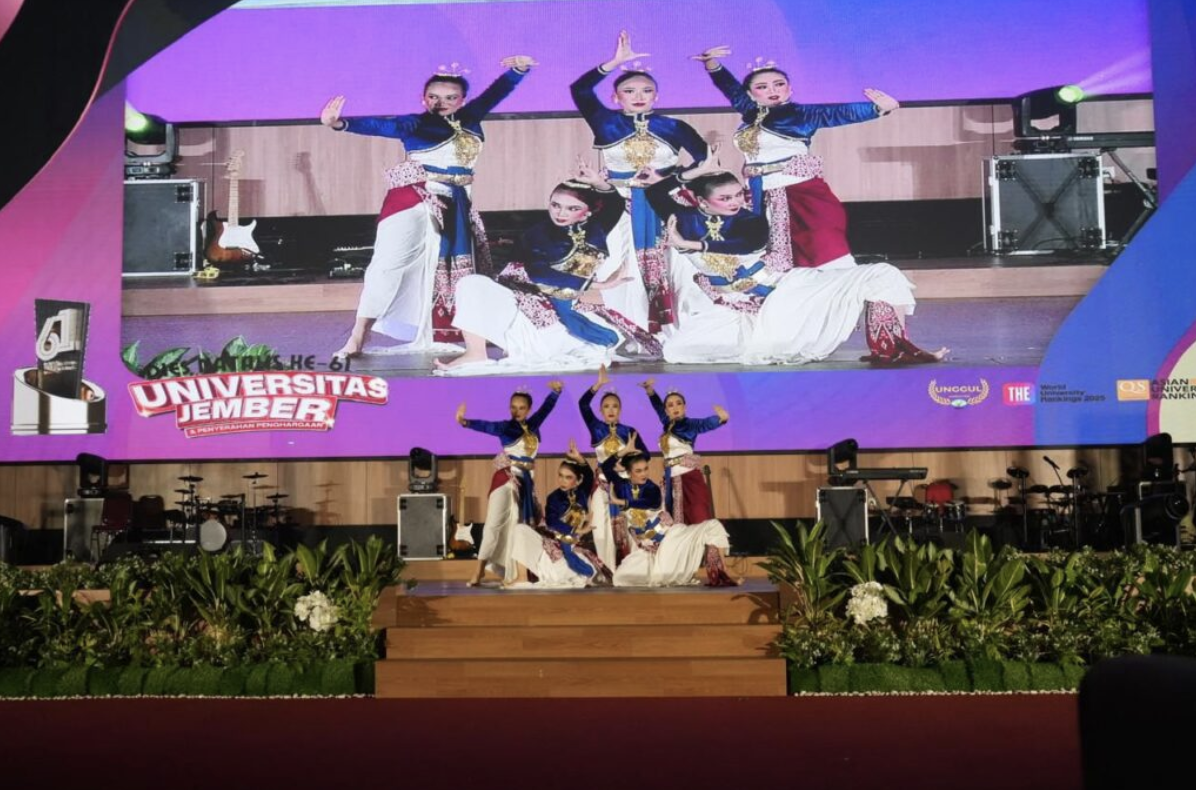
At the university level, UNEJ also strengthened its cultural identity through the launch of “Kidung Mangesti Dharma”, the university's signature dance, during the closing celebration of its 61st Anniversary on 5 December 2025. Performed by male and female dancers, the dance was introduced as a cultural representation of the university's values and identity. The university leadership stated that it was intended to become a signature opening performance at future official university events. This initiative represents an institutional effort to establish and promote a distinctive artistic identity while incorporating cultural performance into the university's ongoing activities.
In addition to these performances, student choral groups continued to develop their artistic capabilities through competitions and external engagements. In October 2025, a student choir team from the Primary School Teacher Education (PGSD) programme at UNEJ's Bondowoso Campus participated in the 5th International Bandung Choir Festival and achieved third place in the Mixed Choir category. Meanwhile, the UNEJ Student Choir (PSM) received a Gold Medal in the same festival's A04 Mixed Choir category in November 2025. These achievements demonstrate the continued development of choral arts within the university and the participation of its student performers in broader artistic platforms.
Through these activities, Universitas Jember demonstrates its contribution to local arts and cultural heritage by providing opportunities for artistic performances, supporting student arts communities, and facilitating collaboration among different performing arts groups. The activities cover traditional and contemporary dance, Reog, choir, theatre, music, and visual arts, with several events directly involving members of the public and external arts communities. These initiatives contribute to the continuity of cultural expression, encourage public appreciation of the arts, and strengthen the role of higher education institutions in preserving and promoting cultural heritage. They also support the broader objectives of Sustainable Development Goal 11, particularly Target 11.4, which emphasizes efforts to protect and safeguard cultural and natural heritage.
Sources
Radar Jember – “Menikmati Pertunjukan PSRM Sardulo Anorogo Universitas Jember, Upaya Pelestarian Budaya agar Tak Punah” (30 May 2025).
https://radarjember.jawapos.com/seni-budaya/796077453/menikmati-pertunjukan-psrm-sardulo-anorogo-universitas-jember-upaya-pelestarian-budaya-agar-tak-punahUniversitas Jember – “Lomba Paduan Suara Antar Unit Kerja Se-Universitas Jember Tahun 2025”.
https://unej.ac.id/lomba-paduan-suara-antar-unit-kerja-se-universitas-jember/FKIP Universitas Jember – “UKM Teater Tiang FKIP Universitas Jember Sukses Gelar Pementasan Bertema Perjuangan Aktivis” (20 April 2025).
https://fkip.unej.ac.id/ukm-teater-tiang-fkip-universitas-jember-sukses-gelar-pementasan-bertema-perjuangan-aktivis/PSTF Fakultas Ilmu Budaya UNEJ – “Pementasan Teater ‘Dhemit’ oleh Sastra Indonesia, Fakultas Ilmu Budaya, Sebuah Ajang Apresiasi Seni dari HIMAFISI” (23 June 2025).
https://pstf.fib.unej.ac.id/pementasan-teater-dhemit-oleh-sastra-indonesia-fakultas-ilmu-budaya-sebuah-ajang-apresiasi-seni-dari-himafisi/BEM Fakultas Farmasi UNEJ – “UKSM ESSENSI Gelar Konser Amal 2025, Wujudkan Donasi Lewat Harmoni” (23 September 2025).
https://bem.farmasi.unej.ac.id/uksm-essensi-gelar-konser-amal-2025-wujudkan-donasi-lewat-harmoni/Fakultas Ilmu Budaya UNEJ – “Fakultas Ilmu Budaya Universitas Jember Gelar Inaugurasi Mahasiswa Baru 2025 Bertajuk Kridaya Abiyasa Penuh Kreasi dan Semangat Budaya” (4 October 2025).
https://fib.unej.ac.id/fakultas-ilmu-budaya-universitas-jember-gelar-inaugurasi-mahasiswa-baru-2025-bertajuk-kridaya-abiyasa-penuh-kreasi-dan-semangat-budaya/FISIP UNEJ – “Puncak PPMB 2025/2026: Pentas Seni di Halaman FISIP Meriah dan Bermakna” (22 September 2025).
https://fisip.unej.ac.id/puncak-ppmb-2025-2026-pentas-seni-di-halaman-fisip-meriah-dan-bermakna/Universitas Jember – “Rektor Luncurkan Tari Khas UNEJ dan Berikan Penghargaan Alumni Inspiratif dalam Malam Puncak Dies Natalis Ke-61” (5 December 2025).
https://unej.ac.id/blog/2025/12/05/rektor-luncurkan-tari-khas-unej-dan-berikan-penghargaan-alumni-inspiratif-dalam-malam-puncak-dies-natalis-ke-61/FKIP UNEJ – “Tim Paduan Suara PGSD UNEJ Kampus Bondowoso Raih Juara 3 Kategori Mixed Choir di 5th International Bandung Choir Festival” (23 October 2025).
https://fkip.unej.ac.id/tim-paduan-suara-pgsd-unej-kampus-bondowoso-raih-juara-3-kategori-mixed-choir-di-5th-international-bandung-choir-festival/PSTF UNEJ – “PSM Universitas Jember Raih Gold Medal di 5th International Bandung Choral Festival 2025” (20 November 2025).
https://pstf.fib.unej.ac.id/psm-universitas-jember-raih-gold-medal-di-5th-international-bandung-choral-festival-2025/
11.2.6 Record and Preserve Cultural Heritage

Universitas Jember (UNEJ) contributes to the documentation and preservation of intangible cultural heritage through research, educational activities, cultural programmes, and digital documentation initiatives. These efforts involve the Faculty of Cultural Studies (FIB) and the Faculty of Teacher Training and Education (FKIP), which support the study and preservation of regional languages, folklore, myths, oral traditions, traditional rituals, and local knowledge. Through research publications, cultural workshops, literary works, and community engagement, UNEJ helps document cultural practices and make local knowledge accessible to students, researchers, and the wider public.
One of the university's contributions is the research and documentation of oral traditions and local wisdom by the Faculty of Cultural Studies. FIB UNEJ has research groups focusing on language, literature, cultural studies, and traditional knowledge, including the Research Group on Oral Traditions and Local Wisdom (TERKELOK). These activities support the study of oral narratives, cultural practices, and traditional knowledge, particularly those associated with the Using community in Banyuwangi. Research and documentation of these traditions help preserve cultural information that is often transmitted orally between generations. Through academic publications and research activities, the faculty contributes to the recording of local cultural heritage for future study and reference. FIB UNEJ – Research and Community Engagement Groups.
FIB UNEJ also contributes to the documentation of local myths, rituals, and cultural identities through scholarly research. The publication Ritual Using dan Jawa: Mitos Hibriditas Budaya sebagai Integrasi dan Harmoni Sosial examines traditional rituals, including the Seblang ritual in Banyuwangi and the Nini Thowong tradition in Yogyakarta. The study discusses how myths and ritual practices reflect cultural beliefs, social relationships, and interactions between cultural traditions. By documenting and analysing these practices, the research helps preserve knowledge about traditional ceremonies and their meanings within local communities. Such documentation also provides academic references for understanding how intangible cultural heritage continues to shape community identity. FIB UNEJ – Ritual Using and Javanese Traditions: Myths of Cultural Hybridity.
11.4.1 Sustainable Practices Targets
Universitas Jember (UNEJ) supports sustainable mobility through initiatives that encourage the use of environmentally friendly transportation and the development of energy-efficient vehicle technologies. Sustainable commuting practices can help reduce dependence on private motorized vehicles, lower transportation-related emissions, and improve mobility within the university environment. To strengthen these efforts, UNEJ can integrate sustainable transportation into its institutional policies and planning documents, including a Rector’s Decree that establishes clear objectives, implementation measures, and indicators for monitoring progress.
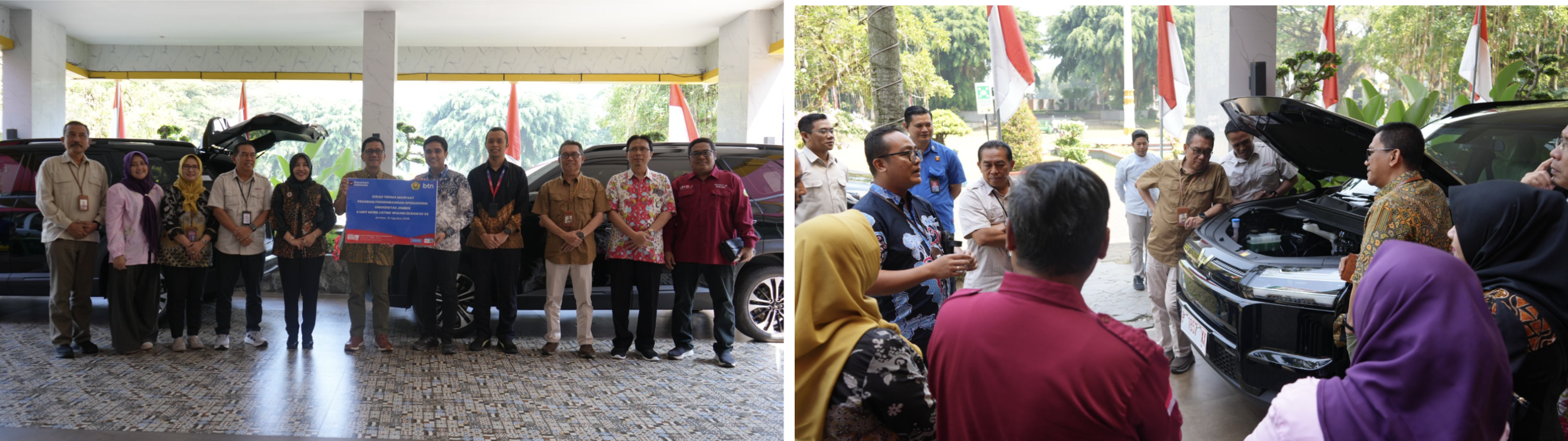
One example of sustainable transportation at UNEJ is the provision of bicycles for students at the Faculty of Agriculture. In July 2025, the Faculty of Agriculture received ten bicycles donated by its alumni to support students’ mobility, particularly those living near the campus. The bicycles are intended to help students travel to lectures, practical sessions, and student activities while providing an alternative to motorized transportation. This initiative demonstrates a practical contribution to promoting cycling on campus. Further development could include establishing bicycle-use guidelines, designated parking areas, and measurable targets for increasing bicycle use. More information is available in the article Faculty of Agriculture Alumni Provide Bicycles to Support Student Mobility.
UNEJ also has a campus bus facility listed among its transportation infrastructure in the university’s institutional planning documentation. A campus bus can provide an alternative means of moving between campus locations and may help reduce the need for individual vehicle trips. To strengthen its contribution to sustainable commuting, UNEJ could establish or expand scheduled campus bus services, communicate routes and operating hours, and monitor passenger numbers and service utilization. The availability of a bus facility is a starting point, while evidence of regular operations, accessibility, and usage would help demonstrate its effectiveness. The campus bus is referenced in UNEJ’s Strategic Business Plan document.
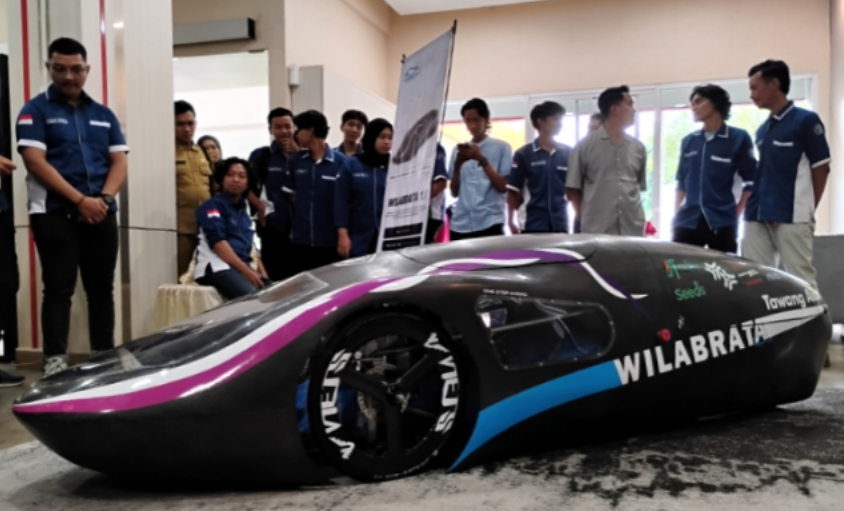
In addition to everyday transportation initiatives, UNEJ promotes the development of energy-efficient vehicles through student innovation and engineering activities. On 24–26 October 2025, UNEJ hosted the national-level Kontes Mobil Hemat Energi (KMHE) 2025, which brought together 68 finalist teams from 44 universities. The competition included Prototype and Urban Concept categories, with vehicle designs using different energy sources, including electricity. UNEJ also presented its own vehicle innovations, including the diesel-powered Wilabrata DV and the electric Basundara E-Kart, which were launched in October 2025. These activities demonstrate the university’s contribution to research and innovation in energy-efficient and alternative-energy vehicles, although competition vehicles should be distinguished from transportation provided for routine campus commuting. Further details are available in the articles UNEJ Hosts the 2025 Energy-Efficient Car Competition and UNEJ Launches Energy-Efficient Cars Wilabrata DV and Basundara E-Kart.
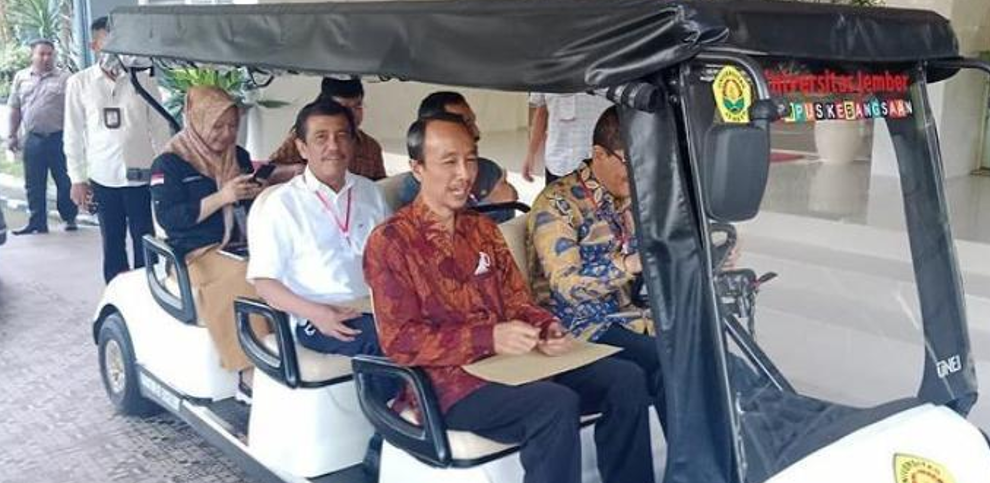
To build on these initiatives, UNEJ could establish measurable sustainable commuting targets, such as increasing bicycle and campus bus usage, monitoring the number of private vehicles entering campus, improving pedestrian facilities, and gradually introducing electric vehicles for institutional transportation where operationally feasible. Baseline data could be collected through transportation surveys, vehicle-entry records, bicycle-use logs, and campus bus passenger statistics. Progress could then be evaluated annually and incorporated into the university’s sustainability reporting.
11.4.2 Promote Sustainable Commuting

Universitas Jember (UNEJ) promotes sustainable mobility through initiatives that support the adoption of more environmentally friendly transportation technologies. These initiatives form part of the university’s broader commitment to developing a greener campus by reducing the environmental impact of its operations and encouraging more efficient energy use. One practical approach is the introduction of electric vehicles for institutional transportation, alongside research and student innovation in energy-efficient vehicle technologies.
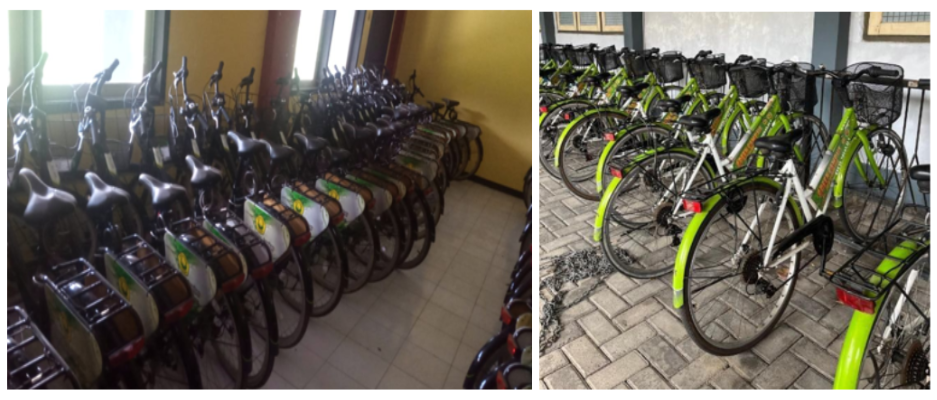
A significant initiative was announced in August 2026, when Universitas Jember received four electric cars through a collaboration with Bank Tabungan Negara (BTN). The vehicles were allocated for operational use by four university units: the Internal Supervisory Unit (Satuan Pengawas Internal/SPI), the Institute for Research and Community Service (LP2M), the Faculty of Dentistry, and the Faculty of Nursing. The provision of these electric cars represents a concrete step toward integrating lower-emission vehicles into the university’s daily operations. By replacing or reducing the use of conventional fuel-powered vehicles for institutional trips, electric vehicles have the potential to reduce direct exhaust emissions and support more sustainable campus mobility.
11.4.3 Allow Remote Working
Universitas Jember (UNEJ) supports flexible and digitally enabled academic activities through the implementation of online learning facilities and blended learning arrangements. These initiatives allow certain educational and institutional activities to be conducted remotely, reducing the need for physical attendance on campus while maintaining the continuity of academic services.
One example is the development of online lecture attendance through Zoom, as documented in UNEJ's publication New Zoom Attendance System at Universitas Jember. This facility allows lecturers and students to record their attendance during online lectures using their SISTER accounts. The integration of Zoom with the university's academic information system supports the implementation and monitoring of distance learning activities.
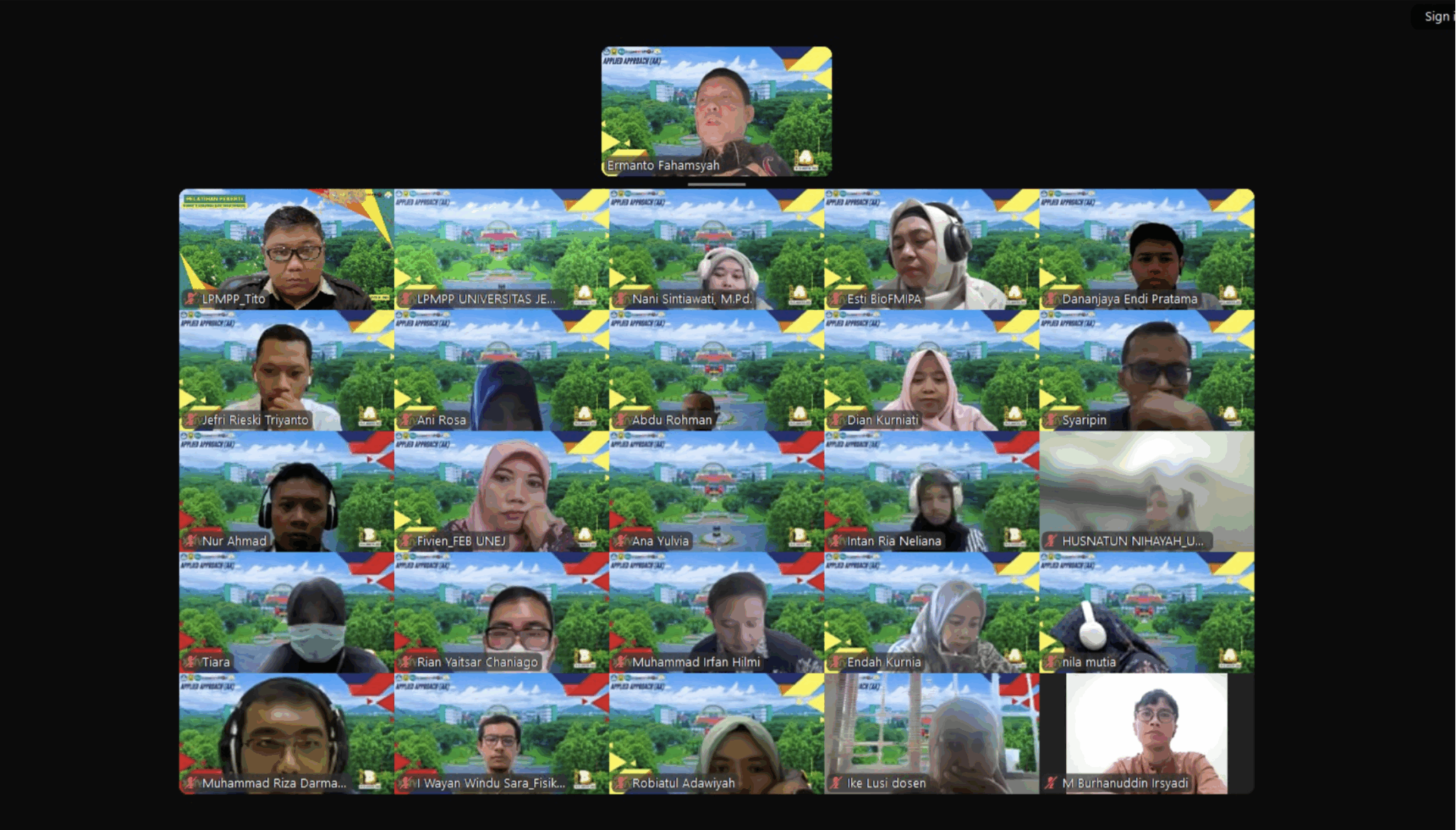
Furthermore, UNEJ implemented blended learning through the Applied Approach Training Phase 44 in 2025, organized by the Institute for Educational Development, Learning, and Quality Assurance (LPMPP). The training was conducted over four days, consisting of three online sessions through Zoom and one face-to-face session. This arrangement demonstrates UNEJ's adoption of flexible learning methods that combine remote and on-campus activities.
These initiatives demonstrate UNEJ's use of digital platforms to support remote academic activities and reduce the necessity of physical attendance for certain educational processes. Online meetings and learning sessions can also help reduce commuting requirements for lecturers, students, and training participants during the periods in which remote activities are implemented.
However, the available 2025 publications primarily demonstrate remote learning and blended training rather than a formal work-from-home policy for university employees. Therefore, additional documentation regarding employee work arrangements, including official WFH regulations, the number of employees permitted to work remotely, and the frequency of remote-working days, would be necessary to establish UNEJ's performance in Indicator 11.4.3 more comprehensively.
Overall, Universitas Jember demonstrates the use of digital learning infrastructure and flexible academic delivery methods. Further evidence of formal remote-working arrangements would strengthen the assessment of the university's contribution to reducing commuting through remote work.
11.4.4 Affordable Housing for Employees
Universitas Jember (UNEJ) recognises that access to adequate and affordable housing is an important part of employee welfare and quality of life. Providing opportunities for employees to obtain suitable housing can help improve financial security, family well-being, and overall quality of life. Through collaboration with housing finance institutions, government agencies, and property developers, UNEJ supports initiatives that help employees access affordable homeownership programmes.
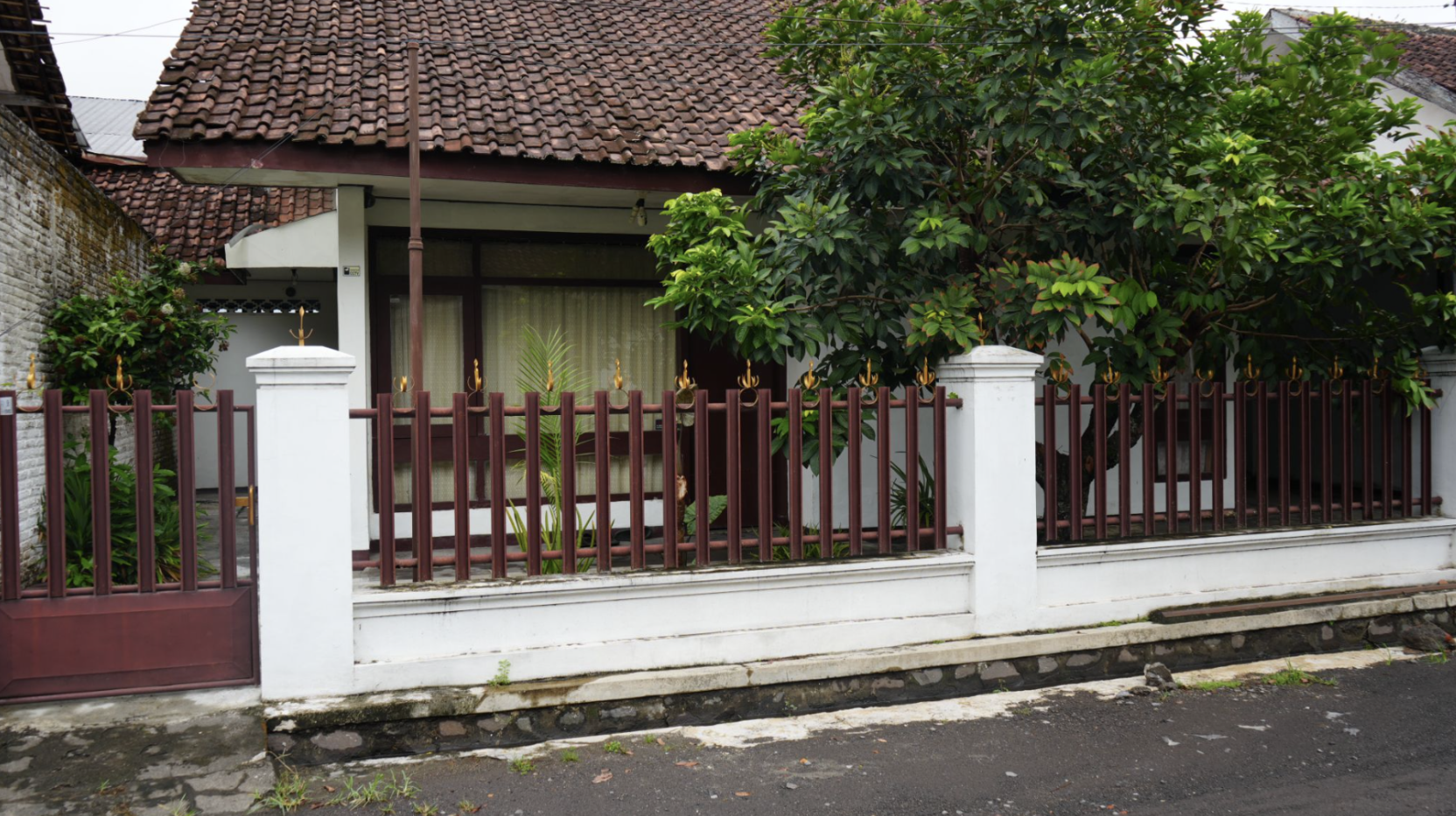
One example of UNEJ's support for affordable housing is its involvement in the mass signing of Tapera Syariah Housing Financing Agreements (KPR Tapera Syariah), held on 17 October 2024 at Soetardjo Building, Universitas Jember. The programme was organised through collaboration between BTN Syariah and the Housing Savings Management Agency (BP Tapera), providing housing financing opportunities for civil servants from the Jember Regency Government and Universitas Jember.
The programme covered 100 housing units for eligible civil servants from both institutions. Through this initiative, employees were given access to housing financing facilities designed to support their efforts to purchase their first homes. The event also demonstrated cooperation between universities, government institutions, and financial service providers in addressing employees' housing needs.
The KPR Tapera Syariah scheme provides an alternative financing option for eligible civil servants seeking decent and affordable housing. Through the programme, BP Tapera and BTN Syariah facilitate access to housing finance based on the applicable participant requirements and financing arrangements. This collaboration helps connect employees with housing opportunities while providing information about the procedures and facilities available to prospective homeowners.
UNEJ's engagement in affordable housing initiatives is also relevant to broader efforts to improve employee welfare. Access to affordable housing can reduce the financial challenges associated with homeownership and provide greater residential security for employees and their families.
The university's involvement in the 2024 KPR Tapera Syariah programme illustrates how institutional cooperation can create opportunities for employees to access housing finance. Collaboration with BP Tapera and BTN Syariah also provides a foundation for further initiatives, including housing programme information sessions, employee consultations, and the dissemination of available financing options.
Through its involvement in the KPR Tapera Syariah programme, Universitas Jember demonstrates support for improving access to adequate and affordable housing for its employees. The initiative reflects the importance of cooperation between higher education institutions, government agencies, and financial institutions in addressing housing needs.
This initiative contributes to SDG 11 (Sustainable Cities and Communities), particularly Target 11.1, which focuses on access to adequate, safe, and affordable housing. It also supports employee welfare by creating opportunities for eligible university staff to access housing financing and work towards homeownership.
Overall, the KPR Tapera Syariah programme provides evidence of UNEJ's engagement in facilitating affordable housing opportunities for employees through collaboration with external institutions. Further documentation, such as the number of UNEJ employees among the 100 beneficiaries, housing allocation records, and employee participation reports, would help demonstrate the direct impact of this initiative on the university's workforce.
Sources
ANTARA News – BTN Syariah and Tapera Hold Mass Signing of Subsidised Housing Agreements for Civil Servants in Jember, 18 October 2024: https://www.antaranews.com/berita/4405793/btn-syariah-tapera-adakan-akad-massal-rumah-subsidi-bagi-pns-di-jember
Ngopibareng – Hundreds of Civil Servants in Jember Sign Mass Tapera Housing Credit Agreements, 17 October 2024: https://malang.ngopibareng.id/read/ratusan-asn-di-jember-lakukan-akad-massal-kredit-pemilikan-rumah-tapera
Jember Regency Government – Housing Financing Programme Socialisation for Civil Servants, 18 June 2025: https://ppid.jemberkab.go.id/index.php/berita/pemkab-jember-gelar-sosialisasi-program-pembiayaan-rumah-bagi-asn
11.4.5 Affordable Housing for Students
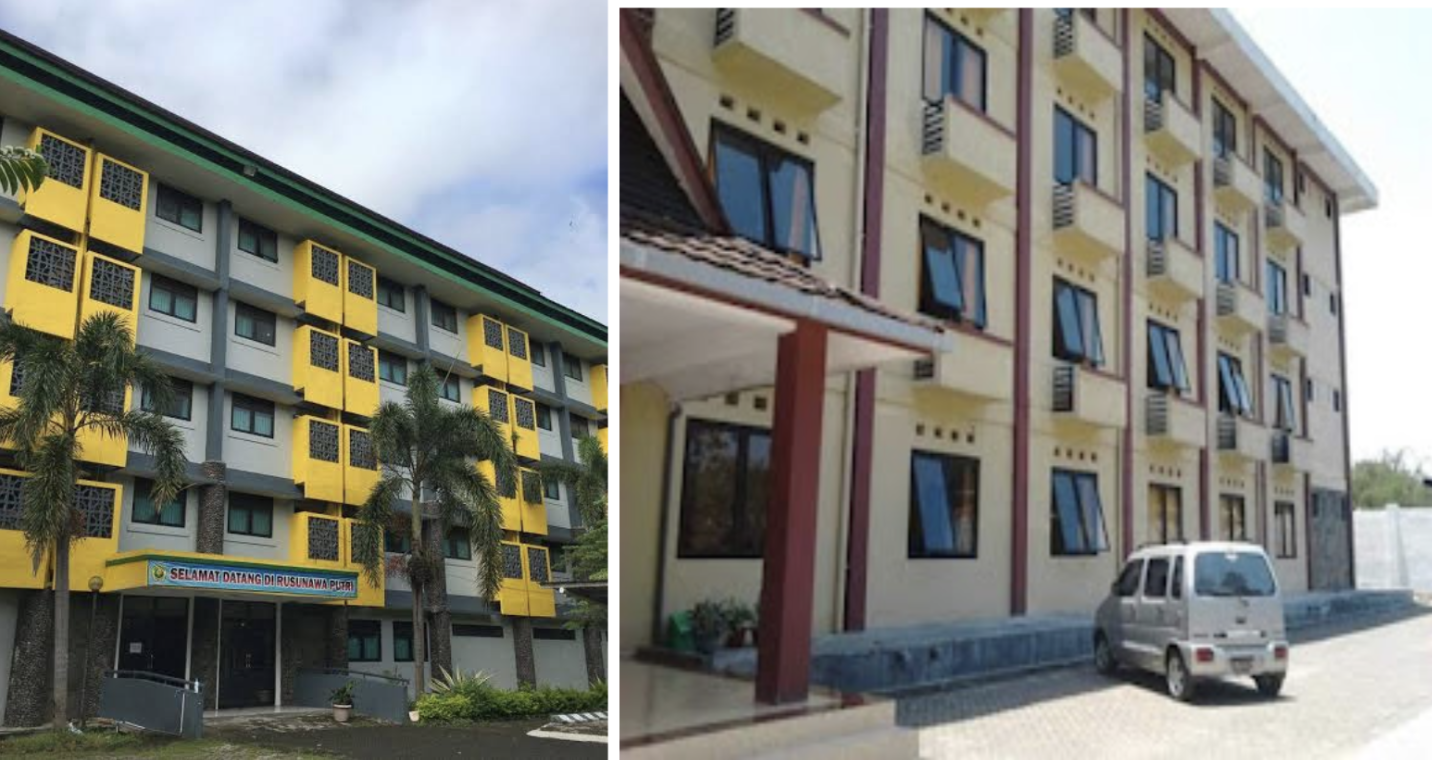
Universitas Jember (UNEJ) provides residential facilities to support students who need affordable accommodation while pursuing their education. Access to reasonably priced housing is particularly important for students from outside Jember, as accommodation costs can become a significant part of their living expenses. Through its student dormitories and other residential options around the campus, UNEJ helps students access temporary accommodation close to academic facilities and supports a more accessible university experience.
One of UNEJ’s main student accommodation facilities is the Rumah Susun Sederhana Sewa (Rusunawa) Putra, which provides residential facilities for male students. The university also operates Rusunawi Putri, a corresponding accommodation facility for female students. The existence of both facilities is documented through their respective official websites: Rusunawa Putra UNEJ and Rusunawi Putri UNEJ. These facilities are managed under the university’s business development unit and have formal regulations covering occupancy, resident responsibilities, security, and rental payments. Their management arrangements demonstrate that student accommodation is provided through an organized institutional service rather than an informal residential arrangement.
The accommodation facilities operate under specific rental and occupancy rules. According to the official regulations for Rusunawa Putra and Rusunawi Putri, the standard period of residence is one year, with payments made every three months. The male dormitory allows an extension when rooms remain available and the resident meets the applicable requirements. These arrangements provide a defined accommodation period and payment schedule for students. To assess affordability more precisely, the published rental rates should be compared with prevailing accommodation prices around the campus and students’ living-cost needs.
UNEJ’s official New Student Admissions Information also identifies student rental apartment facilities as part of the university’s campus facilities. The information highlights the availability of separate accommodation for male and female students, alongside other facilities intended to support students’ academic experience. The dormitories are particularly relevant for students who need temporary accommodation near campus and may otherwise have to rent rooms or boarding houses independently.
In addition to the university-managed dormitories, residential options in the surrounding area, including accommodation along Jalan Nakula Sadewa, may also serve students from outside Jember. Such accommodation can broaden the range of housing options available to students who need to live near the university. However, privately operated boarding houses or rental properties should be distinguished from university-managed accommodation. To include these properties as evidence of UNEJ’s contribution to affordable housing, further documentation would be needed to establish their continued use by students, rental prices, and any formal relationship with the university.
11.4.6 Pedestrian Priority on Campus

Universitas Jember (UNEJ) provides pedestrian pathways throughout its campus environment to support safe, comfortable, and accessible movement for students, lecturers, educational staff, and visitors. Pedestrian infrastructure is an important component of campus mobility because it allows members of the university community to walk between lecture buildings, administrative offices, libraries, laboratories, green spaces, and other campus facilities. By providing designated walking areas, UNEJ supports walking as an alternative to short-distance motorized travel and contributes to a healthier and more environmentally friendly campus environment.
The pedestrian pathways within UNEJ’s Tegalboto campus connect various academic and administrative areas, allowing students and employees to move between facilities on foot. These pathways form part of the campus circulation network and support everyday activities, including attending lectures, visiting campus services, participating in student organizations, and accessing public facilities. The availability of pedestrian routes is particularly important in a university environment where movement between buildings occurs throughout the day. The university’s official Campus Facilities and Public Facilities Directory provides information about the facilities and public spaces that make up the campus environment.
Pedestrian accessibility at UNEJ has also been examined through academic research on active transportation infrastructure. A study entitled Perancangan Fasilitas Pejalan Kaki dan Pesepeda Berbasis Transportasi Aktif pada Kampus Universitas Jember Tegalboto discusses the planning of walking and cycling facilities to support safer and more comfortable movement around the campus. The study highlights infrastructure considerations such as effective sidewalk width, pedestrian crossings, lighting, accessible guidance paths for people with disabilities, green corridors, and seating. These considerations are relevant to ensuring that pedestrian facilities are not merely available but also usable by people with different mobility needs.
The presence and use of pedestrian pathways can also contribute to a more active campus lifestyle. Students and staff who walk between campus facilities can reduce their reliance on motorized vehicles for short trips, potentially helping to reduce traffic within campus areas and associated emissions. To maintain a comfortable walking environment, pedestrian pathways should be kept clear of parked vehicles and other obstructions, provided with adequate lighting, and maintained to prevent damaged or uneven surfaces. Safe crossings and appropriate connections between buildings are also important to ensure that pedestrians can move around the campus without unnecessary barriers.
Furthermore, prioritizing pedestrians requires continuous attention to accessibility and safety. UNEJ can strengthen its pedestrian-friendly environment by conducting regular inspections of sidewalks, improving connections between academic buildings and public facilities, providing accessible routes for persons with disabilities, and collecting feedback from students and employees regarding the comfort and safety of walking around campus. Pedestrian counts and campus mobility surveys could also help the university understand how frequently walking routes are used and identify areas that require improvement.
11.4.7 Local Authority Collaboration Regarding Planning and Development
Universitas Jember (UNEJ) operates within the Jember community and has opportunities to contribute to sustainable urban development through collaboration with local government institutions and other stakeholders. One important aspect of sustainable development is ensuring that residents, including university employees and students, have access to adequate and affordable housing. Collaboration among universities, local authorities, housing finance institutions, and property developers can help improve access to housing by providing information about housing programmes, financing facilities, and available residential developments.
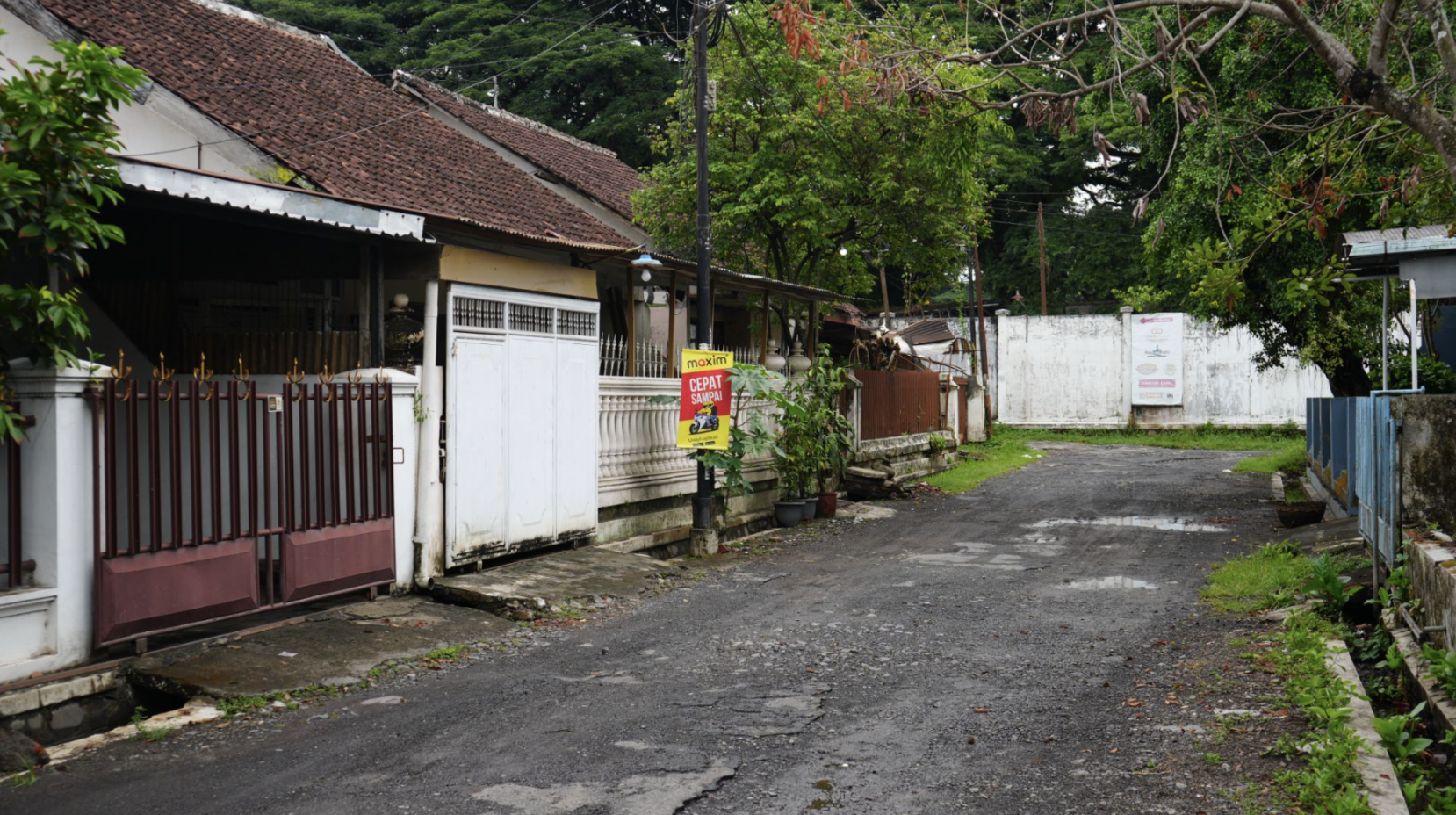
Housing development in Jember can be seen in several residential areas, including Karang Setra, Arjasa, Perum Sumber Alam, and Patrang. Each area represents part of the growing residential landscape in Jember Regency, providing housing options for people with different residential needs.
In Arjasa, for example, developments such as Arjasa Asri and New Arjasa Asri provide residential options for the local community, with both developments listed in the BP TAPERA Sikumbang housing information system. Meanwhile, Karang Setra and Perum Sumber Alam represent other established residential areas in Jember, while Patrang continues to experience residential development alongside the need for supporting infrastructure and proper environmental planning.
The development of these residential areas highlights the importance of collaboration between local authorities, property developers, and other stakeholders in providing decent housing. It also emphasises the need to consider accessibility, infrastructure, drainage, and environmental conditions as part of sustainable residential planning.
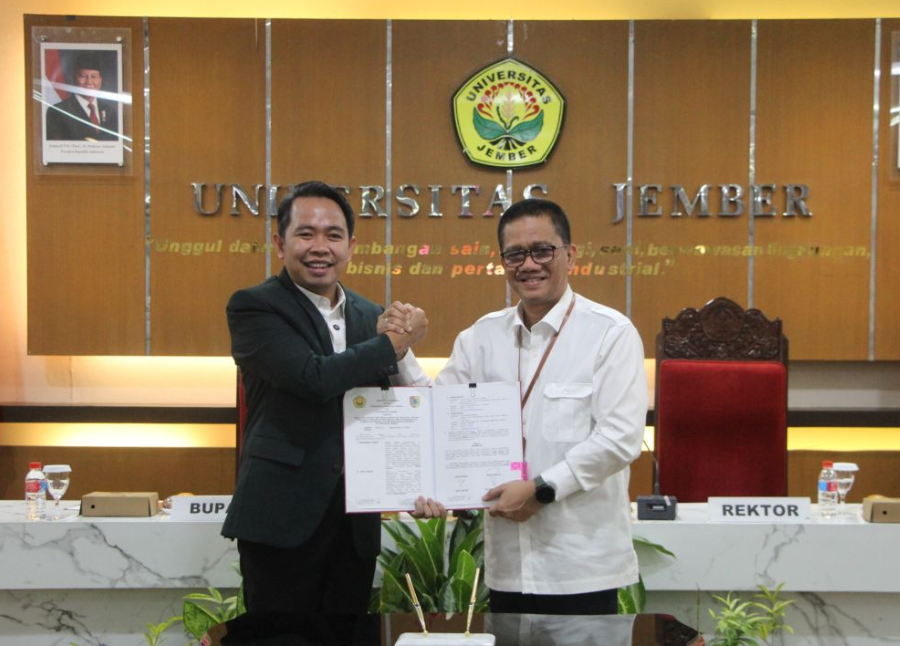
Universitas Jember (UNEJ) has strengthened its collaboration with the Jember Regency Government through the signing of a Memorandum of Understanding (MoU) on October 6, 2025, at the UNEJ Rectorate Building. This strategic partnership aims to support regional development, address extreme poverty, and improve the welfare of communities across Jember Regency.
Through this partnership, the Jember Regency Government seeks to involve UNEJ's academic expertise and professional resources in accelerating data-driven regional development. The collaboration provides opportunities for the local government to draw upon UNEJ's multidisciplinary expertise in social sciences, humanities, engineering, and health sciences to support the formulation and implementation of development strategies that respond to local community needs.
The partnership also reinforces the role of higher education institutions in local development planning. UNEJ, through its commitment to the Three Pillars of Higher Education (Tridharma Perguruan Tinggi), contributes through education, research, and community service to provide practical solutions to regional challenges.
As part of the collaboration, the Jember Regency Government is directing development programs across various regional government agencies, including education, tourism, and agriculture, toward addressing the needs of approximately 124,000 residents classified within the first and second socioeconomic deciles. This demonstrates the importance of coordination between local government and universities in establishing development priorities and ensuring that public programs are directed toward communities that need them most.
This strategic partnership reflects UNEJ's contribution to local authority collaboration in planning and development. By combining government priorities with academic knowledge, research, and community engagement, the collaboration establishes a foundation for more inclusive, evidence-based, and sustainable regional development that aims to improve the quality of life of Jember residents.
11.4.8 Planning Development – New Build Standards
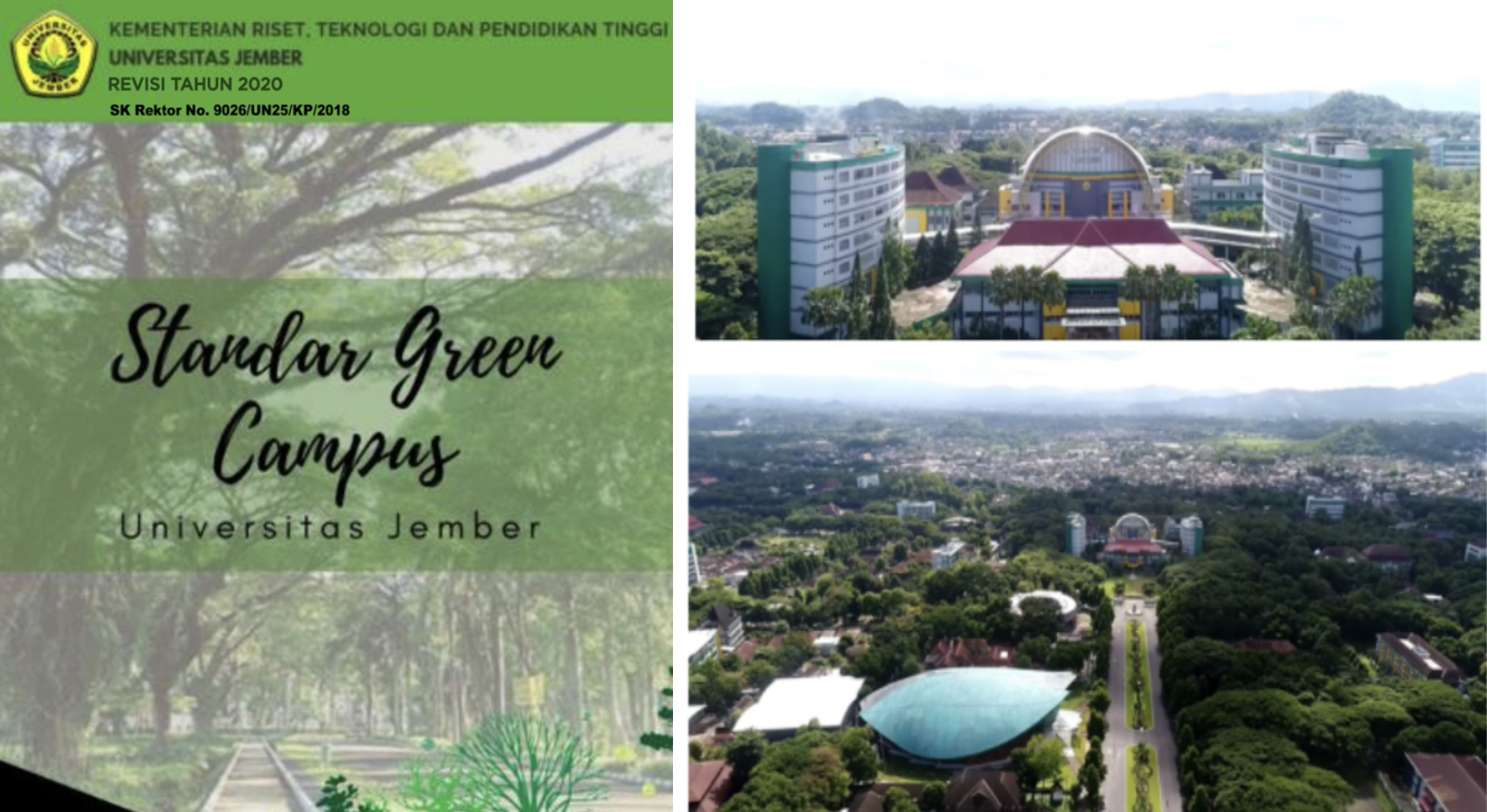
Universitas Jember (UNEJ) supports sustainable campus development through its Green Campus framework, which provides guidance for improving campus infrastructure and promoting environmentally responsible building management. Sustainable building development is important for reducing energy and water consumption, improving indoor environmental quality, and minimizing the environmental impact of university facilities throughout their life cycle. The university’s sustainability efforts are supported by institutional standards, building planning activities, and academic assessments of green building implementation.
One relevant institutional document is UNEJ’s Green Campus Standards, which includes provisions for smart building implementation. The standard emphasizes the role of smart building systems in improving asset management and energy efficiency. It states that university leadership should support smart building implementation and that faculties, vice deans responsible for general affairs, and unit leaders should pursue automation systems to improve energy and water efficiency. The document also identifies Building Management Systems (BMS), Building Information Modelling (BIM), Building Automation Systems (BAS), and Facility Management Systems (FMS) as technologies that can support more efficient building operations. It establishes a target for smart building implementation covering more than 75% of the total floor area of university buildings. These provisions provide an institutional foundation for incorporating energy and water efficiency into campus infrastructure planning. The document is available in UNEJ’s Green Campus Standards.
UNEJ’s approach to sustainable buildings can also be examined through the development of its Auditorium building. A study conducted by researchers from the Faculty of Engineering assessed the building using the Green Building Council Indonesia’s Greenship New Building version 1.2 rating tool. The assessment considered several sustainability categories, including appropriate site development, energy efficiency and conservation, water conservation, material resources, indoor health and comfort, and building environmental management. The study reported a total of 28 points, equivalent to 36.36% of the assessment score, placing the building in the Bronze category. This assessment demonstrates the use of an established green building framework to evaluate the environmental performance of a university building. The findings also indicate that further improvements may be necessary to strengthen the application of sustainable building criteria in future projects. Further details are available in the UNEJ repository study, Assessment of Green Building Criteria for the Universitas Jember Auditorium.
Academic research at UNEJ has also examined the application of green building principles to laboratory facilities. A study of the CDAST 1 laboratory building evaluated existing building conditions, design documentation, and compliance with the Greenship New Building version 1.2 assessment criteria. The research highlights the importance of assessing sustainability during building planning and design rather than relying exclusively on improvements after construction. Such assessments can help identify opportunities to improve site selection, energy performance, water conservation, material use, indoor comfort, and environmental management. The study is available through the UNEJ Institutional Repository: Assessment of Green Building Criteria for the CDAST 1 Laboratory Building.
To strengthen the implementation of sustainable standards in future construction, UNEJ can integrate specific green building requirements into its building planning documents, technical specifications, procurement processes, and construction supervision procedures. These requirements could cover energy-efficient lighting and cooling systems, natural lighting and ventilation, water-saving fixtures, rainwater management, waste management during construction, environmentally responsible material selection, accessible building design, and the installation of systems that allow building performance to be monitored. Requiring sustainability assessments at the design stage and verifying their implementation during construction would help ensure that environmental considerations become part of the standard process for developing new university buildings.
11.4.9 Building on Brownfield Sites
Universitas Jember (UNEJ) incorporates sustainable infrastructure management and environmental considerations into its campus development through building maintenance, land-use planning, and green space conservation. The development of educational and supporting facilities requires careful consideration of existing land conditions to ensure that infrastructure expansion does not compromise green spaces and the campus environment. UNEJ therefore seeks to balance the need for new buildings with the preservation of vegetation and the availability of open spaces.
One example of UNEJ's infrastructure development is the construction of buildings under the Islamic Development Bank (IsDB) project. The project includes integrated laboratory facilities, an auditorium, and other academic infrastructure designed to support education and research. These facilities are located within the existing university campus area. UNEJ also maintains and optimises its existing infrastructure, including the Research Hub building at Jubung Campus, through building maintenance and operational management. These efforts demonstrate the importance of making effective use of existing campus infrastructure.

Another major infrastructure project is the construction of the State University Teaching Hospital (Rumah Sakit Perguruan Tinggi Negeri/RSPTN) at Jalan Slamet Riyadi, Patrang, Jember. The project began in December 2023 and was developed to strengthen healthcare education, research, and services for the university and surrounding community. According to the university's development information, the project was located outside the campus's designated green areas, allowing infrastructure development to take place while maintaining the function of existing green spaces.
UNEJ's commitment to environmental protection is also reflected in its green campus policies. The university's Green Campus Infrastructure Standards provide guidance for managing campus land, including monitoring building footprints, total building floor areas, green open spaces, vegetation coverage, and water infiltration areas. These standards require university and faculty leaders to consider the balance between built-up areas and open spaces, while encouraging the expansion of vegetation and green areas.
This approach is also consistent with the broader framework of Minister of Public Works and Public Housing Regulation No. 05/PRT/M/2008 concerning Guidelines for the Provision and Utilisation of Green Open Spaces in Urban Areas. The regulation provides a planning framework for maintaining green open spaces as part of sustainable spatial development.
In addition to infrastructure planning, UNEJ implements practical environmental initiatives through tree planting and vegetation conservation. On 18 November 2025, the university reported planting 535 trees at its Jubung Vocational Campus through the Jubung Agroforestry Programme. The initiative involved various productive and industrial plant species and supported the development of a greener educational environment. UNEJ also stated its intention to avoid constructing new buildings in the designated area for at least the next ten years, allowing the planted vegetation to grow and develop.
UNEJ's broader environmental management approach also includes strict controls on tree removal. The university has previously explained that trees affected by necessary construction activities should be relocated and replanted elsewhere. It has also promoted vertical building designs to optimise land use and reduce the need to remove existing vegetation.
These initiatives demonstrate UNEJ's efforts to integrate infrastructure development with environmental protection through existing building maintenance, careful land-use planning, green space conservation, and tree planting. The development of the IsDB facilities and RSPTN, together with the university's green campus policies, illustrates its approach to balancing infrastructure needs with environmental considerations.
Sources
UNEJ – IsDB Officially Hands Over Facilities to Universitas Jember: https://unej.ac.id/blog/2020/11/03/isdb-resmi-serahkan-fasilitas-buat-universitas-jember/
UNEJ – Construction of the First Phase of the RSPTN Building Officially Begins: https://unej.ac.id/blog/2023/12/08/wujudkan-mimpi-pembangunan-tahap-pertama-gedung-rsptn-unej-resmi-dimulai/
UNEJ – Jubung Agroforestry Programme: UNEJ Plants 535 Trees to Strengthen a Green Educational Environment (18 November 2025).
UNEJ – Green Campus Infrastructure Standards: https://unej.ac.id/wp-content/uploads/2025/06/R2020-Buku-Standar-Green-Campus-9-UNEJ2018-5.pdf
UNEJ – Operational Maintenance of the IsDB Project Research Hub Building at Jubung Campus: https://repository.unej.ac.id/items/262a8b4b-00fa-4aae-9f98-0e5aa56b1e58
UNEJ – Universitas Jember Contributes 195.19 Tons of Oxygen per Day: https://unej.ac.id/blog/2019/11/20/universitas-jember-sumbang-19519-ton-oksigen-perhari/
Ministry of Public Works and Public Housing Regulation No. 05/PRT/M/2008 concerning Guidelines for the Provision and Utilisation of Green Open Spaces in Urban Areas.